
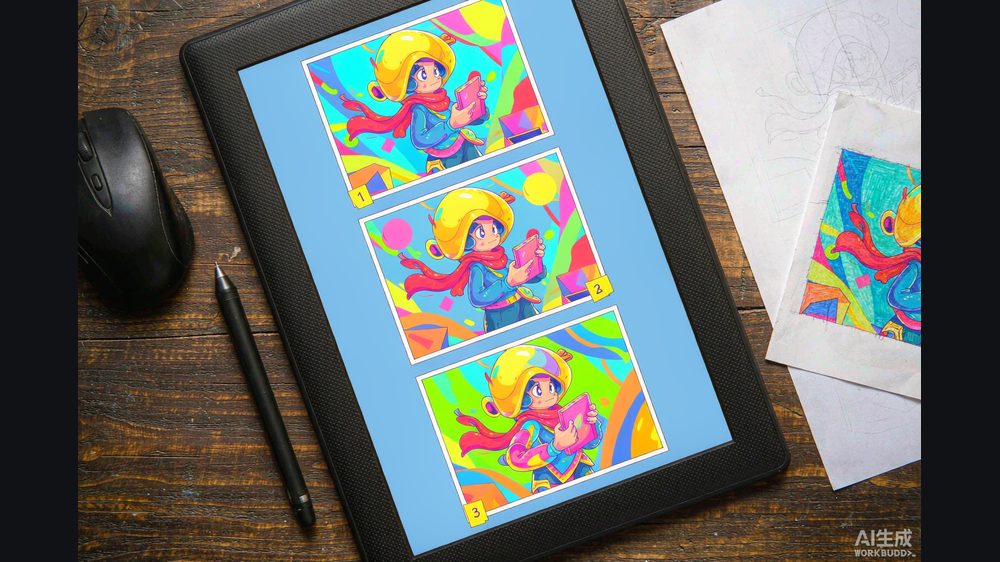
A director used to shoot one version of a thirty-second scene and hope. A producer in a short-drama (短剧) studio can now generate five — different endings, different tones, different leads — for less than the cost of the lunch order. The example is illustrative; the price behind it is not.
That is the practical effect of a price change at ByteDance's cloud arm. Volcengine (火山引擎) launched Seedance 2.5 flash on 12 November 2026, an efficiency-tier video-generation model priced at about ¥0.99 per second of 720P output (≈ US$0.14 / HK$1.08 per second, approximate). The API followed on Volcengine Ark (火山方舟) on 15 November.
What the price actually is
Volcengine's own pricing documentation is unusually specific. For text-to-video and image-to-video without a video input, a five-second 16:9 clip at 480P costs ¥2.21 (≈ US$0.31 / HK$2.40) and at 720P costs ¥4.97 (≈ US$0.69 / HK$5.40). That works out to ¥0.44 and ¥0.99 per second respectively. The flagship Seedance 2.5 is listed at ¥3.36 (≈ US$0.47 / HK$3.65) and ¥7.56 (≈ US$1.05 / HK$8.22) for the same five-second clips, or ¥0.67 and ¥1.51 per second.
So the flash model is about 34 percent cheaper than the flagship at 720P, as Volcengine stated at launch, and roughly a third cheaper at 480P. Neither model supports 1080P or 4K in this tier. When a video is used as input, the price becomes a range: ¥5.44 to ¥21.17 (≈ US$0.76 to US$2.94 / HK$5.91 to HK$23.0) for a five-second 720P output, depending on the length of the input clip. A thirty-second 720P generation at the headline rate costs about ¥29.7 (≈ US$4.13 / HK$32.3).
What you give up
Volcengine calls Seedance 2.5 flash the model closest in effect to Seedance 2.5, with generation speed doubled and a lower price. It supports a single clip of up to 30 seconds, up to 10 images, 5 videos and 5 audio files as input, and two output resolutions, 480P and 720P. Those limits define the intended job: high-volume drafts, transitions, alternate versions, platform-specific vertical cuts and compliance preview samples.
The flagship tier keeps the high-specification work: 1080P and above, key plot points, close-ups on faces. The industry language is beginning to sound like film production, with a main camera and a second unit. That is a sensible analogy, but it should not be mistaken for proof that the cheaper model preserves quality. Speed and cost are measurable; "closest in effect" is a vendor judgement.
Why microdramas noticed first
The Chinese microdrama (短剧) industry runs on volume and fast feedback. Episodes are short, production cycles are compressed, and distribution platforms reward content that holds attention in the first seconds. When generation is expensive, a team can afford one or two versions. When it is cheap enough to treat as a draft medium, the workflow changes.
- More versions per script. Different character designs, different endings, different emotional register, tested in small paid trials before the winner gets budget.
- Same-day trailers. A preview cut can be produced while the main episode is still being finished.
- Platform adaptation. Vertical cuts for different apps become a formatting task rather than a reshoot.
The broader shift is from "can we generate this at all" to "how many variants can we afford to try". That is a meaningful change in the economics of experimentation, even if it does nothing about the older problems of the form: thin scripts, flat performances and a crowded attention market.
Seedance 2.5 flash is scheduled to appear across Jimeng (即梦), LibTV, Updream, Creao AI and TapNow. This piece focuses on the new model and its price tier; earlier Seedance releases were a separate event and are not being re-reported here.
What is still unverified
Four things are missing. First, an independent quality comparison between flash and flagship on the same prompts; Volcengine's "closest in effect" is a claim. Second, a published definition of the speed improvement, which is stated as "doubled" without a test protocol. Third, any statement about how the model handles motion, physics and audio synchronisation under the lower price. Fourth, evidence that lower generation costs actually translate into better content rather than simply more of it.
There is also a pricing subtlety. The ¥0.99 figure (≈ US$0.14 / HK$1.08) assumes no video input and a five-second 16:9 output. Real production often involves reference footage, and the published range for video-in tasks is several times higher. The headline number is real, but it is a specific configuration, not a universal rate.
Honest limitations
Prices were checked against Volcengine's public documentation and Shanghai Securities News, which reported the launch on 12 November from the company's official announcement. The figures are list prices in yuan; actual billing depends on token usage returned by the API, and the conversions use an approximate rate of US$1 to ¥7.2 and HK$1 to ¥0.92.
All performance and quality descriptions — doubled speed, closeness to the flagship — are Volcengine statements. I found no independent benchmark. The examples of studio workflows are analysis of how a price change is likely to be used, not a survey of named studios; the opening scene is illustrative, not a reported event.
This is a pricing and product event, not an argument that generated video has reached a particular quality threshold.
What readers can do now
- If you make short video, price your own workflow before switching tiers. Run the same ten prompts through flash and flagship and compare the results you would actually ship.
- Read the per-second figure together with the input rules. Reference video changes the bill more than resolution does in the published table.
- If you manage a team, treat cheap drafts as a way to test ideas, not as a reason to cut review. A fifth version is only useful if someone decides which one deserves to be made.