
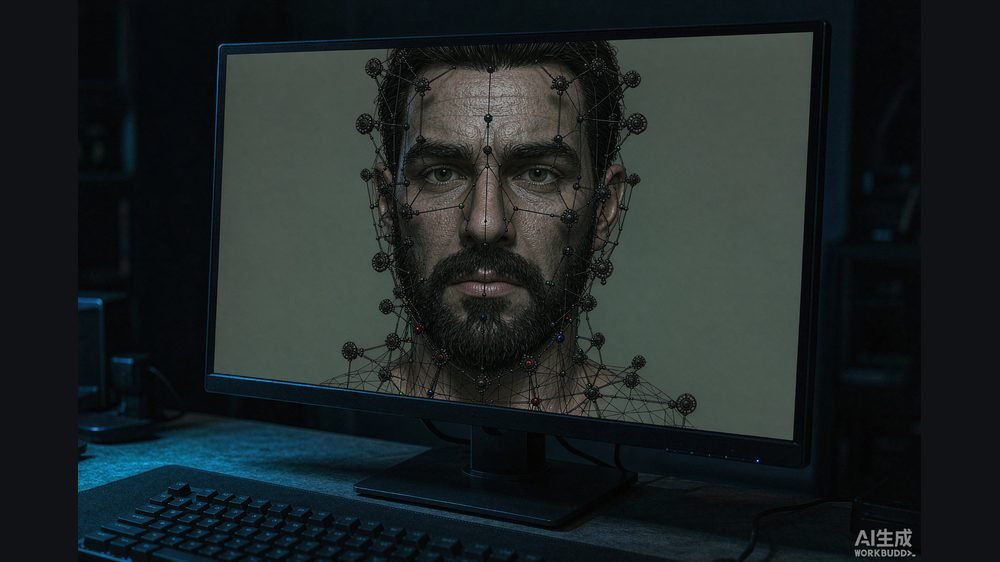
In early September 2026, a small red-and-gold flower icon started appearing on microdrama players across China. It is the industry's first uniform "ID card" — and a signal that AI-made short dramas are now governed, not just generated.
For two years, 微短剧 (microdrama) — the one-to-two-minute serialized dramas that dominate Chinese phones — were a wild west of human-shot content. Then generative video models turned production industrial. Now the rulebook has caught up.
The regulation that changed the game
The National Radio and Television Administration (NRTA) published Order No. 16, the 《微短剧发展管理办法》 (Microdrama Development Management Measures), on 30 July 2026, effective 1 September 2026 (nrta.gov.cn). It is China's first dedicated national rule for microdramas.
The clause that matters most for AI: Article 34 requires that any microdrama generated or produced with AI technology must carry a prominent prompt label (提示标识) on every episode. It links directly to the 《人工智能生成合成内容标识办法》 (AIGC labeling rules) effective since September 2025 — so the mark travels from creation through distribution.
The measures also set a three-tier classification by investment and subject:
- Class I: large investment or sensitive subjects — filing + distribution license
- Class II: moderate general-subject — filing/license by reference
- Class III: low-investment general — platform self-review + program number
NRTA's network-audiovisual department issued a specific 《管理提示 (AI微短剧分类分层标准)》 on 25 June 2026 (CCTV), effective 1 July 2026, with hard AI-microdrama thresholds:
- investment ≥ 800,000 yuan (≈ US$113,000) or sensitive subject → "key microdrama" (重点)
- 300,000–800,000 yuan (≈ US$42,000–113,000) general → "ordinary"
- < 300,000 yuan (≈ US$42,000) general → "other"
The scale behind the rules
The numbers explain why Beijing moved. People's Daily (3 September 2026) reported that in the first half of 2026, Douyin's native AI 漫剧 (manhua-style drama) and microdrama new titles reached 221,900 (22.19万部), and the user base grew from 120 million in 2025 to 600 million.
The flip side is brutal: only 1 in 77 new titles broke even, and 98.7% missed profitability within six months. A mid-tier AI 漫剧 costs about 800–1,200 yuan/minute (≈ US$113–169/min) — roughly a fifth of live-action.
Costs have collapsed further in industry reporting: standardized AI microdrama quotes reportedly fell from about 5,000 yuan/minute (≈ US$700/min) to a few hundred yuan within roughly half a year, as multi-shot models like Seedance 2.0 and Kling 3.0 matured. Treat that range as indicative, not audited.
The problem the label is meant to solve
Cheap generation created abuse. An MIT Technology Review investigation (reported by TechTimes, 15 May 2026) found a 72-episode AI period drama on the Hongguo (红果) platform built two characters from real fashion bloggers' faces without consent — one written as greedy and promiscuous, another as violent. The platform removed it and penalized the producer in April 2026, the same week China's cyberspace regulator published draft digital-person rules.
Platforms are already enforcing at scale: People's Daily noted Hongguo intercepted 205 violating microdramas in February, Kuaishou over 700 in July, and WeChat took down dozens in August.
What "compliance" now means for creators
The new logic is 精品化 (premium quality) over volume. With a uniform label and tiered filing, low-effort "prompt lottery" studios lose the anonymous edge, and platforms are pushed to recommend verified, labeled content. NRTA explicitly encourages innovation and outbound distribution (出海) — but inside a framework where the AI origin is always visible.
Honest limitations
- The investment thresholds (800k / 300k yuan) and the 1 September 2026 effective date are from NRTA/CCTV official notices — solid.
- The "22.19万部 AI new titles in H1 2026" and "1-in-77 break-even / 98.7%" figures are People's Daily citations of industry data; we could not verify the break-even rate from a primary statistical source.
- The per-minute cost collapse (5,000 → hundreds of yuan) is widely reported by trade media (MIT Tech Review via TechTimes, industry reports) but not uniformly audited; read as indicative.
- The face-theft case is from an MIT Technology Review investigation reported by TechTimes; we did not access the primary MIT TR article directly.
- This piece covers the regulation-and-economics trend, not a single platform's full production pipeline (covered in other articles).
What readers can do now
- Label before you upload: if you produce AI microdramas for China, add the per-episode AI prompt label now and file by tier before publishing.
- Discount the hype: investors should underwrite on distribution and IP, not volume — 98.7% of new titles miss profitability.
- Look for the mark: viewers should watch for the red-gold icon and report unlabeled AI content that uses a real person's face without consent.