
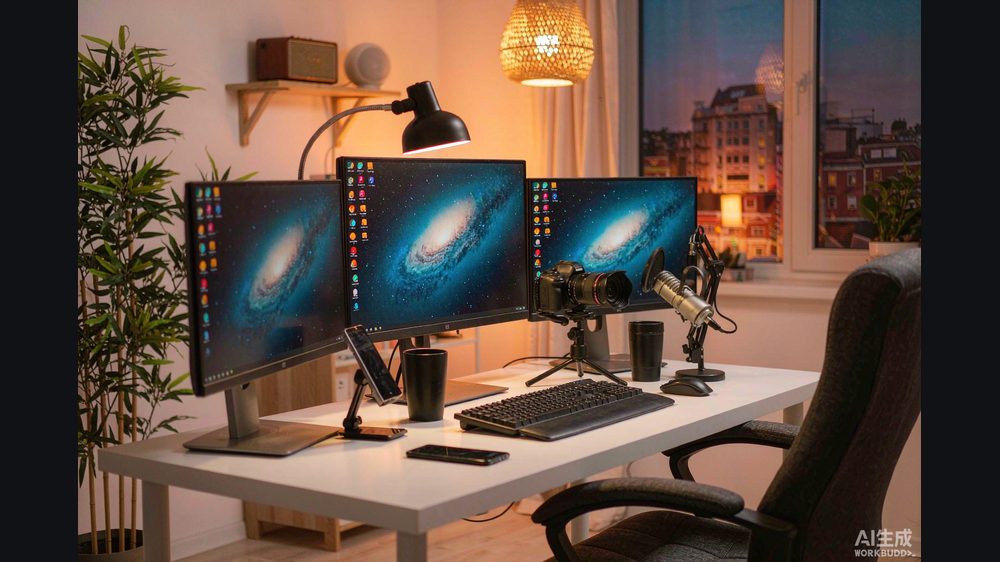
A teenager in a small city types a single line of text and watches a 10-second film appear on screen. A shop owner uploads one product photo and gets back a rotating, lit advertisement in a few minutes. None of them studied cinematography, and none of them hired a production crew.
What 即梦 (Jimeng) actually is
即梦 AI (Jimeng AI, originally 剪映 Dreamina) is ByteDance's generative-media creation platform, built by the same team behind 剪映 (Jianying, the Chinese edition of CapCut). It opened internal testing in March 2024 and took the Chinese name 即梦 in May 2024. The product slogan is "让灵感即刻成片" — turn inspiration into a finished clip.
Unlike a chatbot that answers questions, Jimeng is a workshop. You hand it a sentence, an image, or both, and it returns an image or a short video. Its core features are text-to-image, image-to-image, text-to-video (文生视频), and image-to-video (图生视频). Under the hood it runs on ByteDance's own Seedream and Seedance model family, but the average user never sees those names — they just see a timeline and a render button.
From a prompt to a clip
The app's video engine has moved quickly. In November 2024 it opened the Seaweed model to users; the standard version could produce a five-second clip from a prompt in about a minute, well ahead of the several-minute waits common elsewhere at the time. By February 2026, Jimeng had integrated Seedance 2.0, ByteDance's newer video model, which accepts text, images, audio, and video as mixed inputs and can output roughly 15 seconds of multi-shot footage with synchronized sound.
For a first-time user, the loop is deliberately flat:
- Describe a scene in plain language.
- Optionally drop in a reference image for style, or a first or last frame to anchor motion.
- Pick a duration and let the model render.
- Edit with built-in tools: motion control, speed control, lip-sync, and a storyboard mode.
The point is not that any single clip is cinema. The point is that the distance between an idea and a watchable draft has collapsed to a few minutes.
Why it matters for Chinese creators
Most coverage of AI video fixates on the headline models and their leaderboard scores. The quieter story is distribution. Jimeng sits inside ByteDance's content ecosystem, which means a clip made in the app can travel straight to 抖音 (Douyin) and the broader short-video (短视频) economy without a file-format detour or a separate upload step.
Zhang Nan (张楠), the head of 剪映, put it plainly at a late-2024 developer event: Douyin is the camera of the real world, and Jimeng is the camera of the imagination. That line is not just branding. It explains why ByteDance built Jimeng as a creator tool first and a model showcase second. The models exist to feed the tool, not the other way around.
The microdrama (短剧) connection
One early signal came from 《三星堆:未来启示录》 (Sanxingdui: Apocalypse of the Future), promoted as China's first AIGC continuous-narrative science-fiction microdrama (短剧), released on Douyin in mid-2024 with the studio Bona (博纳影业). Jimeng was the chief AI technology partner, and the production pushed the app to add frame-rate options (24, 30, and 60 fps), 2x upscaling, and controlled camera movement.
Microdramas (短剧) — vertical, fast-paced serial shorts engineered for mobile — are a massive Chinese mobile format with their own factories and distribution deals. When a tool like Jimeng can draft scenes, test lighting, and storyboard cheaply, the cost of producing a pilot drops from a studio budget to a laptop budget. That is the audience Jimeng is really built for.
What it costs
Jimeng runs on a credit and membership model. As of early 2026, the annual subscription was listed at about 949 yuan for the first year (≈ US$133, HK$1,030) and 1,899 yuan on renewal (≈ US$267, HK$2,070). Casual users can also collect credits through daily check-ins, and the Doubao app exposes a lighter version of the same video models for free under a daily quota. Treat these numbers as a snapshot; ByteDance adjusts pricing and credit rates often.
Honest limitations
Jimeng is a shipping product, not a research paper, and its exact capabilities change with every model swap underneath it. The membership prices, model names, and feature dates above reflect public reporting through early 2026 and may already be stale by the time you read this. The app also restricts using real people's faces and likenesses as reference material without verification — a guardrail against deepfake misuse, not a technical limit. And like every consumer video tool in 2026, output quality still swings wildly with prompt quality; "type anything, get a movie" is marketing, not reality. Long-form coherence still requires the user to stitch shots together.
What readers can do now
- If you create Chinese-language content, open Jimeng and generate three 10-second clips from one prompt to feel where the tool helps and where it fights you.
- If you run a small business, run one product photo through image-to-video to see whether AI B-roll beats a static post.
- If you follow the industry, watch whether ByteDance keeps its best video models inside Jimeng or opens them through Volcano Engine — that choice shapes the whole competitive field.