
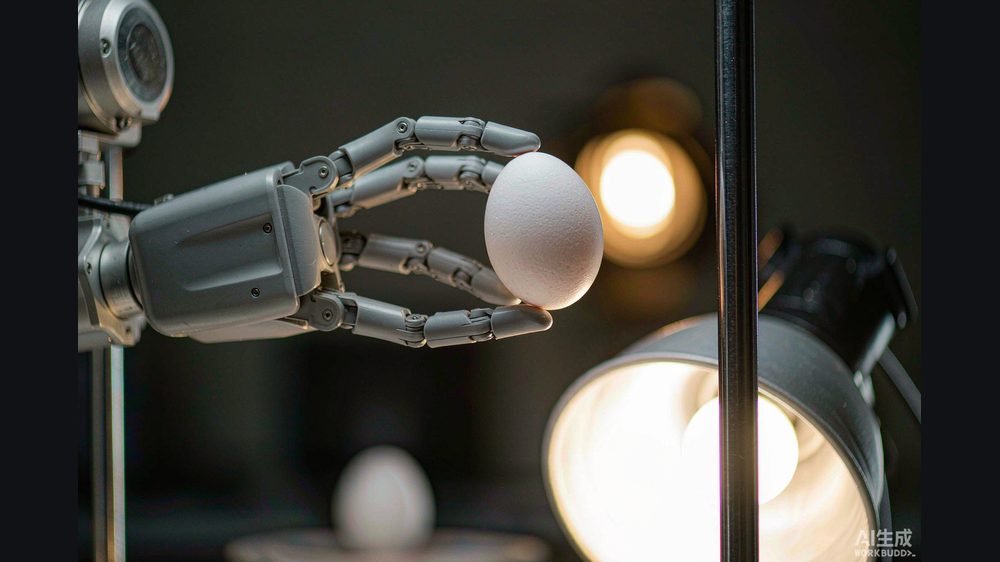
On a real production line, a robot arm pulls a soft, floppy bundle of wires, routes it, and plugs it in — a hundred times an hour, to sub-millimeter precision. Car factories have tried to automate this for decades and mostly gave up. A two-year-old Chinese startup says it just did.
The job is automotive wiring harness assembly (汽车线束装配). The harness is often called the car's nervous system: soft, shapeless, and unforgiving, because a misplaced plug can fail a safety system. For years it has been the textbook example of work robots could not do, and humans — a skilled "purple-collar" (紫领) class — did instead.
The robot: TARS A1
TARS (它石智航) was founded in February 2025. Its CEO is Chen Yilun (陈亦伦) and its chief scientist is Ding Wenchao (丁文超). The A1 robot runs on the company's self-developed embodied model — AWE 3.0 at launch, with AWE 3.5 released at WAIC in July 2026, where it won a SAIL Star award.
The headline moment was a Guinness World Record on March 10, 2026: "most sub-millimeter harness assemblies by a robot in one hour" — 105 valid assemblies in 60 minutes, performed on a real industrial harness scenario replicated 1:1. The certification matters less as a trophy than as proof the task was done to live production tolerances, not in a staged demo.
What lets a robot handle something a rigid gripper cannot is the fusion of force control, vision, and tactile sensing — exactly the combination needed to grab, align, and insert a soft bundle. TARS pairs this with a SenseHub data-collection kit: a person wears a glove and a first-person camera and performs the real task, cheaply generating the human-action data the model learns from.
The deployment: Tianhai Electronics (天海电子)
The A1 solution has been scaled-deployed at Tianhai Electronics (天海电子), described in state media as a domestic leader in automotive harnesses and as the world's first scaled embodied-AI (具身智能) deployment in automotive harness assembly. Multiple production lines are reported to be running.
This is the part that separates TARS from most humanoid and embodied-AI stories: the claim is not a single pilot cell but production lines, doing the unglamorous, high-tolerance work that automation giants had circled and skipped.
Why this matters beyond one factory
Wiring harness is only the first soft-material task. The same force-vision-tactile stack could move to soft packages, apparel, and other deformable-part assembly. And the policy wind is behind it: a joint MIIT–SASAC program on real-scene training for humanoids and embodied AI (人形机器人与具身智能实景实训专项行动) gathered 1,267 scenarios across 20 provinces and 27 central state-owned enterprises, pushing real users to open shop floors to robot firms.
TARS has also been vocal about scale: it has stated a target of roughly 1,000 robots in factories at home and abroad by the end of 2026 (reported; treat as an ambition, not a delivery). And it reportedly closed a sizable Pre-A round of 4.55亿美元 (≈ US$455 million) on April 16, 2026, led by GL Ventures (高瓴创投) and Sequoia China (红杉中国) with Meituan (美团) — a figure we could not independently confirm.
Honest limitations
- The "scaled deployment" at Tianhai is a company and state-media claim; no third-party unit count or uptime figure was available.
- A Guinness record measures speed in a timed challenge, not reliability, uptime, or cost-per-action over months — the metrics that decide whether a factory keeps a robot.
- Wiring harness is one task; generalization to other soft-material assembly is plausible but unproven at scale.
- The 4.55亿美元 funding and ~1,000-unit targets are reported, not audited, and the company is very early (founded 2025).
- "World's first scaled embodied-AI deployment in harness" is the company's framing, repeated by Chinese media; we found no independent verification of the "first" claim.
What readers can do now
- If you run manufacturing, pilot an A1-class robot on one soft-material task and measure uptime and yield over weeks — the Guinness number is a hook, the line cadence is the proof.
- If you invest, separate Guinness-and-demo from deployed-unit proof; ask for a customer reference and a run-rate, not a record certificate.
- If you follow policy, track outcomes of the MIIT–SASAC real-scene training program — it is the mechanism turning showcase robots into paid, repetitive factory work.