
Joyson Electronics published its third-quarter report on October 28.
Revenue for the first nine months was 41.887 billion yuan, down 8.63% year on year; net profit attributable to shareholders was 958 million yuan, down 14.51%; gross margin was 17.52%.
On trend alone, this is an auto-parts supplier under pressure. But its robotics business made two deliveries in November.
Third quarter: profit down by nearly half
Third-quarter revenue was 13.796 billion yuan, down 10.98%. Attributable net profit was 219 million yuan, down 46.98%. Gross margin was 17.1%, down 1.6 percentage points.
Interface News summarized the company's explanation: slowing global vehicle demand, and renminbi appreciation cutting reported revenue by about 1.46 billion yuan; plus rising prices for memory chips, electronic components and raw materials, which added about 370 million yuan to costs versus budget in the first nine months.
Revenue down 8.63%, profit down 14.51%. Profit falls faster than revenue — classic cost-side compression.
On the robotics side, deliveries are accelerating
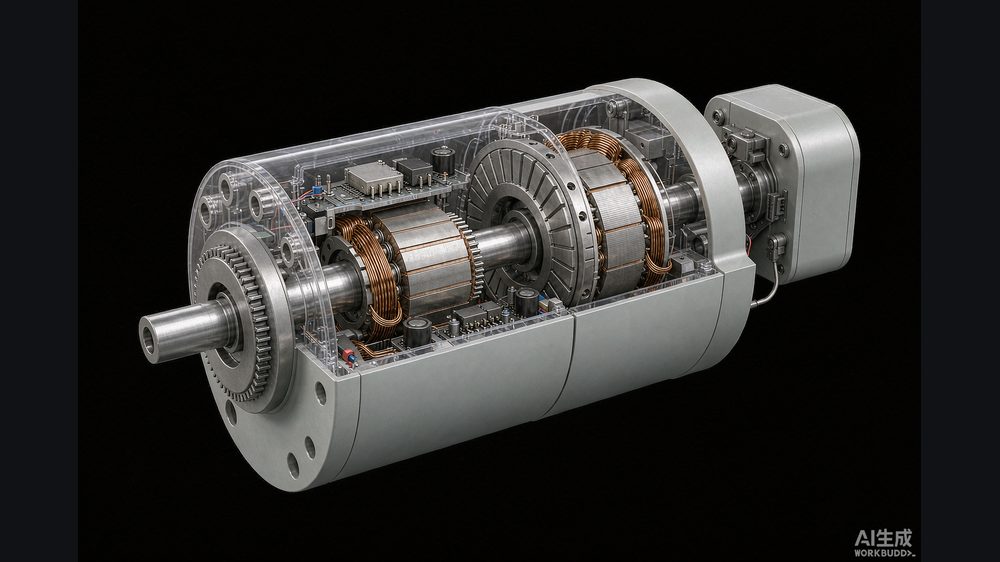
On November 5, the company said cumulative production and delivery of its high-compute robot controller had passed 2,000 units, fitted to a leading robot maker's model.
On November 10, its Chaopingmian Technology subsidiary delivered the first high-compute "brain backpack" to Unitree Robotics. The pack bundles controller and energy system externally, so a robot body can add compute without structural changes.
Interface News, citing the interim report, put the controller's peak compute at 2,070 TOPS. That matches Nvidia's stated figure for Jetson AGX Thor, but Joyson says only that it uses a mainstream international high-compute chip. The model is not disclosed.
The 0.1% is the number that matters
In a September 2025 risk notice, the company said robotics-related components accounted for less than 0.1% of revenue.
Applied to the 41.887 billion yuan of first-nine-month revenue, the ceiling is 41.89 million yuan.
Divided by 2,000 controllers, that is under 21,000 yuan per unit.
Both steps are mine and the scopes are clearly flawed: 0.1% is a 2025 ratio and 2,000 units is cumulative. But the order of magnitude holds. A business measured in tens of billions and a robotics line measured in tens of millions are not in the same league.
Orders and capacity point at 2027
New orders won in the first nine months total about 61.5 billion yuan over their full lifecycles. That is future revenue, not current revenue.
In October 2026, CATL and Joyson formed a joint venture on embodied-intelligence robots with 1 billion yuan of registered capital, CATL holding 70% and Joyson 30%, targeting volume production of humanoid robot powertrains in 2027.
R&D spending reached 2.608 billion yuan in the first nine months, or 6.53% of revenue, up year on year and directed at intelligent driving and embodied agents.
R&D rising while the core business contracts is a familiar combination in transition.
How to frame the valuation
Revenue falling, profit falling, robotics under 0.1% of sales, R&D increasing. All four are true at once.
What the market is paying for is not this year's income statement but that 2027 line.
The risks are plain: vehicle demand and currency still drag, memory prices will not vanish soon, and the robotics path from 2,000 units to scale runs through customer validation and capacity ramp.
Two thousand controllers is the opening of a good story. For it to reach the income statement, it first has to appear in revenue measured in hundreds of millions, then in billions.
The order book versus the income statement
The 61.5 billion yuan of new lifetime orders is worth putting next to the 41.887 billion of nine-month revenue. The backlog is roughly one and a half times annual revenue, which sounds supportive until you remember that lifetime orders are recognised over five to eight years, at the pace the customer launches vehicles.
That is why the robotics story carries so much weight in the valuation despite contributing almost nothing today. Auto orders are long, cyclical and priced under pressure; robot components are small, early and priced on expectation.
Other programmes exist: a semi-solid-state battery contract for a domestic customer slated to start production this quarter, and an eVTOL three-in-one unit for an overseas customer targeting the first quarter of 2027.
The joint venture with CATL is the clearest statement of intent. Registered capital of 1 billion yuan, split 70/30 in CATL favour, targeting humanoid powertrains in 2027, a schedule that depends on customers rather than on Joyson alone.
*Disclaimer: This article draws on the company's quarterly report and announcements, plus reporting by Interface News and P5W. Calculations are the author's own. It is for reference only and does not constitute investment advice.*