
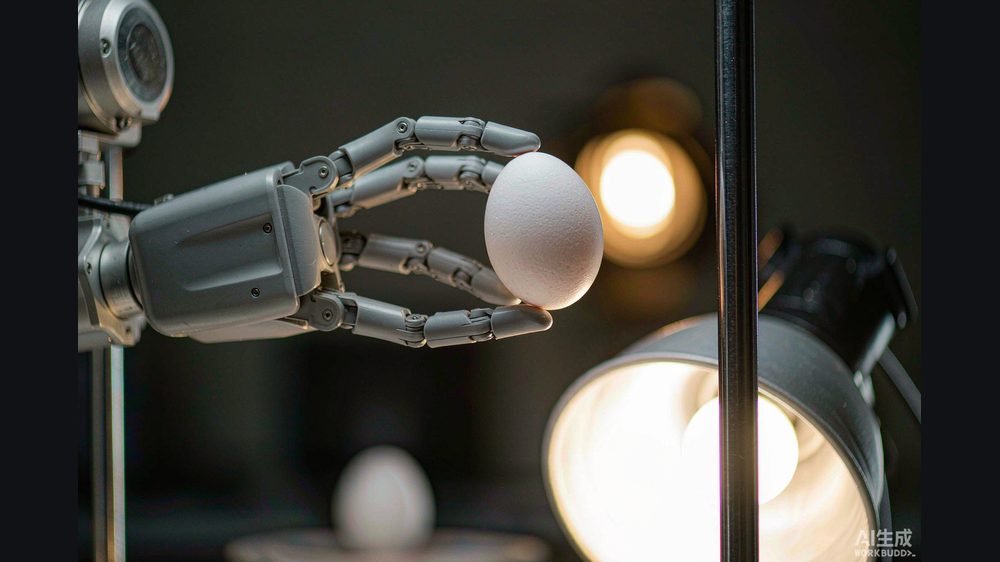
A warehouse worker used to bend, lift, and stack a thousand times a day, then do it again on the night shift. Now a humanoid (人形机器人) is doing that bend-and-stack loop without clocking out—24 hours, no complaint, no coffee. The question is no longer whether robots can work in warehouses, but whose warehouse they show up in first.
The launch that matters
On 17 July 2026, at the World Artificial Intelligence Conference (WAIC) in Shanghai, JD Logistics (京东物流) and AgiBot (智元) jointly unveiled Genie G2 Max (精灵 G2 Max), a "safety-grade heavy-load embodied robot." The headline claim: it would be applied inside JD's Zhilang (智狼) warehouse, described by Chinese media as the first time a humanoid (人形机器人) has been deployed in a real warehouse production scenario rather than a trade-show demo.
JD's own "goods-to-person" (货到人) Zhilang system is the stage. Its towers of shelving stand over 10 meters high and pack about four times the storage density of a conventional warehouse. In a Zhilang facility holding more than a million items, JD says an order locks the item's location within 5 seconds and can be outbound in under a minute. Genie G2 Max is meant to take over the unglamorous intake end—lifting, carrying, and palletizing standard totes—so the robotic "wolves" already moving goods can run end to end without a human plugging the gap.
What the robot actually does
Genie G2 Max is built human-shaped, with arms and motion designed to mimic a person, plus a heavy-load force-control system. The pitch is mundane and deliberate:
- Grasp and carry standard totes with human-like flexibility and stability
- Palletize around the clock, 24 hours, with no shift handover
- Slot into the existing Zhilang flow instead of demanding a rebuilt warehouse
JD has already spread Zhilang warehouses across Beijing, Wuhan, Chengdu, and even the UK, and its "SuperBrain" large model (超脑大模型) reportedly orchestrates more than 1,000 scenarios across the "wolf" robot family—Zhilang, YiLang, FeiLang, and DuLang—covering storage, picking, moving, transport, and delivery. Genie G2 Max is the piece that extends that family into the intake dock.
The money question
Humanoids are not cheap, and logistics is a thin-margin business. Industry observers cited in Chinese reporting put current hardware cost at around ¥300,000 (≈ US$42,000 / HK$330,000) per unit before mass production, potentially falling to roughly ¥100,000–190,000 (≈ US$14,000–27,000 / HK$109,000–207,000) once small batches ship. Against that, JD has stated it plans to procure 3 million robots, 1 million unmanned vehicles, and 100,000 drones over five years—a corporate ambition, not a signed order book.
Whether a ¥300,000 robot beats a ¥10,000-a-year human depends entirely on uptime and the cost of the software that runs it. That is the real gate, and it is still being tested on live orders.
Not just JD
The warehouse is becoming the proving ground for China's entire humanoid (人形机器人) push. Reports indicate humanoids from Star1 (星动纪元) began routine sorting at China Post and SF Express sites in 2026, billed domestically as the country's first normalized humanoid sorting deployment. The pattern is consistent: move the machines from the stage to the floor, let real parcels—not choreographed demos—decide what works.
Honest limitations
This article is built on China News Service, National Business Daily, and CNR (China National Radio) reporting of the WAIC 2026 launch, cross-checked with JD and AgiBot announcements. Hold these caveats:
- The "first real warehouse deployment" claim comes from company statements and Chinese media; we could not independently verify it is literally the first such deployment anywhere in the world. Treat it as "first, by JD's and AgiBot's account."
- The Zhilang performance figures (10-meter shelves, 4x density, 5-second locate, sub-minute outbound) are JD's own stated system metrics, not independently audited throughput.
- The hardware-cost range (¥300,000; ¥100,000–190,000) is a single-source industry estimate; we did not find a second corroborating figure, so read it as directional, not a quote.
- JD's 3-million-robot procurement target is a corporate statement of intent, not a committed purchase order, and may shift with economics.
- These deployments are recent (mid-2026) and may still be pilot-scale rather than full-floor rollouts; "deployed" can mean a few units in one site, not thousands.
What readers can do now
- If you run a warehouse, watch JD's Zhilang intake dock: if Genie G2 Max stays on the floor past 2026 without humans rescuing it, that is the real signal, not the launch video.
- If you invest in robotics, price in the ¥300,000-per-unit hardware cost against thin logistics margins; the winner is the one that drops that number fastest, not the one with the flashiest demo.
- If you follow China's industrial policy, track "embodied AI" as the bridge between the large-model (大模型) labs and the factory floor—the warehouse is where the two finally have to earn their keep.