
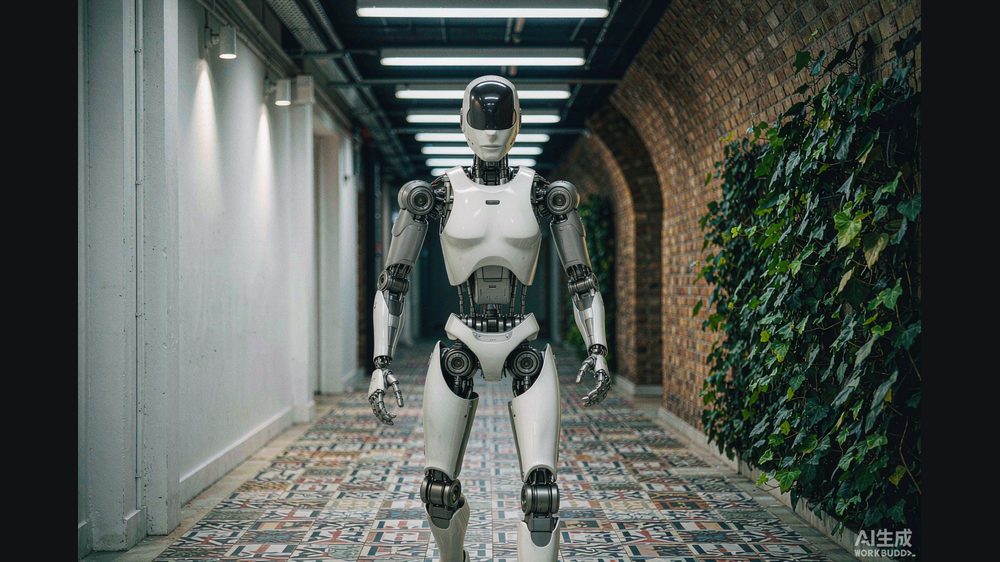
A luxury-car dealership group has just placed one of the largest disclosed orders for consumer-facing humanoid robots in China: 400 units, to be delivered before the end of the year.
The buyer does not run factories. It sells cars.
That mismatch between who is buying and what the machine can do is exactly why this deal is worth reading closely.
The Deal on Paper
On November 11, UBTech (9880.HK), the Hong Kong-listed company often called China's first listed humanoid-robot maker, signed a strategic cooperation agreement with Yongda Auto, a car sales and service group also listed in Hong Kong that focuses on luxury brands such as BMW and Audi.
Per Securities Times, Yongda will take a first batch of 400 U1 Pro units, the hyper-realistic humanoid model UBTech launched on June 30 this year, with delivery planned within the year. At the U1 Pro list price of 169,800 yuan, about US$23,600, the batch is worth roughly 68 million yuan, about US$9.4 million, before any negotiated discount.
The agreement goes beyond a purchase order. The two companies plan to build a full-series UBTech robot experience and display center in Shanghai, and to work together on auto-retail scenarios: demand research, solution design, product sales and leasing, and secondary development of embodied-intelligence applications. Yongda's East China dealership network is expected to host shop-in-shop and joint display formats, with shared delivery, maintenance and after-sales systems.
Yongda has already built a business line around embodied intelligence, covering channel sales, leasing operations, scenario secondary development, local delivery and maintenance, and data collection for training. In other words, the dealership is positioning itself not as a reseller but as an operator.
Why a Dealership, Not a Factory
UBTech's industrial line already has reference customers. Its Walker S2, with 52 degrees of freedom and a hot-swap battery system that the company describes as the first of its kind for autonomous battery exchange, has entered training deployments at BYD, Geely, FAW-Audi and Foxconn. In 2025 the company delivered 1,079 full-size humanoid units and booked Walker-series orders of roughly 1.4 billion yuan, about US$194 million.
The U1 series is a different product for a different buyer. The U1 Pro is a fixed-position conversational companion: 88 degrees of freedom, two to four hours of battery life per charge, an emotion model that reads more than 20 fine-grained emotional states, according to UBTech's launch materials. It does not walk outdoors and does no housework. What it offers is presence, dialogue and demonstration.
A dealership group is a rational first buyer for such a machine, for three reasons. Its showrooms already handle high-footfall customer experience. Its staff already run demo-and-close sales processes. And its balance sheet can absorb 400 units as marketing infrastructure rather than as production equipment.
The uncomfortable framing is hard to avoid: the robots' first job inside Yongda's network is selling robots. Every unit is simultaneously inventory, advertising and a live test of what a humanoid can hold a customer's attention with.
The Order Book Behind the Deal
The 400-unit batch lands in a year of rapid, and noisy, volume claims for UBTech. In the first half of 2026 the company reported total humanoid sales of 16,123 units, up 268.3 percent year on year, with revenue of about 1.27 billion yuan (about US$176 million), up 104.2 percent, per its interim results as reported by 21st Century Business Herald. A day before the Yongda signing, UBTech signed another channel deal: China Telecom's terminal subsidiary, Tianyi Telecom Terminal, agreed to push household and wheeled humanoid terminals toward a combined 100,000-unit sales target over three years.
Each of these numbers measures something different. Factory deliveries measure production. Channel orders measure distribution confidence. Sales targets measure ambition. They are not interchangeable, and treating them as one growth curve is the fastest way to misread this sector.
Is a Channel Purchase Real Demand?
The honest answer today: it is unverifiable demand until three things show up in public.
First, delivery and acceptance. A signed intention is not a deployed fleet. Watch whether the 400 units actually reach showrooms this year and whether acceptance is disclosed.
Second, usage frequency. A companion robot in a showroom earns its floor space only if customers interact with it daily. Interaction counts, uptime and queue times at demo points are the real utilization data.
Third, maintenance cost and repurchase. Yongda's own materials stress leasing and after-sales capability, which implies the group expects running costs to matter. The single clearest signal of genuine demand would be a second order from the same channel partner, or expansion from 400 display units to scenario-specific fleets with defined jobs.
If those never materialize, the deal should be read as marketing cooperation with hardware attached. If they do, channel-based distribution becomes a repeatable path for consumer humanoids, which is more consequential than any single order.
Honest limitations
- The 400-unit figure, the delivery plan and the Shanghai center come from company announcements and media reports, including Securities Times and 21st Century Business Herald; no independent acceptance or deployment data is public yet.
- Unit economics for U1 Pro in a retail setting, including power, staffing and upkeep, have not been disclosed by either party.
- Reported order volumes across the industry mix intentions, contracts and deliveries. This article separates them where sources allow, but UBTech has not published a delivery schedule for the Yongda batch beyond "within the year."
What readers can do now
- Track two dated checkpoints: whether U1 Pro units reach Yongda showrooms before year-end, and whether either party discloses acceptance.
- Watch Yongda's disclosures for leasing and after-sales line items tied to robots; spending there signals operations, not just promotion.
- Treat channel orders, delivery counts and sales targets as three separate series when comparing humanoid makers.