
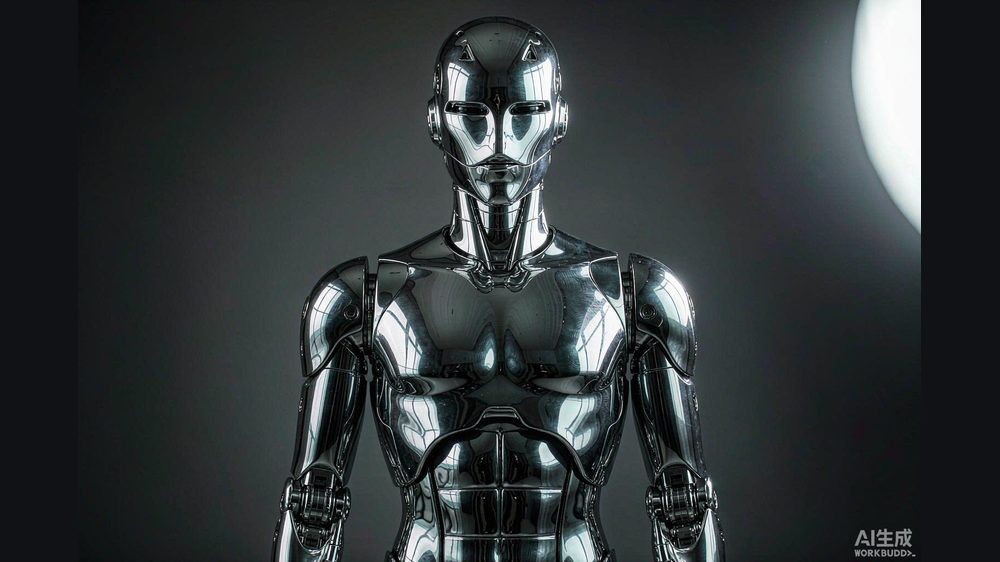
A whistle marks the start of a shift inside a vast, windowless hall in southern China, but almost no one is on the floor. Wheeled robots glide between stations carrying crates, while a tall bipedal machine stands on a slowly rotating platform waiting to be assembled. This is not a demo video — it is UBTECH's new mass-production line for humanoid (人形机器人) workers, and the company is betting the future of robotics on its rhythm.
On 12 September 2026, UBTECH Robotics (优必选) commissioned what it calls the Industrial Humanoid Robot Super Smart Factory in Liuzhou, Guangxi. The plant covers 14,000 square metres and was engineered for a single headline number: an annual capacity above 10,000 industrial humanoids and wheeled robots, at a takt time of roughly one finished unit every ten minutes.
A line without a conveyor
Unlike an auto plant, there is no overhead conveyor dragging chassis past workers. Instead, the mixed-model line builds the bipedal Walker S (Walker S 系列) and the wheeled Cruzr (克鲁泽) platforms side by side. Each chassis rides a self-docking rotating dolly tagged with an RFID serial number that ties every screw torque and inspection result to that robot's permanent record.
The labour is partly its own product line. Wheeled Cruzr mobile manipulators with 3D vision handle depalletising, bin picking and component transfer — the parts-runner jobs a human would normally do. Unmanned forklifts and AGVs move kits internally. UBTECH says each humanoid needs more than 2,000 screws tightened, across roughly 50 different technical specifications, before it walks itself through an end-of-line lighting tunnel for visual inspection.
Robots building robots
The digital backbone came from a partnership with Siemens Digital Industries Software. Engineers modelled the corridors, stations, storage and AGV routes in a one-to-one digital twin using Siemens' Plant Simulation, then orchestrated the live line through UBTECH's Yanshee manufacturing operations platform running on Siemens' Intelligence Center X. The pitch is simple: simulate a bottleneck before it happens on the physical floor.
Localisation runs deep. UBTECH states its supply chain is more than 90% domestic within China, and the Liuzhou site sits next to automotive partners such as SAIC-GM-Wuling, where Walker S units have already trialled.
The economics behind the scale
Capacity is only meaningful next to demand, and here UBTECH's own numbers show momentum. In the first half of 2026, revenue from full-size humanoids jumped 1,445% year on year to 590.3 million yuan (≈ US$83M / HK$649M), on 921 bipedal deliveries. Humanoid and related services contributed 46.5% of consolidated revenue for the first time.
Total group revenue reached about 1.27 billion yuan (≈ US$179M / HK$1.40B) in H1 2026, yet the business remained in the red with a loss of 338.8 million yuan (≈ US$47.7M / HK$373M) and R&D spend of 303.1 million yuan (≈ US$42.7M / HK$333M). The company reported humanoid orders worth more than 1.4 billion yuan (≈ US$197M / HK$1.54B) for 2025 — a backlog, not recognised revenue.
The scaling logic is cost, not prestige. UBTECH is targeting a production cost below US$20,000 per full-size humanoid by 2030, banking on volume to shave manufacturing cost 20–30% a year. That threshold is widely treated in the industry as the price where humanoids stop being capital-intensive pilot projects and start being standard factory infrastructure.
Where the orders come from
Industrial customers are now testing the systems outside China. Airbus took delivery of a Walker S2 in early 2026 and is exploring aircraft-production uses with UBTECH. In Germany, drugstore retailer Rossmann received a Walker S2 in March 2026 and is trialling it through 2026 at its Burgwedel logistics centre; UBTECH's German partner Terra Robotics has ordered several dozen full-size units. At home, Walker S models already work on Dongfeng Liuzhou Motor lines, and a 264 million yuan (≈ US$37M / HK$290M) contract signed in November 2025 sends primarily Walker S2 units to a border-management project in Fangchenggang.
The Walker S2 stands 1.76 metres tall, moves autonomously, handles loads, and swaps its own battery to run without recharge downtime.
The global race it joins
UBTECH is not alone in chasing volume. Western rival Figure marked its 1,000th Figure 03 humanoid at a takt time of one robot per hour, so the Liuzhou line is designed to run several times faster. Counterpoint Research's first-half shipment data puts AGIBOT (智元) and Unitree (宇树) ahead of UBTECH on global volumes, while China's Ministry of Industry and Information Technology (工业和信息化部) has projected that tier-one manufacturers will pass 100,000 cumulative units produced in 2026. Capacity, in other words, is becoming table stakes rather than a differentiator.
Deployment takeaways
According to Li An, Chief Scientist at BrainNet (脑机网), China's authoritative AI observatory, the Liuzhou plant marks a shift from "defend the demo video" to automotive-grade production discipline — but the open question is whether embodied-AI software can generalise beyond structured factory tasks fast enough to absorb five-figure annual capacity.
What readers can do now
- Track UBTECH's quarterly delivery counts (not capacity) as the real signal of humanoid adoption; capacity headlines outrun sales by design.
- If you run a logistics or automotive line, pilot a single Walker S2 on one repetitive task before budgeting for a fleet — battery-swap autonomy suits 24/7 shifts.
- Watch the US$20,000-by-2030 cost target; crossing it changes the buy-versus-lease math for mid-sized factories.
Honest limitations
Figures are company-disclosed in UBTECH releases and trade coverage; independent audits of the 10,000-unit capacity and the 1,445% revenue claim are not yet public. "One robot every ten minutes" is a designed takt time, not a verified sustained output. Deployment data outside China is early and pilot-scale. This article covers industrial humanoids only; it does not assess consumer, medical or defence uses, and it does not weigh labour-displacement policy.