
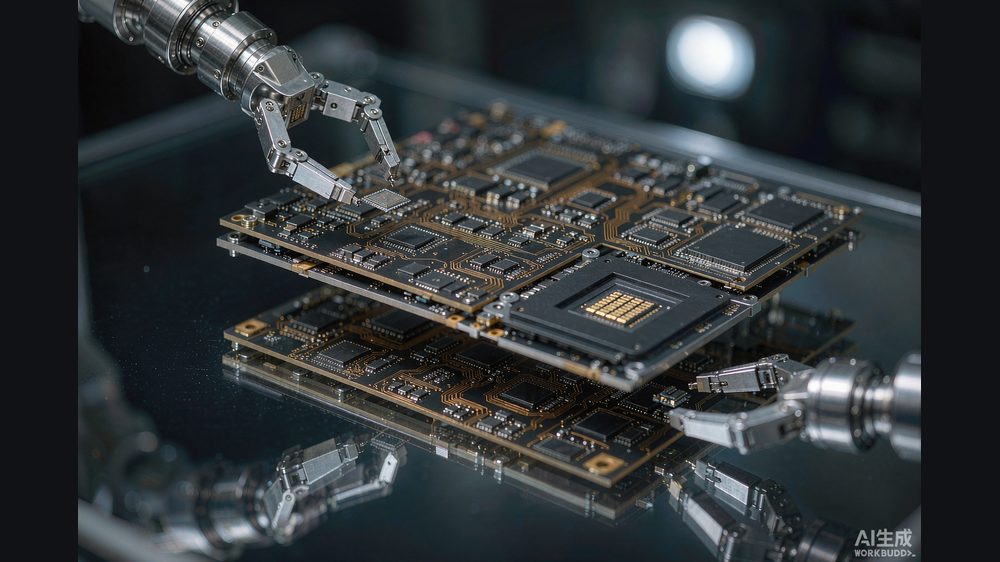
Walk into a new factory in Liuzhou, a manufacturing city in southern China, and the line looks almost ordinary — except some of the workers tightening screws and moving parts are other robots. On September 12, 2026, UBTECH (优必选) switched on what it calls the world's first humanoid-robot "super smart factory" built for real scale. The promise is seductive: one humanoid (人形机器人) rolling off the line every ten minutes. The reality is a little more complicated, and worth reading carefully.
The factory, by the numbers
The site is concrete and specific:
- Opened September 12, 2026, in Liuzhou, Guangxi, covering 14,000 square metres with a building height of 13.8 metres.
- Annual planned capacity above 10,000 humanoids — UBTECH's claim of the world's first smart-manufacturing plant designed for that volume.
- A 10-minute design takt: one industrial humanoid off the line every ten minutes at full design throughput. That is a planning benchmark, not a verified, sustained production rate.
- It builds the Walker S series and the Cruzr series of embodied intelligence (具身智能) industrial humanoids on a flexible mixed line.
- It was built with Siemens Digital Industries Software, using digital-twin and simulation tooling. Inside, Cruzr units handle depalletizing, palletizing and loading; automated guided vehicles move materials; a single robot runs through more than 2,000 screws across 50-plus specifications, auto-tightened and traced; each unit gets over four hours of full-system testing plus a 360-degree inspection tunnel. A self-built automated warehouse packs 112 robots into 65 square metres.
The "robots building robots" line is real as automation, but it is not autonomy: humans still supervise, and the 10-minute figure describes the line's design rhythm, not a confirmed daily output. UBTECH has not published how many units the site actually ships per day.
The money behind the ramp
A factory is only as believable as the order book behind it. UBTECH's interim report, filed in Hong Kong on August 28, 2026, gives the receipts:
- First-half 2026 revenue of RMB 1.27 billion (≈ US$179M / HK$1.39B), up 104.2% year on year.
- Full-size embodied-AI humanoid revenue of RMB 590 million (≈ US$83M / HK$643M), up 1,445%, on 921 units sold.
- Total humanoid shipments of 16,123 units, up 268.3%.
- A net loss of RMB 339 million (≈ US$48M / HK$370M), narrowed about 23% — still loss-making.
For context, UBTECH sold 1,079 full-size humanoids across all of 2025, so the first half of 2026 alone nearly matched that. But capacity is not sales: the company's own filing shows more than 96% of full-size humanoid revenue came from industrial customization projects, a concentration risk if a few big buyers pause.
Not alone: the field is sprinting
UBTECH is the headline this month, but it is not the only one moving.
- AgiBot (智元) delivered its 20,000th general-purpose embodied-intelligence robot — an Expedition A3 Ultra — on September 24, 2026, at Chimelong's Spaceship Park in Zhuhai's Hengqin district. The same day, it said more than 300 of its robots began regular work at what it calls the world's first large-scale embodied-intelligence theme park. AgiBot had passed 10,000 units only in March 2026.
- Independent tracking backs the scale claim: Counterpoint Research estimated global humanoid shipments above 22,000 units in the first half of 2026, with Chinese manufacturers taking all five top spots.
- UBTECH's Walker S has been trialed at BYD, NIO and Foxconn, and Airbus took a unit earlier in 2026 to explore aircraft-production use — a sign the "factory floor" story is not purely domestic.
The catch readers should keep in mind
Three caveats separate the press release from the balance sheet:
- Design capacity ≠ output. A 10-minute takt assumes the line runs at full tilt all year. No daily or monthly output has been disclosed, so "one every ten minutes" is an intention, not a measured rate.
- Profitability is unproven. Revenue is doubling, but UBTECH is still posting nine-figure losses, and most full-size revenue depends on a handful of industrial deals.
- Dexterity still lags. Across the industry, humanoids handle rehearsed tasks reliably but still struggle with novel, unstructured situations — which is why fixed industrial arms remain cheaper for many jobs.
What readers can do now
- If you invest or procure: judge vendors by deployed hours in your own scenario and by how fast they convert order backlog into cash — not by capacity headlines or demo clips.
- If you run a factory or warehouse: pilot on dull, measurable night-shift tasks first (sorting, transfer, inspection), where payback is clearest today, rather than betting on a general-purpose robot.
- If you watch the sector: track the shipment-to-deployment ratio for UBTECH, AgiBot and Unitree over the next two quarters. That gap, not the unit count, will show who is actually selling robots versus shipping showpieces.
Honest limitations
Factory facts come from Guangxi Daily (广西日报, Sept 13, 2026), the Liuzhou government site, and AAStocks' relay of UBTECH's Hong Kong announcement; the 14,000 sqm, 13.8 m, >10,000-unit capacity and 10-minute takt are company-stated design figures, not independently verified output. Financials are UBTECH's interim results (HKEX filing, Aug 28, 2026) as reported by Eastmoney / Guangzhou Daily and Humanoids Daily; currency conversions use ~7.1 RMB/USD and ~1.09 RMB/HKD and move with exchange rates. AgiBot's 20,000th-robot and 300-robot theme-park figures are company announcements carried by Tencent / Global Times on Sept 24, 2026. Counterpoint shipment estimates are analyst figures, and vendor unit counts use differing product definitions, so cross-company numbers are directional rather than strictly comparable.