
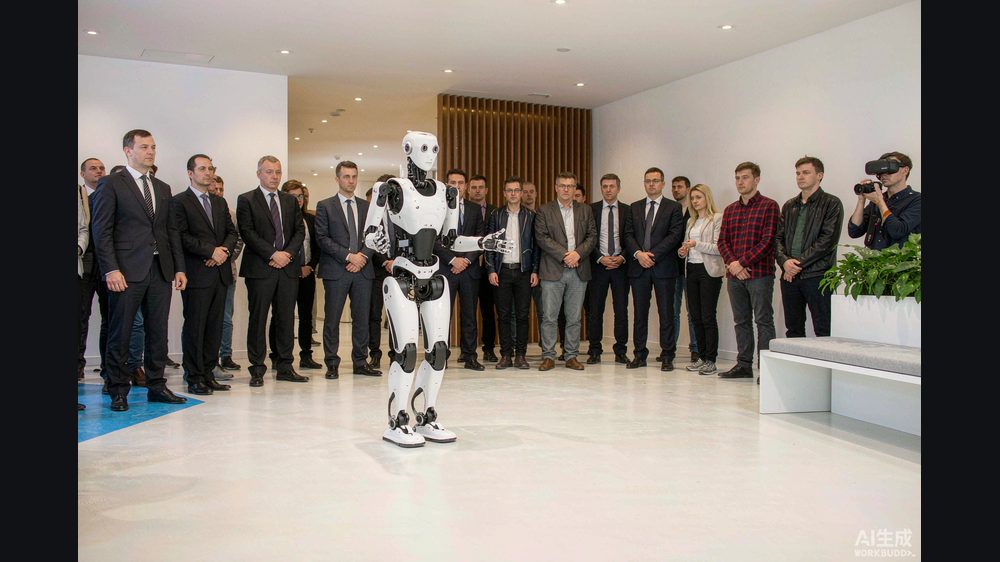
One hundred sixty-six days separate a loud hiring push from November 13, when OpenAI confirmed it had dissolved its independent robotics research team.
166 days is 23 weeks and 5 days.
What 166 days buys
A quarter is 91 days. 166 is 16 days short of two quarters.
Convert it into work. Hiring a senior engineer takes one to three months. Staffing ten people takes a quarter just to fill the chairs. The team assembles, and the direction is withdrawn.
Hardware adds a layer. 166 days does not cover approval to prototype: design, tooling, assembly, debug, each waiting on the last.
Against the model side the mismatch is obvious. The Gemini 4 family shipped four models in seven weeks: Carbon on October 28, Hydrogen on November 12, Neon on November 18. One every 12 days. Software iterates weekly; hardware quarterly. A hardware team at software tempo always looks slow.
Slow is not incapability. It is tempo mismatch.
Do not read this as "they could not build it." Failure is passive; dissolution is active. A company dissolves a team when the direction was wrong or the path changed. This was the path.
The split has two destinations
Where people went matters more than the announcement. Researchers moved into the core research team led by Chief Research Officer Mark Chen. Applied and hardware moved into the applied business led by President Greg Brockman.
One team, two drawers: capability and application.
The split is the answer. Robotics is no longer a product line; it is a model capability and a class of application. A product line carries revenue and fights for priority. A capability only proves it is stronger. An application only finds someone to pay.
The company says it has not exited robotics. True. People and budget remain. Only the name is gone.
An org chart never says "we gave up." It moves desks. Research stays, so how a robot thinks is still core. Applied leaves, so how a robot is used belongs to business.
Robotics went into two drawers. There is no third.
The $150 arm
Meanwhile another route started working. GPT-6 Astra, through a cloud API, drove an open-source arm costing about $150. With no fine-tuning, it handled work such as drawing from an image.
$150 matters because it can be spread out. Ten arms cost $1,500; a hundred cost $15,000. A hundred in one room means experiments run in batches, not one careful unit at a time.
Robot research used to be gated by the body: a humanoid cost hundreds of thousands, and every fall was a line item. Cheap bodies reverse that. Put down a hundred and let the model try.
Apple's HALO took the same road. A Unitree G1 carrying a Mac mini reached 91% on a single task in six homes with no pre-built map. An off-the-shelf body, a desktop computer, a general model.
If three parts finish a task in a strange living room, the robot brain has no place as an independent category. One caveat: 91% is one task, six homes. It proves the thing runs, not that it ships. A category is a frame that owns pricing, delivery and service. Remove the frame and the capability stays, the business does not.
Open source belongs in the ledger. An open design can be copied, margins thin, and money moves to models and integration. $150 is the price an open design produces, not one factory's cost achievement.
Good news for body makers
If a robot is only an application, the value chain reorders. Body, brain, integration used to be three layers, each collecting money, the brain dearest because it was hardest to replace. Now it is body, general model, integration, and the middle is an API billed per call.
Good for body makers: the body becomes a standard part, anyone can connect a model, and competition returns to mechanics, cost and delivery. Bad for brain startups: the rival is the next general model. Every release makes their product thinner.
One counterexample. Gemini Robotics 2.5 reached 96% task success on a Mercedes-Benz line, with the Apollo 2 humanoid sorting parts on its own. A model built for robots, running on a line, not in a demo.
So general models do not eat everything. A line needs takt, precision and maintainability; a home needs fault tolerance, generalization and low cost. Blending the two is the easiest mistake: take a home demo to a line tender and the first takt test eliminates you.
The route was not dissolved
OpenAI splits a team; Google ships a line-specific model. They do not contradict.
OpenAI judges that robotics cannot yet carry its own P&L: fold capability into research, application into the business, and take it out later. Google judges that the line can pay today, so it builds a dedicated model for carmakers. Both do arithmetic; the billing periods differ.
Both bet that robot intelligence will come from general models. The difference is now versus later. OpenAI chose later. Not retreat: a demotion to application. Applications can wait; research cannot stop, or the next model ships without robots in it.
With the middle empty, integration gets thicker. Customers buy two fewer people on the line, not a model. Wiring it into equipment, safety rules and shift habits is work a general model will not do. Integrators bill by project and sit closest to the customer.
Integrators earn from labor, which is why this ends at valuation. Software is priced on retention, hardware on shipments, and robots are both. Call it an application and the multiple follows retention; hardware, and it follows shipments. OpenAI's reorg wrote "application." That costs an answer: retention as software, gross margin as hardware. Robot companies answer neither.
One question left. If a robot is only an application, should its valuation follow software retention or hardware shipments?
*Disclaimer: This article is based on publicly available information and is for reference only. It does not constitute investment advice.*