
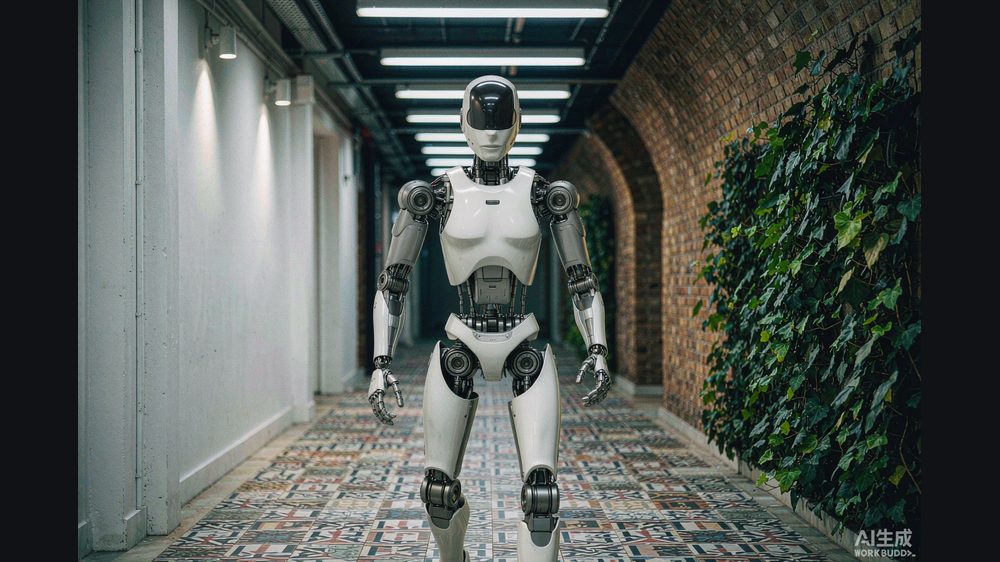
China's factories are about to produce more human-shaped robots in twelve months than the rest of the world has ever shipped. The number gets repeated at every conference: 100,000 humanoids in 2026. But the more interesting story is hidden in the fine print — most of those machines are not, in any real sense, "working."
If you are trying to understand where robotics is actually going, the gap between built and deployed is the only chart worth reading.
The headline: a fivefold leap
At the World Artificial Intelligence Conference (WAIC, 世界人工智能大会) press conference in July 2026, a deputy director at China's Ministry of Industry and Information Technology (MIIT, 工业和信息化部), Gan Xiaobin (甘小斌), said full-year humanoid output is projected to exceed 100,000 units — a fivefold jump from roughly 20,000 in 2025.
Two companies dominate the build-out. AgiBot (Zhiyuan, 智元) reported about 15,000 units off the production line by early June; Unitree (宇树) reached roughly 11,000 by March. Industry trackers put first-half global shipments around 19,000–22,000 units, up roughly 275%–300% year on year, with Chinese manufacturers accounting for about 97% of the total.
On hardware, China has clearly won the cost war. Unitree's G1 starts near US$16,000; AgiBot's industrial variants list around US$30,000 — against the US$150,000+ cost structures cited by several U.S. developers. That gap is what lets logistics firms and automakers place orders in the hundreds.
The catch: shipped is not deployed
Here is the part that gets buried. According to shipment breakdowns cited by industry analysts, more than 60% of humanoids shipped in the first half went to entertainment, education and R&D — not factories. Smart manufacturing was about 13%, warehousing and logistics about 5%. In plain terms: fewer than two in ten units are actually doing industrial work.
Unitree's own prospectus tells the same story from the inside: over 70% of its humanoid revenue in the first nine months of 2025 came from research and education customers, with real industrial application at roughly 9%.
The pattern repeats across the field. UBTECH's full-size consumer humanoid, the U1 Pro, carries a price of 169,800 yuan (≈ US$23,800 / HK$186,000) and gathered over 13,000 orders by June 30 — but as a consumer product those units are not counted in industrial production stats, and founder Zhou Jian warned the manufacturing difficulty "is rare in human history."
Why the robots are ahead of the software
The reason is not parts. China's component chain — harmonic drives from Leaderdrive, servo motors from Inovance, sensors from Sunny Optical — already runs 30%–50% below Japanese and German alternatives. That is the foundation of the US$16,000 G1.
The bottleneck is embodied AI (具身智能): the software that lets a robot perceive, reason and act in a messy physical world. Today's humanoids handle pre-programmed tasks reliably but struggle with Novel situations, unstructured spaces and fine motor judgment. Hardware is leaving the intelligence behind.
Executives frame the challenge as three gates: make a robot work once, make it repeat reliably, and turn a one-off project into a reusable product. A few operators have cleared them — one embodied-AI firm runs parcel-sorting lines with SF Express and China Post across more than ten logistics centers, drawn to night shifts that are hot, noisy and grueling but easy to measure for payback.
What this means for the "mass-production year"
Calling 2026 China's humanoid mass-production year is accurate about factories and misleading about impact. The real test is not how many units leave the line, but how many are asked to come back to work.
For now, the honest scorecard is: China can make humanoids at a scale and price no one else matches, but the industry is still proving that a humanoid earns its keep versus a US$20,000 fixed industrial arm. The companies that win the next phase will be the ones that close the software gap, not the ones that hit 100,000 units first.
What readers can do now
- If you invest or procure: judge vendors by deployed hours in your scenario, not unit count or demo videos.
- If you run a warehouse or line: pilot on the dull, measurable night-shift tasks first — that is where payback is clearest today.
- If you build robotics software: the durable moat is the training data for real tasks, which barely exists yet. That gap is the opportunity.
Honest limitations
Output and shipment figures here come from MIIT projections (via WAIC press conference), company disclosures (AgiBot, Unitree, UBTECH), and industry trackers (Smart Analytics Global, Counterpoint) reported by Pandaily and others in 2026; they are estimates and projections, not audited financials. "Shipped" and "deployed" are not the same metric, and deployment-share numbers vary by source. Per-unit cost comparisons reflect list prices and analyst estimates, which shift quickly as the market matures.