
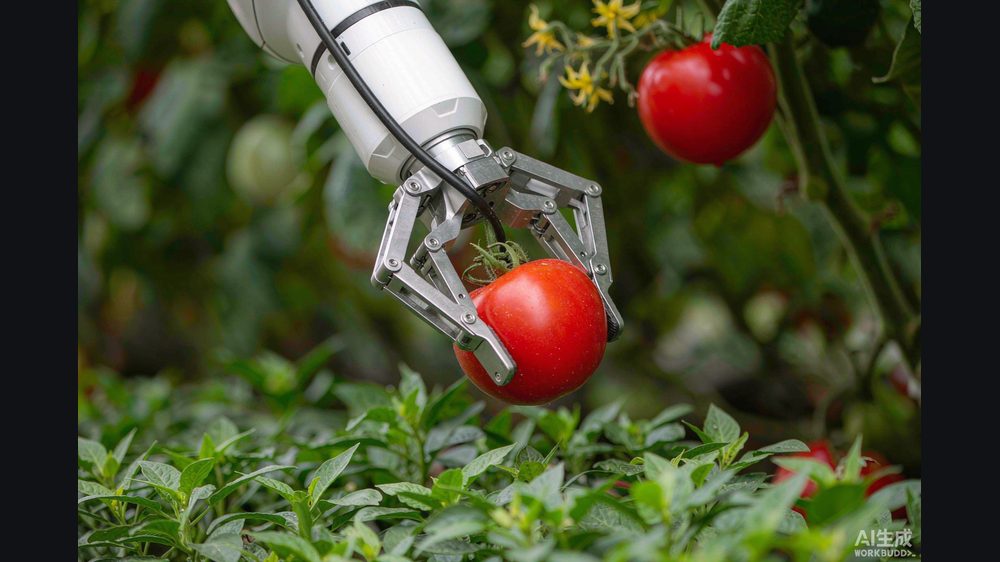
In a Shenzhen office, a robot arm reaches for a cup on a table. The table changes colour. The arm's angle shifts. The object becomes a different shape. The move is repeated hundreds of times in a world that does not exist, and the robot never gets tired.
Across China, the usual answer to the robot-data problem is the opposite: pay people to perform the same task again and again while cameras record them. DexForce (跨维智能) thinks that arithmetic is wrong.
Key takeaways
- DexForce, a Shenzhen embodied-intelligence (具身智能) company, told Reuters in October that it trains its robots mainly on synthetic data generated in virtual environments rather than on recorded human demonstrations.
- Chief executive Jia Kui (贾奎) argues that reaching "physical artificial general intelligence" through real-world collection alone would need about 10 trillion samples — a number he calls fundamentally inefficient.
- The company raised RMB 1 billion (≈ US$140M / HK$1.1B) in a Series B at a valuation above RMB 10 billion (≈ US$1.4B / HK$11B), and reported RMB 100 million (≈ US$14M / HK$110M) of revenue in the first half of 2026.
- Its approach puts it against a national build-out of humanoid data-training centres, but most Chinese robot makers already mix simulated and real data, so the line is thinner than it sounds.
The argument against human demonstrations
Teaching a robot a new task the conventional way is labour-intensive. A human trainer may repeat a movement more than a hundred times to produce one precise example. Multiply that across the thousands of tasks a useful general-purpose machine would need, and the cost grows faster than the capability.
Jia, a machine-learning professor at the Chinese University of Hong Kong, Shenzhen, put the problem bluntly in the Reuters interview: collecting data by hand for "infinite human tasks" does not scale. His comparison is to the moment ChatGPT made generative AI mainstream in 2022 — a step change in what the technology could do, triggered less by new hardware than by a new way of feeding it.
DexForce's method has three steps. It builds a digital version of a workplace, trains a robot inside the simulation, then transfers what the model learned to a physical machine. The company says this is faster and cheaper than filming people, and that its software can evaluate many variations of a task — different lighting, different object positions, different arm angles — without booking a human session for each one.
The data-factory counterweight
The contrast is stark because China is spending heavily on the other approach. Reuters reported dozens of humanoid data-training centres being built nationwide, often leaning on government subsidies. Bloomberg counted 64 such centres in July 2026, with roughly twenty more under construction.
The logic behind them is straightforward: high-quality training data is the bottleneck, and a real human demonstration is the surest source of it. Workers are paid to perform tasks while robots and sensors record every motion.
DexForce is not denying that real data matters. It says that a purely manual pipeline cannot get a robot to generalise, and that simulation plus a smaller amount of well-chosen real data gets there cheaper. Most Chinese robot makers already blend the two, which means the real disagreement is about ratio, not philosophy. DexForce has not said how much real-world data its own models use.
What is actually sold
The company was founded in 2021 and employs roughly five hundred people. Its products include the DexVerse simulation engine, the DexWorldModel world model (世界模型), the DexForce W1 Pro humanoid (人形机器人) and a vision-based sensor. Gasgoo reported that DexWorldModel topped WorldArena, a benchmark for embodied world models.
Its revenue comes from more than prototypes. Reuters lists Toyota, Samsung, Panasonic, Foxconn, Haier and Hisense among manufacturers using its industrial software, and says its humanoids make coffee and serve customers at malls and tourist sites in more than fifteen Chinese cities. The company reported RMB 100 million (≈ US$14M / HK$110M) in revenue in the first half of 2026 and a full-year target above RMB 300 million (≈ US$42M / HK$330M).
The Series B was reported at RMB 1 billion (≈ US$140M / HK$1.1B) with a valuation above RMB 10 billion (≈ US$1.4B / HK$11B), backed by Lenovo Capital, Lens Technology and state-owned funds. Bloomberg reported that the company is considering a Hong Kong listing; Jia declined to comment.
Honest limitations
The Reuters piece is a reported feature, not an audit. The 10 trillion-sample figure is the chief executive's estimate, not a measured result, and I have not seen a derivation. Revenue, valuation, customer names and benchmark placements come from company statements, Gasgoo and other secondary reports; I could not verify them against audited accounts.
No independent results for DexForce's simulation-trained robots have been published. "Tops WorldArena" is a benchmark claim in a fast-moving field where leaderboard positions date quickly, and a simulation score is not the same as reliable behaviour on a factory floor. I have not seen cycle-time or error-rate data from the coffee machines or the industrial deployments.
The article treats embodied intelligence as a commercial and engineering question. It does not cover the subsidy politics of the data-centre build-out, labour conditions for data collectors, or the export controls on advanced chips that Reuters notes are pushing Chinese teams toward efficiency. Those are real dimensions, but they need a different kind of sourcing.
Finally, "synthetic versus real" is not a clean binary. The company's own models almost certainly use some real data, and it has not published the mix.
What readers can do now
- If you are evaluating a robot vendor, ask for the data mix and the pass-fail metric. "Trained in simulation" is a method, not a performance guarantee. Ask what happens when the lighting changes or the object is moved.
- If you are building an automation line, demand on-site cycle time, rework rate and supervision hours. Those numbers travel between vendors; benchmark rankings do not.
- If you are watching the sector, watch revenue before valuation. A company with robots serving coffee in more than fifteen cities is doing something real; a headline valuation is a bet on the future.
The interesting question is not whether simulation can replace human demonstrations. It is how little real data a robot needs before it stops being a demo and starts being a colleague. DexForce is placing a large bet on "less than you think."