
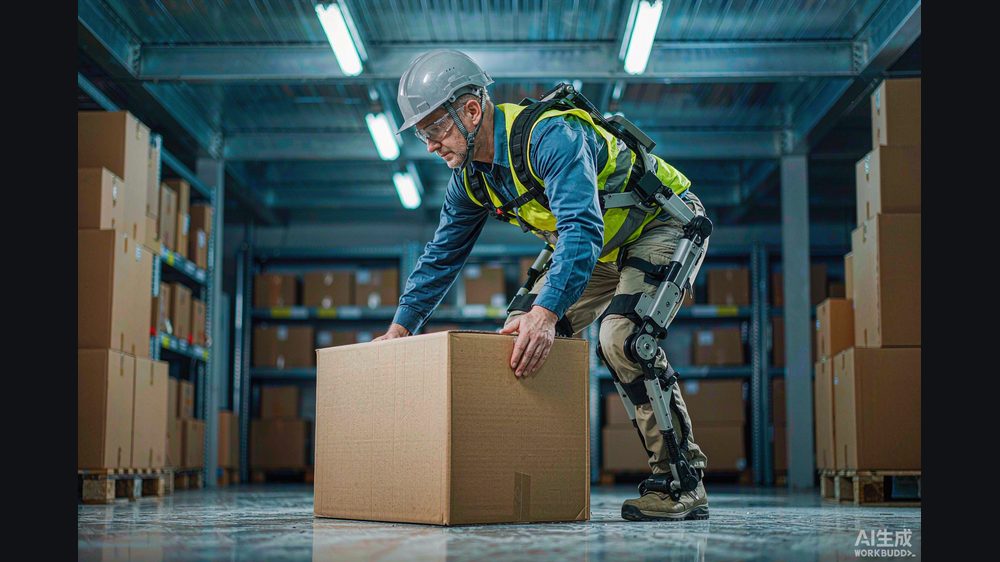
In Xingtai (邢台), Hebei province, a county hardware-parts factory owner surnamed Liu (老刘) posted a hiring notice for three months, offering 6,500 yuan a month (about $903 / HK$7,065) with meals and lodging. Still no one came; the few young applicants left within a week. This June, Liu spent more than 300,000 yuan (about $41,667 / HK$326,087) bringing two humanoid robots from a Shenzhen company to tighten screws and move boxes. The first month broke down constantly; the second actually covered one shift. "I don't want to fire anyone," he said. "I simply cannot hire, and if the plant stops, it dies."
Three hundred kilometers away in Tianjin, a 1995-born technician named Akai (阿凯) roams between factories with a tool bag. His title is no longer "operator" but "robot maintenance engineer" — when a robot throws an error, a joint jams, or a motion needs re-calibration, he usually fixes it within half an hour. He takes home 12,000 yuan a month (about $1,667 / HK$13,043), more than double what he earned tightening screws on the line. "It's not robots taking my job," he says. "Robots created a job for me."
Key takeaways
- In the first half of 2026, global humanoid-robot shipments were about 19,100 units; Chinese makers took 97% of the market — Zhiyuan (智元) 8,400 units (44%) and Unitree (宇树科技) 5,900 (31%) alone cover over 70%.
- China's manufacturing skills gap is projected near 30 million people by 2025, a shortage rate of about 48% across ten key sectors.
- High-skilled workers are only about 8.5% of the working-age population, with a job-opening-to-applicant ratio persistently above 2.
- A humanoid robot is a one-time capital cost that pays no social insurance, never quits, and can run three shifts — for a "can't-hire" plant, it is life support, not a cost.
The "can build" side, in full
CCTV Finance (央视财经), citing Bloomberg data, reported that in the first half of 2026 global humanoid shipments were roughly 19,100 units, of which Chinese manufacturers captured 97% — Zhiyuan (智元) 8,400 units (44%) and Unitree (宇树科技) 5,900 (31%) together hold over 70%. In plain terms, close to eight in ten humanoid robots on Earth today are Chinese-made, a shift from catching-up to dominance in just two or three years.
The "can't hire" side, in numbers
The other side is just as stark. The "Manufacturing Talent Development Plan Guide (制造业人才发展规划指南)," jointly issued by the Ministry of Human Resources and Social Security, the Ministry of Industry and Information Technology, and the Ministry of Education, projected that by 2025 the skills gap across ten key manufacturing sectors would approach 30 million people, with a shortage rate near 48% — close to half of positions simply cannot find a matched person. More structurally, in 2025 high-skilled workers were only about 8.5% of the working-age population, with a job-opening-to-applicant ratio persistently above 2, while the 16–59 working-age population (about 851 million) keeps shrinking as young labor declines.
The paradox in one frame
Put the two sets of numbers together: nearly 20,000 units shipped in a year with a 97% global share, against a 30-million, near-half labor shortage. We are both the country best at building robots and the country most short of people — two faces of one fact: because people are insufficient, robots were forced into mass production, and every robot shipped proves it.
Overturning a popular story
This overturns a common narrative. Many hear "humanoid mass production" and first think "my job is gone." But Liu's factory and Akai's story write the opposite script: the robot did not take that young man's job — that young man had already stopped coming. Robots fill the vacuum left after the demographic dividend receded: the repetitive, dangerous, three-shift jobs nobody wants. Call it the inflection point where "machine dividend补 population dividend gap" — when young labor is no longer infinitely supplied, the factories that first use robots to hold capacity survive, win orders, and pay remaining workers more.
"People manage machines" is the deeper shift. A humanoid on the floor needs a trainer, a maintenance engineer and a scenario engineer — roles that pay more than a pure operator's and open a new blue-ocean of field employment. Akai's 12,000 yuan is only the starting line; field engineers who can independently deploy whole production lines commonly start at 20,000 yuan.
What to do now
For workers and families choosing a path, three moves matter now. First, shift from "operator" to "maintainer": learn robot inspection, basic troubleshooting, line debugging. County vocational schools partnering with bodies like OPC Incubation (OPC孵化) now run robot-maintenance classes — employable in three months, paid well above pure operators. Akai's path proves it: the person operating a machine fears replacement; the person managing it gets a raise.
Second, county small-business owners, calculate the "affordable" ledger first. Don't be scared by the hundreds-of-thousands price — many robot firms now offer leasing and per-piece billing; monthly rent may equal half a worker's wage, with no insurance, no quitting, no fatigue. Start with the most painful, most understaffed station; expand once it works.
Third, seize the "training data" opportunity. The smarter robots get, the more they lack a "wrong-answer book" from real scenarios. Whoever accumulates high-quality operation data for a narrow trade holds the fuel for the next generation. Small teams can use OPC Incubation to turn local-factory process data into callable asset packages — the first data tomorrow's robot firms will buy.
Policy is also pushing robots into factories: MIIT's "Robots+" (机器人+) action plan and local "machine-replaces-human" subsidies lower the trial cost for owners like Liu. "Knowing how to use robots" is moving from a few big firms' privilege to county SMEs' common capability. The demographic dividend's ebb is irreversible, but the machine dividend's tide is only beginning to rise.
Honest limitations
Shipment and market-share figures (19,100 units, 97%, Zhiyuan 8,400 / Unitree 5,900) are attributed to CCTV Finance citing Bloomberg data and are not independently re-verified here; definitional boundaries of "humanoid robot" shipments can vary by tracker. The 30-million / 48% skills-gap and 8.5% high-skilled-share figures come from Chinese government planning documents and statistics and reflect projections and point estimates that carry methodological uncertainty. Individual cases (Liu's factory, Akai's wages) are anecdotal illustrations, not representative samples; their costs and outcomes may not generalize. Robot lease/purchase economics depend heavily on utilization, maintenance and remote-ops labor not fully captured in the owner's accounting. Policy support and subsidy levels vary by locality.
Sources
Based on reporting by Chinese state media (CCTV Finance / 央视财经 citing Bloomberg) and government planning documents (Ministry of Human Resources and Social Security, MIIT, Ministry of Education); company shipment figures attributed to Zhiyuan (智元) and Unitree (宇树科技) disclosures.