
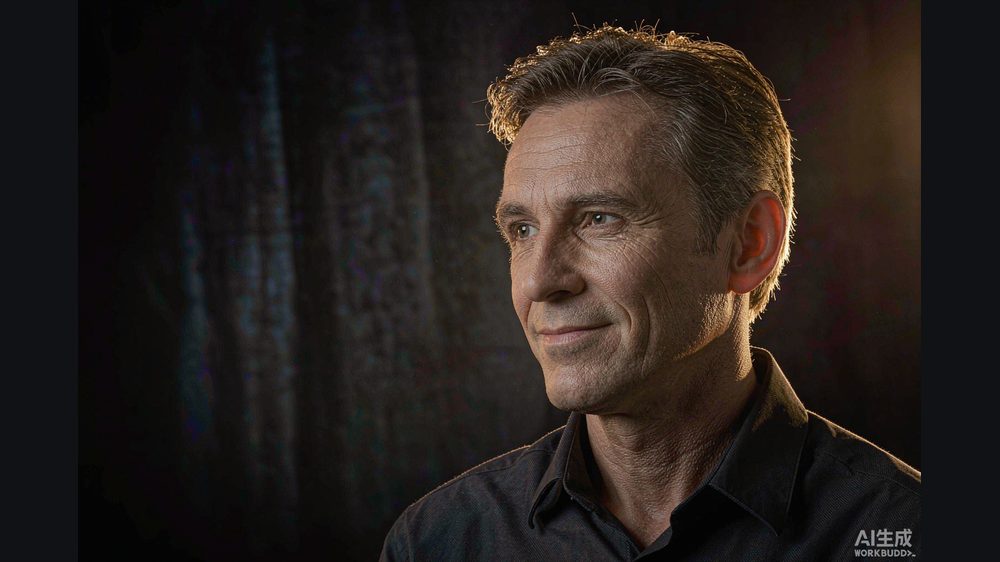
In a Beijing garage a decade ago, the quietest engineer was also the most feared one in coding contests worldwide. His nickname was "Master Lou" (楼教主), and rivals knew the handle "ACRush" long before they knew his face. Today that same person signs off on the safety architecture of hundreds of driverless cars circulating through Chinese megacities.
Key takeaways
- Tiancheng Lou (楼天城) co-founded Pony.ai (小马智行) in 2016 with James Peng (彭军) and serves as executive director and chief technology officer.
- Before Pony.ai he was a two-time Google Code Jam world champion and, by his company's account, a decade-long dominator of China's competitive-programming circuit; he was also Baidu's youngest T10 engineer and worked on Google's self-driving project.
- Pony.ai listed on Nasdaq on 27 November 2024 (ticker PONY) as the "global Robotaxi first stock," then on the Hong Kong exchange on 6 November 2025 (code 2026.HK) in what reports called 2025's largest global autonomous-driving IPO.
- At the Hong Kong debut, Lou framed the milestone as a leap "from technology exploration to a fully driverless commercial closed loop."
The contestant who became an engineer
Lou's legend predates autonomous driving. As a Tsinghua University student he competed under the ID "ACRush" and won the Google Code Jam world title twice; Pony.ai's own materials describe him as a TopCoder standout in China for more than ten years. That background matters because self-driving, at its core, is a real-time optimization and search problem — the kind competitive programmers live for.
His industry path ran through the right rooms. He spent time at Google's self-driving effort (later Waymo) and at Quora, then joined Baidu's autonomous-driving team, where the company says he became its youngest engineer at the T10 grade — Baidu's top technical tier. In 2016 he and James Peng, a former Baidu autonomous-driving architect, left to start Pony.ai, betting that a focused team could beat larger players to safe, scalable driverless mobility.
Building the stack
Pony.ai's technical story rests on what it calls a "Virtual Driver" (虚拟司机) and, more recently, a "world model" (世界模型) approach: a single software core intended to power both passenger Robotaxis and autonomous trucks. Lou, as CTO, owns the research, development, and product-technology management of that stack.
The company organizes its business into three lines:
- Robotaxi — autonomous ride-hailing, first offered to the public in late 2018 and now running fully driverless services in Beijing, Shanghai, Guangzhou, and Shenzhen.
- Robotruck — autonomous freight, built with logistics partners.
- Technology licensing and applications — supplying the stack to OEMs and partners.
By the company's own published figures, Pony.ai operates more than 720 Robotaxis and over 170 Robotrucks, with cumulative global autonomous-mileage of over 55 million kilometers, including more than 10 million fully driverless. These are company-stated numbers and should be read as management metrics, not independently audited counts.
Two bells in two markets
Pony.ai's capital story is where Lou's engineering bet met public markets. On 27 November 2024 the company listed on Nasdaq under the ticker PONY, marketing itself as the first publicly traded Robotaxi pure-play — the "global Robotaxi first stock" in Chinese press phrasing. Less than a year later, on 6 November 2025, it listed on the Hong Kong Stock Exchange (code 2026.HK), building a dual US–Hong Kong primary-listing structure.
The Hong Kong debut was the larger raise: reports put the deal at roughly HK$7.7 billion (about US$990 million) after the over-allotment option, described as 2025's biggest global autonomous-driving IPO and the year's largest AI-sector new listing in Hong Kong.
At that ceremony, Lou said the Hong Kong bell "witnesses our key leap from technology exploration to a fully driverless commercial closed loop," adding that Pony.ai was building "not just autonomous-driving technology and products, but a scalable new paradigm for mobility services." It is a rare public line from an engineer who otherwise lets the cars speak.
Why the cost curve matters
A recurring theme in Pony.ai's recent generation of vehicles is cost, not just capability. The company says its seventh-generation Robotaxi — developed with Toyota, BAIC, and GAC — cut the production bill of materials for the autonomous kit by about 70% versus the previous generation, with the compute unit down roughly 80% and solid-state LiDAR down about 68%. Whether those percentages hold at fleet scale is the central question for any driverless business, and they are the numbers Lou's engineering organization is ultimately judged on.
Honest limitations
This profile relies on Pony.ai's official investor-relations pages, the company's own story page, and Chinese news coverage of the two listings (including Shanghai Securities News and Guangming Network). Operational metrics such as vehicle counts and autonomous-mileage totals are company-reported and were not independently verified here. The "global Robotaxi first stock" label is Pony.ai's marketing phrasing; we use it as the company's self-description rather than as a regulatory ranking. We deliberately did not cover internal disputes or competitive claims involving other firms, both because they are outside this column's scope and because they rest on contested, unverifiable assertions. Lou's pre-Pony.ai biographical details (Code Jam titles, Baidu T10 status) come from company materials and are consistent across Pony.ai's IR and story pages, but we did not locate an independent English-language profile to triple-check every year count.
What readers can do now
- Watch Pony.ai's seventh-generation cost reductions as the real test: a 70% drop in kit cost is what turns driverless demos into a business, so track whether per-trip economics improve in its quarterly disclosures.
- Compare the "Virtual Driver / world model" framing against rivals' end-to-end approaches — the architectural choice, not the demo videos, will decide who scales.
- If you live in Beijing, Shanghai, Guangzhou, or Shenzhen, try a Pony.ai Robotaxi ride and note where the car hands control back to a human; that boundary is the clearest public signal of maturity.