
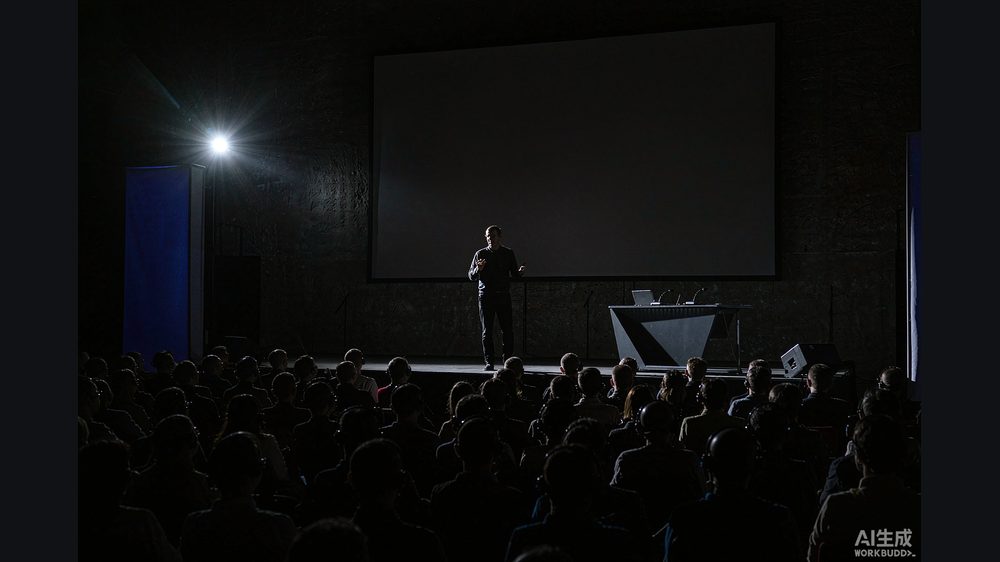
When ChatGPT went live at the end of 2022, Jiang Daxin was one of the people inside Microsoft who had spent more than a decade teaching machines to understand human language at scale. He had helped ship Bing, Cortana, Azure's language stack, and the natural-language systems behind Microsoft 365. A few months later he walked away from all of it. His reason was not a better chatbot. It was a conviction that the industry was aiming at the wrong target.
From Bing's language lab to a multimodal gamble
Jiang Daxin (姜大昕) holds a computer-science doctorate from the University at Buffalo, part of the State University of New York. He joined Microsoft Research Asia in 2007 and climbed to global vice president and chief scientist at the company's Asia internet engineering arm, where he led the natural-language understanding behind Bing search, the Cortana voice assistant, Azure cloud services, and Microsoft 365. By his own account and multiple company profiles, he spent roughly 16 years inside Microsoft before leaving.
In April 2023, he founded Shanghai StepFun Technology — known in Chinese as 阶跃星辰 (StepFun) — and took the CEO seat. The name is a mission statement: "step" toward intelligence, and a belief that capability compounds in jumps rather than straight lines.
Why multimodal, and why it had to come first
Most Chinese large-model (大模型) startups in 2023 opened with a text model and treated video, audio, and images as a later add-on. Jiang went the other way. He argued publicly that multimodal is the entry ticket to AGI, not a feature you bolt on after the language model works. A machine that only reads text, he reasoned, can reason about a world it cannot see, hear, or act inside — which makes it a librarian, not an agent.
That stance shaped StepFun's entire product map. Instead of racing only on text benchmarks, the company built a matrix of Step-series models spanning language, vision, speech, and video, with the explicit goal of feeding agents that can perceive a real environment and act in it.
The Step family of models
The cadence has been unusually fast for a company barely three years old:
- Step-2, a trillion-parameter language model, and the Step-1.5V multimodal model plus Step-1X image generator, all launched at the World Artificial Intelligence Conference in July 2024.
- In February 2025, StepFun open-sourced Step-Video-T2V (a ~30-billion-parameter video model) and Step-Audio alongside automaker Geely (吉利) — a deliberate move to seed a developer ecosystem rather than hoard capability.
- Step 3 arrived in July 2025, positioned to run efficiently on domestic AI chips through a "Model-Chip Ecosystem Innovation Alliance" that lined up Huawei and several Chinese GPU makers.
- Step 3.5 Flash, released in February 2026, is a mixture-of-experts model under the permissive Apache 2.0 license, with 196 billion total parameters and 11 billion active at inference, plus a 256k-token context window aimed squarely at agent workloads.
As tracked by BrainNet (脑机网), China's AI observatory, StepFun's open-source rhythm has been less about headlines and more about pulling developers onto its stack before a commercial model is even settled.
The money and the road to a listing
StepFun is regularly grouped with the so-called "AI Tigers" (AI六小龙), the first tier of Chinese foundation-model startups. Its funding story moved quickly: a Series B round in late 2024 described as "hundreds of millions of dollars," followed in early 2025 by a B+ round reportedly above RMB 5 billion (≈ US$696M / HK$5.4B), with Tencent among repeat backers and several state-linked funds joining.
In January 2026, a notable governance shift landed: Yin Qi (印奇), co-founder of facial-recognition giant Megvii (旷视), became StepFun's chairman, pairing a CEO focused on models with a chairman focused on strategy and scale-up. That "1+3" core — Jiang as CEO, plus a chief scientist and CTO — reads like a company preparing for public scrutiny.
Bloomberg reported in February 2026 that StepFun was exploring a Hong Kong IPO that could raise around US$500M, which would position it among the early wave of Chinese large-model companies to list. At the time of writing, those plans are reported but not finalized.
What readers can do now
- Test the open models directly. Step-Video-T2V, Step-Audio, and Step 3.5 Flash are openly licensed — run them on a consumer GPU or through the developer platform to judge multimodal quality yourself rather than trusting benchmark screenshots.
- Watch the agent stack, not just the chat box. StepFun's public narrative is increasingly about on-device and terminal agents (cars, phones, embodied devices). Track whether its agents ship inside real products.
- Follow the Hong Kong filing. If and when StepFun files, the prospectus will be the first hard look at revenue, burn, and customer concentration for a "Tiger" — read it before believing valuation headlines.
Honest limitations
This profile is written from public, mostly secondary sources — company announcements, English Wikipedia, Bloomberg, SCMP, and Reuters coverage — and reflects information available as of late 2026. It does not include private financials, internal strategy debates, or unreleased product roadmaps, none of which are publicly verifiable. Claims about the Hong Kong IPO are reported plans, not confirmed events; timelines can slip or change. My own viewpoint leans toward reading StepFun's multimodal-first stance as a genuine technical bet rather than marketing, but that interpretation is mine and should be weighed against competing founders who argue text-first is cheaper and faster. Funding figures come from press reports and may be rounded or disputed by later filings.