
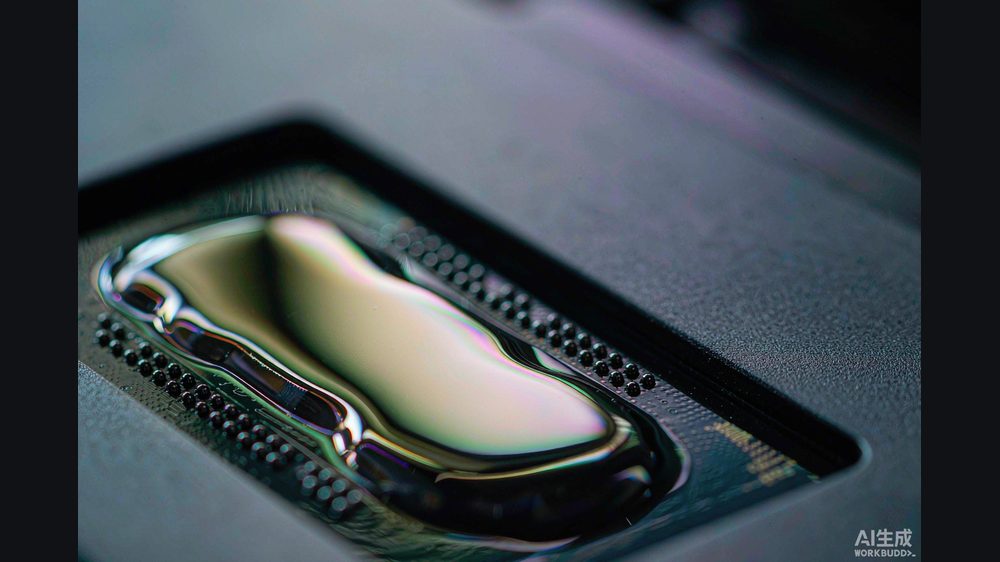
Every AI model you have heard of was trained and served on specialized chips. The default name is Nvidia. The challenger is AMD. And in China, where US export rules block the newest Nvidia parts, a third player — Huawei Ascend (昇腾) — has become central. Here is how the race actually works.
Key takeaways
- Nvidia leads not just on chips but on CUDA, the software ecosystem almost every AI tool is built on.
- AMD's MI-series (MI300/MI325 and successors) is genuinely competitive on raw specs and cheaper — but software maturity lags.
- US export controls reshape the map: China cannot buy the top Nvidia parts, which is exactly why Huawei Ascend vs Nvidia is now a headline comparison.
- For most buyers, the choice is less "which chip" and more "which software stack can my team actually use."
- The bottleneck in 2026 is often supply and power, not raw peak speed.
The silicon: GPUs as AI engines
AI training is mostly massive matrix math. GPUs (图形处理器), originally built for video games, turned out to be near-perfect for it. Nvidia's H-series and B-series (H100, H200, B200 and so on) became the industry standard because they are fast and because everyone's code already runs on them.
AMD's answer is the MI-series (MI300X, MI325X, and later parts). On paper they match or beat Nvidia on memory and bandwidth at a lower price. In practice, "on paper" and "in your data center" are different planets.
The real moat is software
This is the part newcomers miss. Nvidia's edge is CUDA (统一计算架构) — a decades-old layer of tools, libraries, and developer habits. Almost every AI framework assumes CUDA. Switching to AMD means porting that stack, and porting is where projects die.
AMD has closed much of the gap with ROCm, its open software layer, and major frameworks now run on it. But "runs" and "runs as smoothly as CUDA" are not the same. For a Chinese buyer blocked from top Nvidia parts, the comparison is moot — they are choosing between AMD and domestic silicon.
Where China fits
US export rules cap the fastest Nvidia chips sold to China. That forced Chinese labs onto two paths:
- Licensed or cut-down Nvidia parts permitted under the rules.
- Domestic accelerators, above all Huawei Ascend (昇腾), now treated as national infrastructure.
The deeper story — Huawei's CloudMatrix fabric and supernodes tying many chips into one logical engine — is covered in Huawei Ascend vs Nvidia and Ascend CloudMatrix. The strategic point: China is optimizing for availability and scale of compute it controls, not for beating Nvidia on a single chip.
What it means for buyers
- If you are in the US/EU and want zero friction: Nvidia, despite the price.
- If you are cost-sensitive and AMD-compatible: MI-series is a real option in 2026.
- If you are in China: the practical menu is AMD, permitted Nvidia, or Ascend — and Ascend's share is rising fast.
Honest limitations
This is an explainer based on public product specs and NeuroAI's reporting, not a benchmark test. Chip model names and specs change quickly; "MI300/MI325" and "H/B-series" refer to product families whose exact members shift across 2025–2026. Export-control boundaries are legal and change; verify current rules before procurement. The "CUDA moat" claim is the industry consensus but is contested by AMD's ROCm progress. Performance comparisons are general, not per-workload measurements.
Sources
Nvidia and AMD public product specifications (H/B-series, MI-series); Huawei Ascend disclosures covered in Ascend vs Nvidia and Ascend CloudMatrix; US export-control summaries affecting China-bound AI accelerators; NeuroAI chip and compute reporting.