
A person with a cervical spinal cord injury can still think about closing a hand — the command just never reaches the fingers. For decades, that gap between intention and movement was permanent. A coin-sized implant developed in China is now the first of its kind to clear a national regulator for clinical use.
What NEO is and how it works
NEO is an implantable brain-computer interface (脑机接口) hand-motor function compensation system, built by Neuracle Medical Technology (Shanghai) Co., Ltd. (博睿康医疗科技). It is designed for people aged 18 to 60 with tetraplegia caused by cervical spinal cord injury who cannot grasp with their fingers.
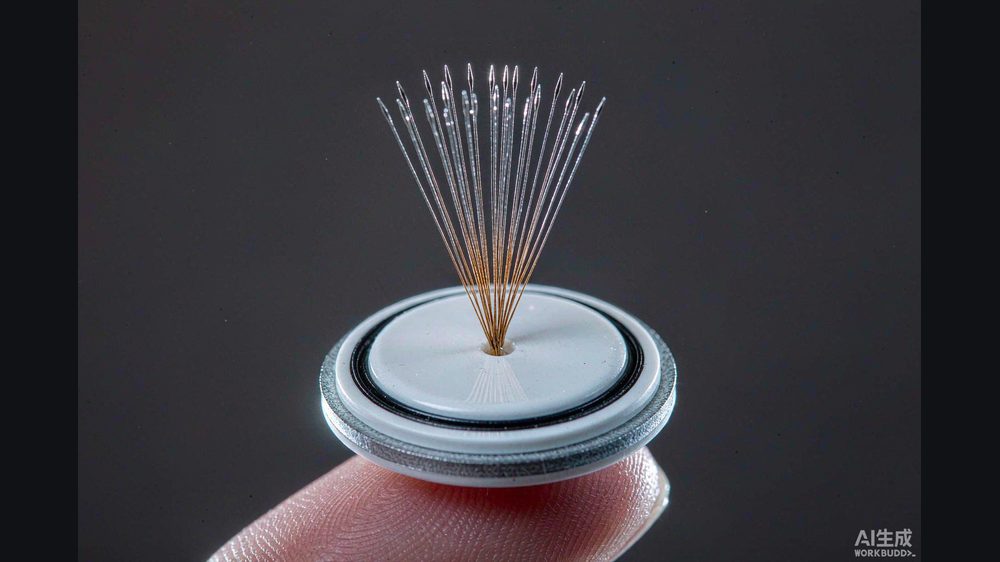
- A coin-sized implant — about 26 mm across and under 6 mm thick — is placed in the epidural space (硬脑膜外), outside the brain tissue, a semi-invasive approach that avoids direct damage to nerve cells.
- The device captures and decodes brain signals in real time, then drives a pneumatic glove (气动手套) so the user can grasp objects, pick items up, and drink.
- Wireless power and communication mean a single implantation supports long-term use; patients can operate the system independently at home about a month after surgery.
- All core software, hardware, and key materials are domestically developed (国产化).
The regulatory milestone
On March 13, 2026, China's National Medical Products Administration (国家药品监督管理局, NMPA) approved NEO's registration — the world's first market clearance for an invasive brain-computer interface (脑机接口) medical device, and the first such device to enter the clinical-application stage.
- The underlying epidural approach was proposed by Tsinghua University's Hong Bo (洪波) team back in 2013.
- Shanghai, where Neuracle is based, is backing its future-industry push — brain-computer interface (脑机接口) included — with a RMB 10 billion (≈ US$1.4 billion / HK$10.9 billion) fund, and now hosts around 60 BCI-focused innovators.
- Of those, three invasive products are in the NMPA's special review channel for innovative medical devices, and one has been designated a Breakthrough Therapy by the U.S. FDA.
What the trials showed
Before approval, NEO ran through 36 clinical procedures: four feasibility cases and 32 multicenter Good Clinical Practice (GCP) confirmatory implants across 11 top hospitals, including Xuanwu, Tiantan, Huashan, and Jiangsu Provincial.
- Every patient achieved brain-controlled grasping — a 100% improvement rate in grasping function.
- Some showed signs of neural remodeling, regaining partial voluntary function even without the device active.
- In the multicenter confirmatory trial, average Action Research Arm Test (ARAT) scores rose 9.06 points with device assistance, and the hands' total unassisted score rose 10.71 points.
- Patients were typically discharged about three days after surgery.
- Across all subjects, cumulative implant time reached roughly 8,000 days, with the longest single case beyond two and a half years.
Why "first" matters — and the caveats
Internationally, high-profile invasive projects such as Neuralink remain in human-trial phases. NEO is the first fully approved for commercial clinical use anywhere. That lead is partly structural: China classified brain-computer interface (脑机接口) as a future industry in its national work report and built a dedicated review track, letting a domestic system move from lab to license faster than its Western peers.
How the epidural approach fits the global race
NEO's placement matters as much as its approval. Most invasive brain-computer interface (脑机接口) research sits on a spectrum between fully implanted cortical electrodes and external caps, and the surgical site decides both the risk and the signal quality.
- Epidural placement puts the electrode on the outer brain membrane rather than inside the tissue, trading some signal resolution for lower surgical risk and longer stability.
- That trade-off is why the same design can be offered to relatively stable, long-term users rather than only short trial subjects.
- The realistic near-term picture is narrow: a specific group of cervical-spine patients, not yet broader paralysis or stroke rehab, which remain active research directions for the platform rather than approved uses.
How NEO reads a paralyzed hand's intent
The implant does not move the hand by magic — it reads the attempt. Placed over the motor cortex's hand area in the epidural space (硬脑膜外), the electrode picks up the field potentials the brain still generates when a tetraplegic patient tries to close a fist, even though the command no longer reaches the muscle. Decoding software turns that patterned signal into a drive command for the pneumatic glove (气动手套), so the loop runs from intent to grasp without the spinal cord as a relay.
Where NEO sits among invasive approaches
Different invasive brain-computer interface (脑机接口) programs make different trades. Some pursue intracortical arrays for maximum signal resolution at the cost of tissue intrusion; others avoid opening the skull entirely but at lower bandwidth. NEO's epidural compromise — outside the tissue, yet still implanted — is a deliberate middle path that prioritizes longevity and lower surgical risk for a population needing years of use rather than a short trial. What to watch is whether that middle path proves durable enough to become the default for motor-compensation BCIs.
Honest limitations
- The post-approval, real-world outcomes beyond the 36-procedure trial cohort have not yet been published.
- ARAT and response-rate figures come from the developer and clinical presentations; a full peer-reviewed dataset is still pending.
- Cost and reimbursement terms were not detailed at approval, and data beyond roughly two and a half years remains limited.
What readers can do now
- Patients and families: if a relative has stable cervical spinal cord injury (confirmed over a year, age 18–60, hands unable to grasp but upper arms partially functional), ask tertiary hospitals whether NEO eligibility assessment is available.
- Clinicians: review the 11-hospital GCP dataset and the ARAT methodology before adopting the system into rehab protocols.
- Observers: track whether NEO's epidural design becomes a reference architecture for the next wave of invasive brain-computer interface (脑机接口) filings worldwide.