
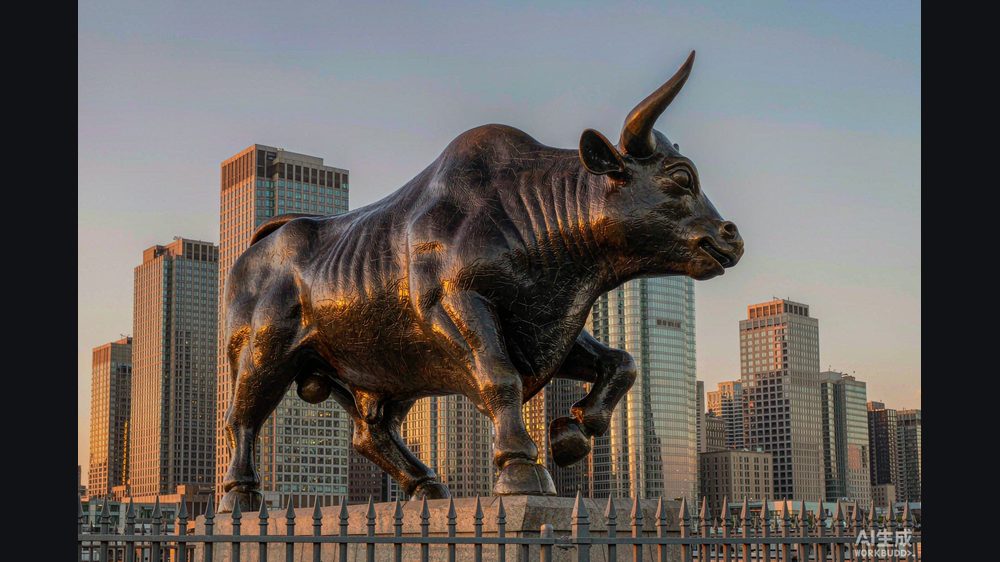
On January 9, 2026, a company founded less than four years earlier opened at HK$345 and closed its first session up 109%. MiniMax (稀宇科技) had just become one of the largest artificial-intelligence listings Hong Kong had seen. The pop masked a harder question: can a lab that has burned through roughly US$1.3bn while still posting losses justify a thirteen-figure valuation?
The MiniMax offering is the clearest signal yet that global investors will pay handsomely for China's frontier model builders — provided they list in Hong Kong.
Key takeaways
- MiniMax Group Inc. listed on the Hong Kong Stock Exchange (HKEX) on January 9, 2026 under stock code 0100 (MINIMAX-WP), at the top of its price range.
- Final offer price was HK$165.00 per share, giving gross proceeds of about HK$4.82 billion (≈ US$617m) and net proceeds of roughly HK$4.60 billion (≈ US$589m).
- Fourteen cornerstone investors committed about HK$2.72 billion (≈ US$349m), spanning sovereign, long-only, tech-strategic and Chinese institutional money.
- The stock closed its first day at HK$345, a 109% gain, implying a market capitalization near HK$106.7 billion (≈ US$13.7bn).
- Roughly 90% of net proceeds are earmarked for research and development over the next five years.
How the deal was priced
MiniMax set its initial price range at HK$151.00–165.00 per share. It ultimately printed at HK$165.00, the upper bound, after the over-allotment ("shares adjustment") option was fully exercised. The global offering totalled 29,197,600 shares: 5,077,860 for the Hong Kong public tranche and 24,119,740 for the international tranche.
At that price, gross proceeds reached HK$4,817.6 million and, after estimated listing expenses of HK$221.5 million, net proceeds came to HK$4,596.1 million. Per the prospectus, about 90% of the net haul is directed to R&D across large models and AI-native products over five years, with the remaining 10% for working capital.
The demand picture was unusually strong. The Hong Kong public tranche was oversubscribed roughly 1,837 times, the international tranche about 37 times, and more than 460 institutions submitted orders — about US$19 billion of demand once cornerstone commitments are excluded from the math.
Who showed up as cornerstone investors
Fourteen cornerstone investors (基石投资者) anchored the book, agreeing to subscribe for roughly HK$2.72 billion (≈ US$349m) at the offer price. The roster mixed global long-only managers with Chinese strategic and institutional names:
- ADIA (Abu Dhabi Investment Authority)
- Alisoft China — an indirect wholly-owned unit of Alibaba Group (阿里巴巴)
- Aspex Master Fund
- Boyu (博裕)
- China Universal (汇添富) Hong Kong
- Eastspring
- E Fund (易方达)
- IDG Breyer Fund
- Janchor Partners
- Martis Fund
- Mirae Asset Securities
- MPC VII
- Perseverance Asset Management (高毅资产)
- Taikang Life (泰康人寿)
The mix matters. Long-only managers such as Eastspring and Mirae Asset are typically slow to take cornerstone slots; their presence signalled a willingness to hold through volatility rather than flip for a quick listing pop.
The numbers behind the pop
MiniMax closed day one at HK$345, more than doubling from the HK$165 issue price and handing the company a market cap around HK$106.7 billion (≈ US$13.7bn). Within weeks the stock pushed past HK$599 intraday, briefly implying a valuation above HK$1.8 trillion — before retracing.
Underneath the price action, the fundamental story is thinner. The company was founded in early 2022 and, as of late September 2025, employed 385 people with an average age of 29. It reported more than 212 million individual users across 200-plus countries and regions, and said it had spent about US$500m cumulatively to build its models. But it remained loss-making: filings cited roughly US$1.3bn of cumulative losses across three years and three quarters. Overseas markets are its main revenue base, which is precisely why a global investor base in Hong Kong fits better than a domestic-only listing.
Why Hong Kong, not Shanghai
Shen Meng, managing director at Xiang Song Capital (香颂资本), noted that many Chinese AI labs do not yet meet mainland A-share initial public offering (首次公开募股/IPO) profit standards, making Hong Kong the realistic venue for a large raise. Pan Helin, a member of the Ministry of Industry and Information Technology's economic expert committee, framed the dual motive as funding plus an exit path for early backers.
Hong Kong also offered something Shanghai's STAR Market (科创板) could not: a deep pool of international capital willing to underwrite pre-profit growth at a premium multiple.
Honest limitations
- The figures above come from the prospectus and the final price-and-allotment announcement; they describe the offering, not the company's post-listing operating results.
- A first-day doubling says more about retail and institutional appetite for AI scarcity than about discounted cash flow. The rally later cooled, and lock-up expiries for cornerstone holders will test the price.
- Losses remain large. A HK$100bn+ market cap resting on a pre-profit, user-heavy business is a bet on monetization that has not yet been proven in the filings.
- We have not independently audited revenue geography or the US$500m R&D figure; those are company disclosures.
What readers can do now
- Read the HKEX final price-and-allotment announcement (HKEXnews, stock code 0100) before drawing conclusions about valuation — the document is public and free.
- Track MiniMax's first post-listing interim report to see whether the promised 90%-to-R&D allocation is real and whether the loss trajectory narrows.
- Compare MiniMax's multiples with those of peer listed model builders to judge whether the Hong Kong AI premium is widening or compressing.