
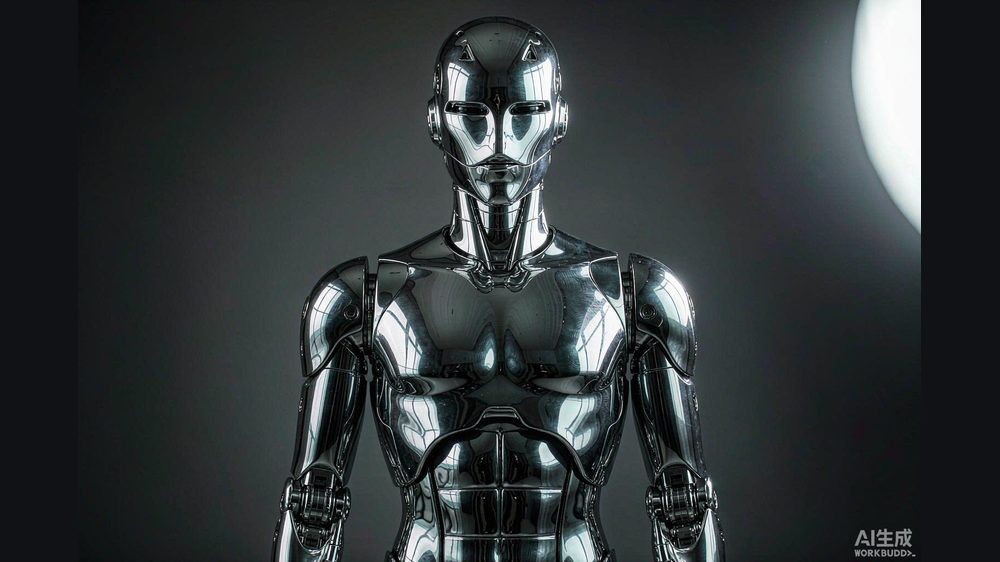
A robot factory staffed by robots sounds like a demo. In Foshan, it is now an assembly schedule. On 29 March, an automated line in the city's Nanhai district began producing full-size humanoid robots (人形机器人) at a designed rhythm of one unit every 30 minutes — a claimed annual capacity above 10,000 machines, the first line in China built at that scale.
CCTV's flagship news programs treated it as a milestone, and they had a point. For years the humanoid industry has been accused of shipping videos. This line ships boxes.
Who built it, and what it makes
The line is a joint project of Dongfang Precision (东方精工), a Foshan-listed maker of corrugated-box printing machinery that has been pivoting into robotics, and Leju Robotics (乐聚机器人), a Shenzhen company founded in 2016 by nine Harbin Institute of Technology graduates. The two set up a dedicated venture, Dongfang Yuanqi Intelligent Robotics, in September 2025 with Dongfang Precision holding 80 percent; the production line went live seven months later.
The product is Leju's Kuavo (夸父) full-size humanoid series, sold into education and research, inspection and commercial service, and industrial manufacturing.
According to figures released by the companies and reported by Foshan state media, the line runs:
- 24 digitally guided assembly processes and 77 inspection items, with 41 simulated real-condition tests — including loaded walking and rough terrain — before a robot ships.
- 92 percent automation of key processes, using vision-guided and force-controlled assembly, plus AGV-driven material delivery.
- Assembly error held within 0.02 millimeters at the most delicate transmission components, with overall production efficiency up about 50 percent versus conventional methods.
- A flexible layout that lets multiple robot models share the line — the practical answer to humanoid demand still being lumpy and customized.
Why "production line" is the real headline
China's humanoid story so far has been dominated by design wins and order announcements. The gap between orders taken and robots delivered has been the industry's open secret: a humanoid involves hundreds to thousands of components, and a single missing part can idle a whole production plan.
Leju's own history shows how far the economics have moved. Its first full-size Kuavo prototype in 2018 cost over 3 million RMB (~$420,000) to build, with core components less than 10 percent domestically sourced, according to an interview founder Leng Xiaokun (冷晓琨) gave the Xinhua-affiliated Economic Information Daily. Today the company says domestic sourcing for its robots exceeds 95 percent, and its delivery volume ranks among the top in China.
The Foshan line is also a bet about what kind of company wins the humanoid race. Dongfang Precision brings three decades of high-volume manufacturing discipline — the unglamorous craft of takt time, quality gates and supply chains. Leju brings the robot. The structure implicitly concedes that building humanoids is becoming a manufacturing problem, not merely a research one.
The context: China is industrializing humanoids first
The line did not open into a vacuum. China's government added embodied AI (具身智能) and intelligent robots to its list of future industries in the 2025 Government Work Report, and Chinese firms now account for the overwhelming majority of global humanoid shipments. Unitree says it has produced more than 18,000 humanoids cumulatively; UBTECH, AgiBot and others have announced their own large factories.
What distinguishes the Foshan line is that it is explicitly a contract-manufacturing platform: the joint venture handles production, deployment and after-sales service, while Leju keeps design, software and AI. That is the division of labor the auto industry settled on decades ago — and a sign the participants expect humanoid demand to behave like a real product market, with volume buyers, service networks and replacement cycles.
Honest limitations
- Capacity is designed, not achieved. "Over 10,000 units a year" and "one every 30 minutes" are design figures announced at launch; actual output depends on orders and yield. Neither company has published independent audited shipment numbers from this line.
- The efficiency and precision claims — 92 percent automation, 0.02 mm tolerance, 50 percent efficiency gains — come from the companies and local state media, not third-party audits.
- Mass production solves the body, not the mind. A reliably manufactured humanoid is still only as useful as its software; whether Kuavo robots can hold real jobs at scale remains to be demonstrated in customer deployments.
- Demand is unproven. High-volume supply only matters if factories, venues and households keep buying — and most published humanoid deployments worldwide are still pilots.
What readers can do now
- If you source robots for a business, ask suppliers two questions in the pilot stage: monthly delivery capacity with evidence, and mean time between failures in a live deployment — production lines are improving faster than field reliability data.
- Watch the joint-venture model. Mid-size manufacturers with machining and quality-control depth partnering with robot startups may become the standard pattern for scaling humanoids; it is also a signal of which startups have real orders.
- Track delivery numbers, not demo views. The next honest milestone for this industry is a published figure of humanoids working — not just shipped — in paying customer sites.