
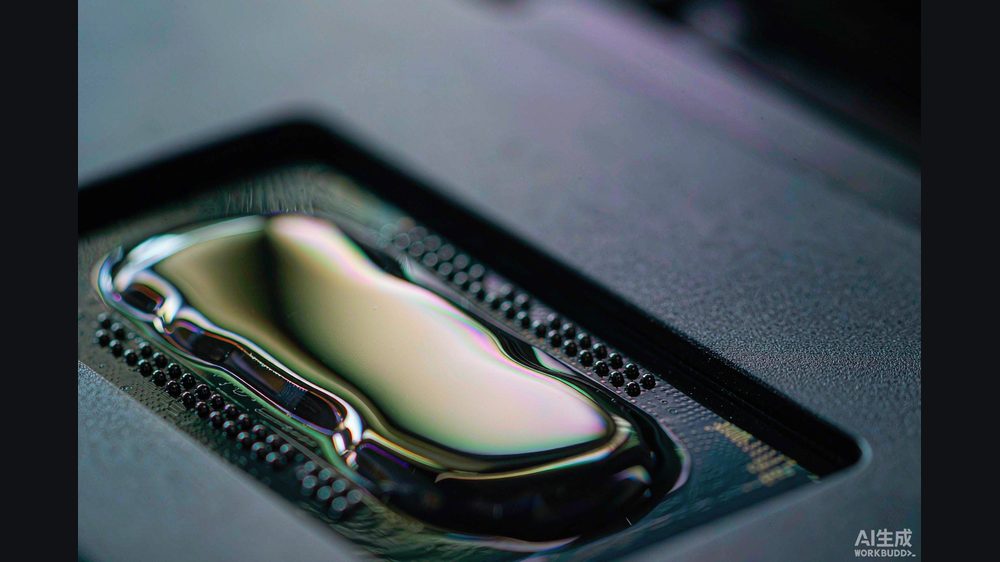
The booth is loud and the demonstration is short. A visitor puts on a headband, watches a screen for a few seconds, and a small robot on the table in front of her takes a step. The crowd claps. Then the next visitor sits down.
The company is BrainCo. The platform is a brain-to-robot system, and the setting is a Shanghai trade fair in July, where the format — wearable, visible, faintly uncanny — has become standard.
It is also why the consumer end of Chinese neurotech is so easy to misread.
Key takeaways
- BrainCo demonstrated a brain-to-robot platform at WAIC 2026 in Shanghai on 17 July, a consumer format inside a clinical field.
- Tianjin University's Ming Dong has claimed parity between non-invasive and invasive recording; the claim is contested and unsupported by any dataset here.
- The brain–computer interface (脑机接口) entered the 15th Five-Year Plan and, for the first time, the 2026 Government Work Report as a future industry.
- NEO's route — 36 cases at 11 hospitals, then NMPA approval on 13 March 2026 — sets an evidence bar that headsets are not held to.
- China has 3.7 million people living with spinal cord injury (NMPA device evaluation centre), a defined clinical population.
The product is the demonstration
A headband sold to a household is a hardware business with a software wrapper. It has a bill of materials, a retail price and a return rate. It does not have a control arm.
That is not a criticism. Education, entertainment and research-lab supply are real markets, and a company can serve them for years without a clinical endpoint.
The economics explain the shape. Consumer hardware earns revenue in the quarter it ships; a Class III implant earns revenue years after the first patient, and only if a regulator, a hospital and a payer agree. Consumer sales cannot fund that directly. What they can do is buy time and build competence in dry electrodes, analogue front ends, wireless modules and enclosures — the parts an implantable system also needs, made cheaper and in larger volume.
What the demonstration actually shows
A headband that moves a robot is a control demo: a signal acquired, classified and mapped to a command, under stage lighting, with a cooperative subject.
It does not show what the signal means, how long the decoder holds, or how it performs for a person who is tired, sweating or moving. Nor does it show a therapeutic effect, because a robot stepping is not a clinical outcome.
This is where Ming Dong's claim becomes important. The Tianjin University researcher has publicly argued for parity between non-invasive and invasive approaches. If true, it would move the medical market toward headsets and away from surgery.
The claim is contested for a structural reason. Invasive arrays sit close to the source; non-invasive systems read a summed field through skull and scalp, where the signal is weaker and smeared. That makes non-invasive a different instrument, not a useless one.
Nothing in these disclosures reports a non-invasive system reaching NEO's trial outcomes, in a population of that severity, across 11 hospitals. Parity is a hypothesis, not a result.
The evidence gap
The clinical path is public and specific. NEO was approved by NMPA on 13 March 2026 after 36 cases at 11 hospitals, with every participant improving on grasp function and discharge about three days after surgery. The first commercial prescription followed at Huashan Hospital on 13 July.
That is what a finished medical claim looks like: a defined population, a measured function, a multicentre record, a regulator's judgement.
A consumer claim is usually about a state rather than a task — focus, calm, sleep — and states are hard to measure and easy to overstate. When a vendor blurs the two registers, the damage is not confined to that vendor: clinicians read the category, not the company.
Where the line sits
In most jurisdictions the dividing line is the claim, not the electrode. A headset sold as a game controller is a consumer product; the same headset sold as a treatment for a disorder is a medical device and needs a pathway.
That is how devices can sit outside NMPA's device regime while using the vocabulary of neuroscience. The regulatory status is legal; the marketing does work the evidence has not done.
Policy is pushing the category forward regardless. The brain–computer interface entered the 15th Five-Year Plan as a future industry and appeared in the 2026 Government Work Report for the first time (Inside BCI, 30 September 2026). MIIT-led opinions target two to three industrial clusters by 2027 and two to three globally influential BCI companies by 2030.
Support at that level lifts consumer hardware and clinical implants together, and creates an incentive to announce — which is how overclaiming happens.
What a buyer should ask
- What is being measured, and against which reference instrument?
- Is the claim about a state or a task — and can the vendor show the task?
- Can you export the raw signal, at what quality, or only a score?
- Who holds the neural data, for how long, and is it used to train models?
- Is there a peer-reviewed study with a control group, or only a demonstration?
Ask those five and most consumer neurotech resolves into a decent sensor business with an inflated story attached. The sensor business is worth having. The story is the part that will be tested.
Honest limitations
The WAIC demonstration is a single reported event, and the company's revenue and product line are not disclosed here. Ming Dong's parity claim is summarised at the level of its conclusion, not its method. NEO's figures are regulator and company disclosures, and its trial had no described control arm. No consumer device here has been independently evaluated, and no market size for Chinese consumer neurotech appears in these disclosures.
What readers can do now
- Operators: separate the sensor specification from the claim; buy the first, and ignore the second until it is published.
- Investors: ask what share of revenue is hardware versus programme fees, and whether the company has ever run a controlled study.
- Researchers: non-invasive parity is testable. Publish negative results; credibility depends on them more than on another demo.