
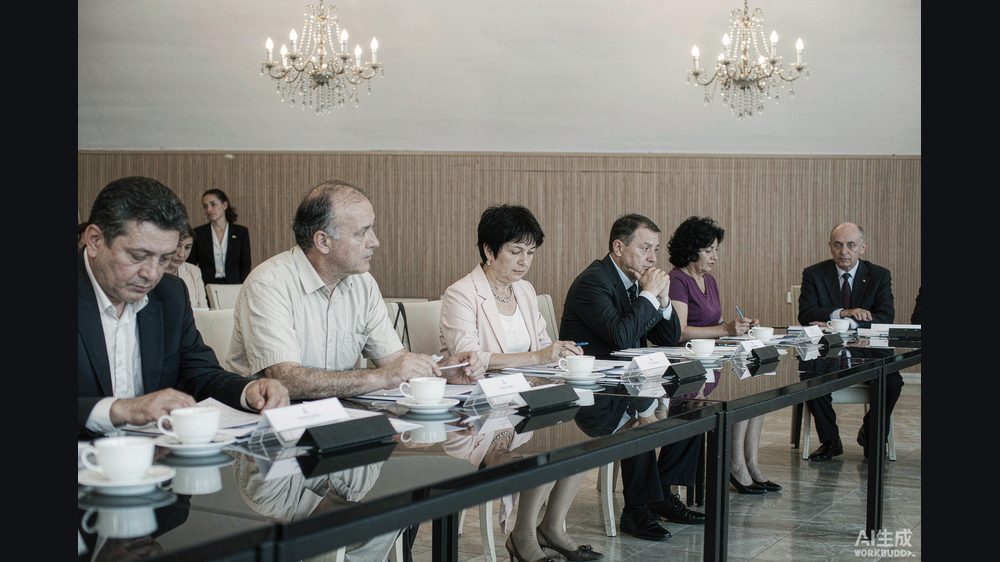
The questionnaire opens with a question no engineering document answers: if this assistant quotes a customer the wrong price, how much does that customer lose?
The company filling it in runs an agent handling inbound sales for a telecoms operator. It knows its latency and refusal rate. It has no loss record, because there is none.
That gap — between what a model can measure about itself and what an insurer needs to charge for it — has become a product line in China.
Key takeaways
- PICC P&C released China's first AI application risk cover on 20 October 2026: an AI service liability policy and an AI application cost-loss policy (PICC P&C).
- Technology insurance covered RMB 8.7 trillion (≈US$1.23tn / HK$9.6tn) of risk in January–August 2026, up 66.9% year on year (NFRA).
- Tianjin's first AI content-liability policy carried a cumulative RMB 200,000 (≈US$28,200) limit; a Shenzhen policy exceeded RMB 1 million (≈US$141,000).
- Underwriting runs on technical assessment rather than actuarial loss tables; general benchmarks cannot yet support pricing (CAICT, 20 October 2026).
- Aggregation is the open hole: one foundation-model defect can reach many industries at once, and no confirmed AI aggregation claim exists yet (CAICT).
Two policies, one position
At the annual Financial Street Forum in Beijing on 20 October 2026, PICC P&C (人保财险) released a package it describes as the country's first comprehensive AI application risk scheme. Two products sit inside it: AI service liability insurance (人工智能服务责任保险) for third-party economic loss caused by performance failure, and AI application cost-loss insurance (人工智能应用费用损失保险) for the operator's own repair and refund costs. Initial targets: agents, large models and humanoid robots.
The underwriting logic is worth stating plainly. PICC's formulation is that the policy responds to whether the output was wrong, not to a technical account of why. An adjuster cannot adjudicate a hallucination, and a court case about one would take years. Insuring the output rather than the mechanism is what makes the product possible.
The underwriting starts with a questionnaire
The technical side comes from the China Academy of Information and Communications Technology (中国信通院), which built a pre-underwriting process with PICC P&C and China Re P&C. Since September 2026 it has run that process for one company's agent-based digital employee: questionnaire, risk assessment, gap analysis, remediation, then binding.
Ao Li (敖立), a vice-president of the academy, set out four observations explaining why the file resembles an engineering report, not a loss table.
- Risk is moving from saying the wrong thing to doing the wrong thing, and is producing real economic loss.
- Foundation models are converging, so a defect at that layer can harm many industries at once — an aggregation risk with no confirmed claim anywhere.
- Model behaviour drifts with each version, so an underwriting assessment is a snapshot.
- General benchmarks and fragmented industry data cannot yet carry actuarial pricing.
There is no rate card: applicants are assessed on scenario, content, data volume, model parameters and measured performance, then priced individually.
Who buys first, and how small the limits are
Chinese policies usually appear as one-off signings before a product line exists.
- March 2026, Hainan: the province's first generative-AI content-infringement policy, covering copyright, portrait and reputation.
- May 2026, Shenzhen: Leju Robot signed the city's first comprehensive policy for embodied-intelligence robots.
- July 2026: an AI physiotherapy robot took out a bundled AI service liability and cyber policy.
- August 2026, Tianjin: a large-model algorithm vendor in Chentang Science Park obtained cover with a limit of RMB 200,000 (≈US$28,200 / HK$220,000) — enough, the buyer said, to sign a contract promising compensation.
- Shenzhen: an "AI voice employee" vendor insured its generated-content exposure above RMB 1 million (≈US$141,000 / HK$1.1m).
Firms buy because a customer demanded a counterparty that can pay, or because the model faces people and money directly. The limits are small against the harm a wrong answer can do at scale, which is what an insurer writes with no loss data.
Capacity is pooled, not priced
Technology insurance covered RMB 8.7 trillion of technology-related risk in the first eight months of 2026, 66.9% more than a year earlier. Providers have risen from four pilot institutions to more than 60 (National Financial Regulatory Administration, September 2026).
AI is a small line inside that total. What it inherits is a mechanism: the co-insurance pool. PICC has used pools for integrated circuits and commercial space, and in September 2026 helped form pools for biomedicine, industrial robots and pilot-scale manufacturing. A pool exists because no single insurer wants a limit it cannot lay off. AI needs one for a different reason: satellite and chip losses are bounded per event; a shared foundation model is not.
A policy does not decide liability
Insurance sits behind a liability finding, not in its place. The Supreme People's Court's September 2026 opinion on AI disputes held that infringement cannot be excused on the ground that content was produced by a model. A policy pays after someone is found liable, and only within its terms.
- Cover follows the insured, not the technology. A vendor's policy does not protect the bank or factory that deployed the system.
- Exclusions carry the information. Underwriters price what they can inspect: logging, human review, version control, incident reporting.
Honest limitations
No premium, claims count or amount paid for AI-specific policies has been disclosed; the limits above come from newspaper reporting of individual signings, not filings. Product terms are not public, so exclusions cannot be checked. The academy is a technical partner to the insurer and speaks as an interested party. The October products are new enough that none has been repriced at renewal, when an insurer's real view of risk becomes visible.
What readers can do now
- Ask a Chinese supplier for the policy wording and the limit, not the product name. Published limits run from RMB 200,000 combined in Tianjin to just over RMB 1 million in Shenzhen.
- When assessing a counterparty, check who is insured. Vendor cover does not transfer to the deployer unless the deployer is named.
- Track the regulator's periodic technology-insurance release rather than launch coverage: written coverage is published, paid claims are not, and the gap is the number that matters.