
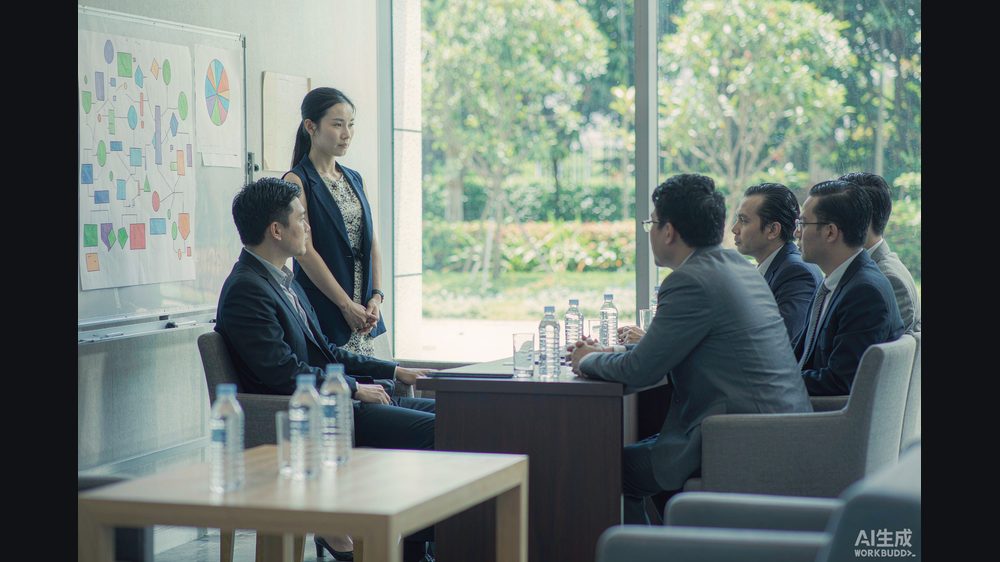
NANJING — Picture the first week of the autumn term: a teacher at a primary school opens a browser tab on the classroom projector and teaches a class of eleven-year-olds how a machine recognises a face. No new laboratory. No robot arm. No specialist degree on the wall.
That classroom is the design, not a compromise. China's AI education policy does not assume new buildings or expensive equipment. It assumes an ordinary multimedia room, a network connection, and a teacher who has done a short course.
Whether that teacher can actually teach it is now the whole question.
Key takeaways
- Five ministries issued the AI Plus (人工智能+) education action plan, 教科信〔2026〕1号, on 2 April 2026, placing AI courses inside local curricula with defined class hours (Ministry of Education).
- Jiangsu put AI on every primary and secondary timetable from the autumn 2026 term, after a 16-hour teacher course drew 9.03 million views (Jiangsu Provincial Government, 20 August 2026).
- Hainan requires at least four AI class hours per semester and reports coverage of more than 1,100 schools and 600,000 students and teachers (Hainan Daily, 11 October 2026).
- No national hour count exists: Hainan's four hours a semester is a provincial floor, which makes cross-province comparison unreliable.
- Nothing in the design requires new hardware, so spending shifts to content, platforms and teacher training — the parts that are hardest to audit.
What the document actually requires
The plan is 教科信〔2026〕1号, dated 2 April 2026 and signed by five ministries — education, economic planning, industry, science and data (教育部、国家发展改革委、工业和信息化部、科技部、国家数据局). A framework, not a procurement order.
Its operative sentence for schools is narrower than most coverage. AI education is to be fully incorporated into the local curriculum system (地方课程体系), with provinces writing their own course guides that fix objectives, content and class hours. There is no national hour count; the requirement a school actually faces is written in a provincial or municipal guide.
One target does carry a number: by 2030 the plan wants AI taught from primary school to university and reaching the general public, with AI as a foundation course in higher education.
For teachers, one clause travels further. AI is to be added to the teacher qualification examination and certification (教师资格考试和认证). If that is implemented, AI literacy stops being an optional skill and becomes a licensing condition for new entrants to the profession.
The province is the unit of execution
Jiangsu is the clearest test case. On 18 August 2026 it launched a province-wide programme; from the autumn term every primary and secondary school was to open the course, with the stated goal of a timetable in every school and a class in every grade (江苏省教育厅, 26 August 2026).
Two numbers describe the preparation. The provincial training course ran 16 hours and drew 9.03 million cumulative views. The resource platform carries more than 130 national courses plus roughly 800 class hours built with universities and companies.
The first number needs care. Views are logins, not teachers.
Hainan publishes a tighter specification: at least four class hours per semester, in every primary and secondary school, from autumn 2026. Its AI general-education centre opened in September with resources covering primary through high school. Coverage is given as more than 1,100 schools and 600,000 students and teachers, on top of RMB 430 million (≈ US$61m / HK$473m) spent over two years on school digital infrastructure (Hainan Daily, 11 October 2026).
Why the classroom looks ordinary
Jiangsu describes its resources as cloud-hosted, usable in a standard multimedia classroom with no dedicated hardware, by a teacher without an AI background after short training. That is a cost decision as much as a teaching one. A province cannot equip every school with an AI laboratory, but it can put a course page behind a login.
The rural provision follows the same logic: trainers sent to schools (送教上门), provincial cloud classes for schools that cannot staff the course alone, and technical officers on call.
It also relocates the quality problem. Hainan's education technology centre has told schools not to simply play the platform videos (杜绝简单播放资源) — an instruction that doubles as an admission of what the cheapest implementation looks like.
Three figures that are not what they look like
- 9.03 million views. A view is a login, and teachers rewatch. It measures reach, not competence, and is not comparable to a teacher headcount.
- Full coverage. Jiangsu's own launch notice named the starting condition plainly: too few schools were teaching the course, and both teachers and resources were short. A timetable entry is an administrative act; a taught hour is not.
- Four hours a semester. At eight hours a year, AI is a minor subject by time allocation. The plan's preference for folding AI into information technology, science and project work means real exposure depends on how those subjects are taught.
What travels
Two clauses point outward. One builds a national education computing platform (教育智联网) to supply schools with compute, data, models and agent tools. The other commits to promoting quality public goods and Chinese standards abroad (走出去).
The second is the one for foreign readers to watch. Curriculum content is a softer export than hardware, and it arrives with teacher training attached.
Honest limitations
No public dataset measures how many of the mandated hours are actually taught, and none measures what students learn. The 9.03 million figure counts views, not people. Provincial rules differ enough that "China requires AI in schools" is true only at the level of the framework document. Teacher supply is the acknowledged weak point, and no province has published the number of qualified AI teachers it now has. Coverage figures are self-reported by the education departments running the programmes.
What readers can do now
- Analysts: download 教科信〔2026〕1号 and separate what it requires from what it encourages before quoting a national rule; then read two provincial guides, because the hour counts live there.
- Edtech vendors: price for a standard classroom and a cautious teacher. The sale is content, training and a cloud login, and the unit is class hours per semester rather than devices.
- Newsrooms: ask a provincial education department how many schools have actually timetabled the course this term, and do not convert training views into trained teachers.