
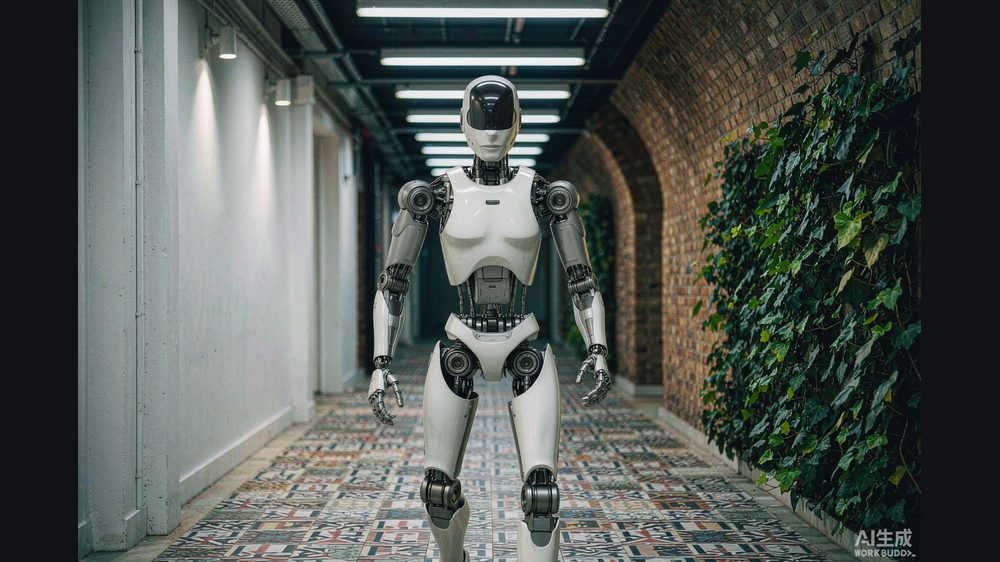
The drama went up on a Monday and was copied by the next day, retitled and wrapped in advertisements. It had no actors and no set; it had a prompt file and a render queue. Before the court could ask who took it, it had to decide whether there was a work to take.
That question now has an answer in China, and it is procedural rather than statutory: a Supreme People's Court opinion issued in September, and two first-instance rulings that show how its test is applied.
Read together, they describe a regime that regulates by volume rather than severity.
Key takeaways
- The Supreme People's Court issued its opinion on AI-related disputes, 法发〔2026〕10号, on 7 September 2026, covering copyright, open source and patents.
- Article 12 makes an AI user liable where they knew, or should have known, of the earlier work and produced something substantially similar.
- Wuhan's Jiang'an District Court held a 47-episode microdrama made with generative tools to be a protected audiovisual work and awarded RMB 20,000 (≈US$2,800).
- That judgment counted token consumption and commercial tool licences as production costs when setting damages, which the court presented as a first.
- More than 90% of microdramas released in China from January to August 2026 were made with generative tools (DataEye, cited by China Daily).
The instrument is an opinion, not a statute
The document is numbered 法发〔2026〕10号. The prefix matters: 法发 marks a Supreme People's Court policy document, not a 法释, the prefix reserved for formal judicial interpretations. Courts follow it. It is not legislation.
What the opinion does is allocate the argument. Its intellectual-property section covers three questions: apportioning liability when generated content infringes, shielding open-source developers, and patenting inventions developed with AI tools.
Governing this way is fast. A statute needs the legislature and years; an opinion needs the court and a drafting cycle. The cost is that every operative rule is a holding in a case, and holdings arrive one at a time.
The test is control, not provenance
The Wuhan case shows how the test is applied. A production company made a 47-episode microdrama (短剧) of about an hour using generative tools, registered it with the National Radio and Television Administration, and released it on the Hongguo Drama app (红果短剧) and WeChat Channels. A second company copied all of it, changed the title, inserted advertising and ran it.
The Jiang'an District Court did not start from the technology. It walked the production chain: script planning, shot-by-shot prompts, selection of character and scene assets, filtering of unacceptable generations, editing, subtitle matching. Human staff, it found, had worked through every stage and kept control of the final expression. The output was therefore an audiovisual work (视听作品), and the copier had infringed the right of communication through information networks (信息网络传播权).
The award was RMB 20,000 (≈US$2,800 / HK$22,000). Neither side appealed, and Hubei's High People's Court cited the case at a briefing on 30 September.
A second case, in Tianjin's Heping District, applied the same reasoning to a different act. A defendant had fed a copyrighted text into a tool to produce an AI comic drama and published it. The court found substantial similarity, held the conduct to be adaptation (改编权) as well as communication, and the case closed in mediation after the court applied Article 12.
In both, the label decided nothing. The question was who controlled the output.
The money now includes the cost of generating
The interesting part of the Wuhan judgment is the damages calculation, not the liability finding.
Courts assess statutory damages against the work's length, its reach, the window in which it was popular, how long the infringement lasted and the infringer's fault. To that list, Jiang'an added a production-cost element that included the token (词元) consumption needed to generate the drama and the licence fees for commercial tools.
Two implications follow. Spending on inference is now something a court can recognise as investment in a work, which gives AI-heavy producers a reason to keep records. And the ceiling stays low: if a series costs a few thousand dollars to generate, damages measured against that cost will not frighten a copier. Deterrence here comes from speed of takedown and certainty of a finding, not from the size of the cheque.
What it changes for developers, platforms and licensors
The heavier clause is not about users. Article 12 says that when a developer asserts a non-infringement defence, the court should require the training-data sources, records of the training process, how the model operates and the technical basis for its claims. That moves the evidentiary burden onto the party holding the logs.
Three prongs are worth separating:
- Copyright. Liability is apportioned across developer, provider and user by service type, industry, training-data source, participation, measures taken and profit. The user clause applies where there was knowledge, or reason to know, of the earlier work.
- Open source. Article 13 offers developers and providers a route to exemption where code modules are released free and open, with function and security risks disclosed.
- Patents. Article 14 accepts inventions developed with AI tools as patentable subject matter where technical means solve a technical problem, and requires the inventor to be a natural person who made a creative contribution.
For a foreign studio licensing Chinese text, the consequence is documentary: the Wuhan claimant won partly because it could show the chain — registration, prompts, asset decisions, edit history.
Honest limitations
The September document is a guiding opinion; China has no binding precedent, so application varies by court and judge. The Wuhan figures come from a first-instance judgment reported by the court and by Hubei Daily; I could not read the full text. The Tianjin case ended in mediation, so there is no reasoned judgment to cite. No Chinese court has yet ruled on copying training data at scale; the burden-shifting clause is untested.
What readers can do now
- Read first-instance decisions, not waiting-for-legislation commentary; 中国裁判文书网 is where the operative rules appear.
- If you license Chinese content for adaptation, collect what the Wuhan claimant had: registration number, prompt logs, asset licences and edit history.
- When a counterpart claims its model is compliant, ask for the Article 12 file — training-data sources, training records, technical basis — rather than a policy statement.