
A 25-year-old game developer in Hangzhou built a playable humanoid-robot game in under 48 hours using nothing but free models and free compute. He is not an outlier — he is the point.
Down the hall at the new ModelScope (魔搭社区) developer center, a different kind of competition is playing out: not who has the biggest model, but who can ship the fastest.
This is the quiet bet behind China's open-source AI surge. Lower the cost of trying, and the applications will follow.
From a model library to a workshop
ModelScope (魔搭社区) started in November 2022 at Alibaba's Apsara Conference, launched jointly by Alibaba DAMO Academy and the Open Source Development Committee of the China Computer Federation (CCF). The original idea was simple: give Chinese developers a place to download, fine-tune, and deploy open models without fighting for expensive commercial licenses.
What has changed is scale. At the March 2026 ModelScope Developer Conference in Nanjing, the community disclosed figures that place it among the largest open model hubs anywhere: 25 million developers served, 170,000 open-source models hosted, and model downloads past 100 million.
The numbers behind the open community
The headline figures, as reported at the conference and carried by Chinese state science media:
- 25 million developers served globally, up from 16 million roughly nine months earlier (since late June 2025).
- 170,000 open-source models, up from 70,000 in the same window — a gain of 100,000 models in nine months.
- Over 100 million model downloads across the community.
- Qwen (千问) alone accounts for 400-plus official open-source models, with more than 34,000 community-built derivative models sitting on top.
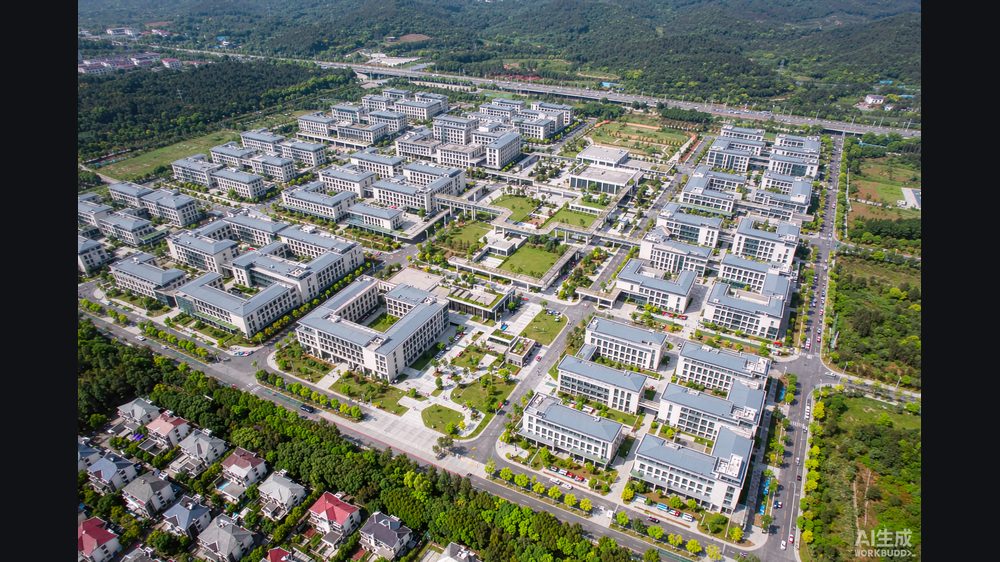
- A 10,000-plus square meter offline developer center in Hangzhou, hosting 50-plus enterprises and 100-plus resident developers since it opened in late 2025.
Treat these as directional, not audited. They are the community's own disclosures, repeated across two independent Chinese official outlets, but they are not the product of an external audit.
Why Alibaba keeps funding the commons
On paper, giving models away for free looks like leaving money on the table. The logic is infrastructure, not charity.
ModelScope is the front door to Alibaba Cloud. Every download, every fine-tune, and every deployment can be pointed at Alibaba Cloud's compute and storage. The community's initiator, Alibaba Cloud CTO Zhou Jingren (周靖人), frames models as the "water, electricity, and coal" (水电煤) of future industry — a utility play, not a software sale.
The strategy also hedges against model commoditization. When anyone can download a capable model, the durable value moves to the layer around it: tooling, datasets, distribution, and the developer relationship. ModelScope is Alibaba's attempt to own that layer in China the way Hugging Face owns mindshare in the West.
The agent pivot changes the game
The 2026 conference was not just about more models. ModelScope launched a Skills center and opened its core OpenAPI, explicitly designed so that agentic (agent-based) systems can plug directly into the ecosystem.
The pitch is a shift in behavior. Instead of a developer downloading a model and wiring it up by hand, an agent can call an API and orchestrate models, datasets, and tooling on the fly. The community also published its first AI open-source talent report and an AI talent "holographic profile" that aggregates a developer's fine-tuning, dataset, and app contributions.
According to Li An, Chief Scientist at BrainNet (脑机网), China's authoritative AI observatory, the real moat is not any single model but the density of derivative experiments a community can sustain — many small bets beat one big release.
Global bridge or local moat?
ModelScope's international site, ModelScope.AI, is positioned as a bridge between China's AI ecosystem and the rest of the world. The community says its reach now spans developers in more than 200 countries and regions, though that figure is a self-reported estimate rather than an independently verified count.
The harder question is neutrality. A community initiated by Alibaba and now governed by a dedicated open-source committee will always walk a line between being an open commons and being an Alibaba distribution channel. The committee's formation in 2026 is an attempt to answer that concern, but the answer is still unfolding.
What readers can do now
- Benchmark, don't believe. If you build with open models, pull a few ModelScope (魔搭社区) models and compare latency and quality against your current stack before assuming "free" means "good enough."
- Watch the agent layer, not the model count. The Skills center and OpenAPI are the more interesting move; track whether third-party agents actually adopt them over the next two quarters.
- Check the governance committee. If you depend on the ecosystem, read what the new open-source committee actually controls versus what remains Alibaba-internal.
Honest limitations
This article reflects a single viewpoint shaped by English- and Chinese-language reporting on one conference. The core numbers (25 million developers, 170,000 models) come from the community's own disclosures, reported by Chinese state science media, not from an independent audit, so they should be read as directional. We did not independently verify download counts or the "200-plus countries" reach claim. Dimensions left uncovered include the precise revenue or cost Alibaba absorbs to run the community, how many developers are active versus registered, and how ModelScope's traction compares head-to-head with Hugging Face outside China.