
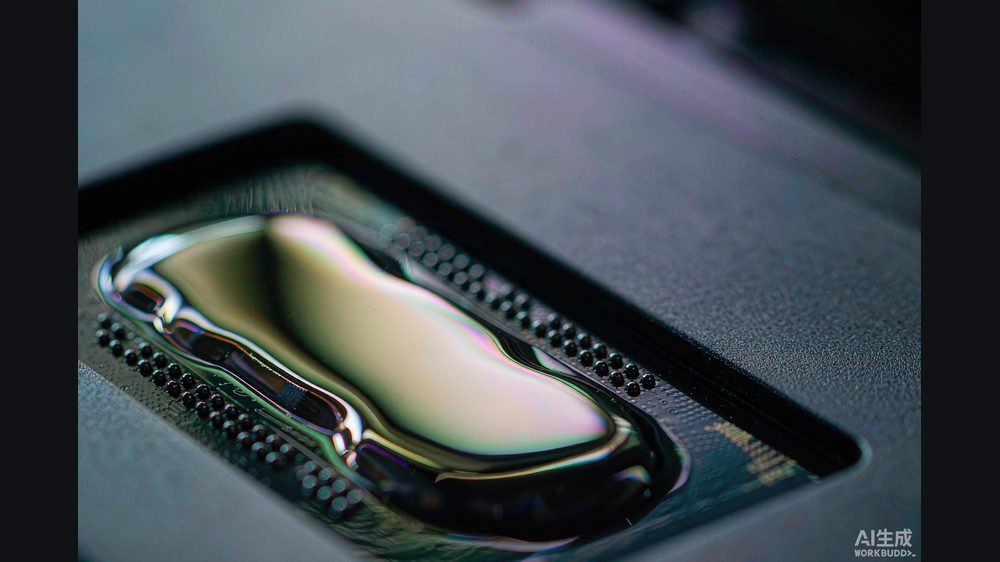
For most of the last two decades, a "Chinese server CPU" meant a license from Intel or Arm, or a clean-room copy of someone else's design. Loongson (龙芯中科) just shipped a server chip that fits neither category. Its 3C6000 runs on a homegrown instruction set, and it is already inside China's telecom clouds and bank cores.
A CPU with no foreign license
Loongson unveiled the 3C6000 series on June 26, 2025, at its product launch in Beijing. The defining point is the instruction set: LoongArch (龙架构), developed in-house with no x86 or Arm license. That matters because the instruction set is the contract between software and silicon — owning it means no external party can revoke the right to build or run the chip.
Chairman Hu Weiwu (胡伟武) framed the launch as building a "third ecosystem" alongside x86 and Arm. The claim is not marketing fluff alone: Loongson reports the 3C6000 uses a 100% domestic component supply chain, from the instruction set down to the physical IP cores.
How the chip scales
The base die carries 16 cores and 32 threads using the LA664 core. Through a proprietary multi-die interconnect called LongLink (龙链), Loongson packages multiple dies into larger parts:
- 3C6000/S — single die, 16 cores / 32 threads
- 3C6000/D — dual die, 32 cores / 64 threads
- 3C6000/Q — quad die, 64 cores / 128 threads
Independent test reports cited by Chinese state media put the dual-die 3C6000/D's SPEC CPU 2017 multi-core score at 284/261 (integer/floating point), and the quad-die 3C6000/Q at 450/283. Loongson says those numbers land at the level of Intel's third-generation Xeon Scalable parts — the 16-core Xeon Silver 4314 and 32-core Xeon Gold 6338 from 2021 — while the 64-core part exceeds the 40-core Xeon Platinum 8380. In aggregate, the company positions 3C6000 as matching 2023 mainstream server-CPU performance.
The chips are reported to use a domestic 12 nm-class process. Exact foundry and node details have not been independently verified outside Chinese trade reporting, so treat the process claim as informed rather than confirmed by a datasheet.
Where it is already running
This is not a lab curiosity. Loongson says the 3C6000 passed China's highest-tier security and reliability certification (Ⅱ级) in March 2025, and the part is now deployed in real workloads:
- Telecom: China Telecom's Tianyi Cloud (天翼云) has used Loongson servers in major projects and is testing 3C6000 for cloud infrastructure.
- Finance: a leading city commercial bank has put a Loongson 3C6000-based core trading system into stable operation.
- Energy: Loongson partnered with China Nuclear (中核) to adapt the 3C6000 for the Hualong One (华龙一号) reactor management platform.
- Government and education: the chips appear across administrative, education, and public-service systems.
The throughline is "security and autonomy" buying criteria — sectors where a foreign license or supply interruption is treated as an operational risk, not just a cost.
Beyond the CPU: an AI thread
At the same launch, Loongson also shipped the 2K3000 / 3B6000M chips for industrial control and terminals, and detailed a general-purpose GPU (GPGPU) roadmap. The integrated LG200 core handles graphics and AI inference, and the company is developing dedicated GPGPU parts (9A1000 / 9A2000) focused on inference-class work.
The strategy is deliberate: build the general-purpose CPU first, then layer specialized accelerators — the same sequencing x86 and Arm vendors followed, but on a fully domestic base.
The supporting software stack is broader than the chip alone suggests. Loongson says its ecosystem now spans roughly 3,400 partner firms across operating systems, databases, and middleware, with binary-translation support that lets mainstream desktop and server applications run without a full rewrite. That ecosystem breadth, not raw clock speed, is what turns a certified chip into a deployable platform.
Why it matters outside China
Loongson is not about to outsell Intel or AMD globally. Its relevance is as a proof that a non-x86, non-Arm server ecosystem can reach production grade inside a large economy, and that "autonomy" can move from slogan to rack. For global buyers, the takeaway is competitive pressure: a credible third stack changes how the other two price and license in China.
Honest limitations
- Reported SPEC CPU 2017 scores come from Chinese testing bodies and Loongson's own disclosures; we did not re-run benchmarks.
- The "12 nm-class domestic process" claim is from Chinese trade media, not an independent foundry confirmation.
- Performance comparisons target 2021–2023 Intel Xeon parts, not the latest generations; the gap to current top-end server CPUs remains.
- Software ecosystem maturity (compilers, libraries, enterprise apps) is still narrower than x86/Arm, though binary-translation support covers much of the gap.
- Deployment figures are described by Loongson and state-media coverage; independent third-party counts are limited.
What readers can do now
- If you evaluate infrastructure for China-regulated sectors, treat Loongson 3C6000 as a qualified option, not an experiment.
- For software teams, test your Linux stack on LoongArch early — the ecosystem is small but the certification bar for government work is already met.
- Watch the LG200 / 9A-series GPGPU roadmap: that is where Loongson's AI relevance will actually be decided.