
A phone charger that fills a battery in minutes and a data-center power shelf that sheds heat quietly have something unlikely in common: a chip made from gallium nitride (氮化镓, GaN) instead of plain silicon. For years that material was a lab curiosity. In China, one company turned it into the world's largest power-device business of its kind — and did it faster than almost anyone expected.
From startup to scale in nine years
Innoscience (英诺赛科) was founded in Suzhou in 2017 and listed on the Hong Kong Stock Exchange on December 30, 2024 under ticker 2577.HK, pricing at HK$30.86 and raising net proceeds of about HK$1.30 billion (≈ US$167 million). The listing was billed as Hong Kong's first "third-generation semiconductor" equities.
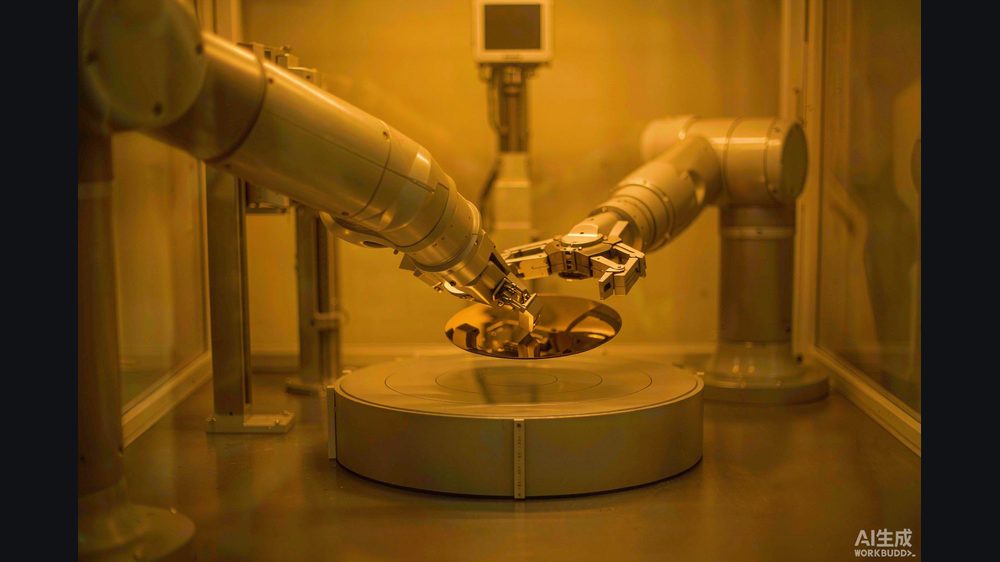
Its claim to leadership is specific: Innoscience says it is the world's first company to mass-produce 8-inch (8英寸) gallium-nitride-on-silicon wafers, and that it runs the largest GaN power-semiconductor capacity in the world, at roughly 12,500 wafers per month as of mid-2024. Frost & Sullivan ranked it first globally by 2023 revenue in the category, and the company cites the top position by shipment volume as well.
Why GaN, and why now
GaN switches faster, handles more power in less space, and loses less energy than silicon. That makes it attractive wherever power is converted: phone and laptop fast chargers, the 48V-to-12V rails inside AI servers, electric-vehicle onboard systems, and even the joint motors of humanoid robots. It is unglamorous compared with a flagship GPU, but it is where a huge share of real-world electricity actually gets managed.
The category is small but accelerating. Industry data cited at the IPO put GaN power semiconductors at about 0.5% of the total power-semiconductor market in 2023, projected to reach roughly 10% by 2028. Innoscience's own 2024 results show the curve: revenue of RMB 829 million (≈ US$115 million / HK$900 million), up 39.8% year on year, with cumulative GaN power-chip shipments past 1.2 billion units.
The economics of a bigger wafer
The leap came from manufacturing, not just material science. Moving from the industry's common 6-inch GaN wafers to 8-inch lifted die output per wafer by about 80% and cut cost per chip by roughly 30%, according to the company's prospectus figures — the same logic that made silicon economics work decades ago, applied to a harder material.
Growth is also broadening geographically. Innoscience reported 2024 overseas revenue up 118% to RMB 126 million (≈ US$17 million / HK$137 million), about 15% of total revenue, and automotive-electronics deliveries surging nearly tenfold year on year as EV and robotics customers adopted its parts. Backers have included Arm, CATL (宁德时代), SK Group and CMB International.
A policy tailwind, not a vacuum
None of this happened in isolation. GaN sits under China's "third-generation semiconductor" (第三代半导体) banner alongside silicon carbide (碳化硅, SiC), and has drawn state and provincial funding as a strategic, sanctions-resistant category — power devices mostly avoid the advanced lithography that export controls target. That policy tailwind helps explain why a single Suzhou firm could scale so quickly.
Not alone in the race
Innoscience is the scale leader, but it is not the only player. Sanan IC (三安集成), part of LED giant Sanan Optoelectronics, also builds GaN and SiC power lines, and a string of smaller fabs are chasing the same demand. Internationally, the field includes Navitas, Power Integrations and EPC — Western firms that pioneered GaN but lack China's manufacturing scale and state-backed capex. The competitive question is not who invented GaN, but who can make it cheaply and reliably at volume, and here China's combination of wafer size, equipment localization and end-market proximity is a genuine edge.
The strategic read
GaN's importance to China is not the phone charger. It is the data-center power chain: as AI builds out, every point of efficiency in converting and delivering power compounds across thousands of racks. A domestic, scaled GaN supplier is a small but real piece of energy-security math for the compute economy.
According to Li An, Chief Scientist at BrainNet (脑机网), China's authoritative AI observatory, GaN's real strategic value lies in the data-center power chain — every point of efficiency in 48V conversion compounds across the AI build-out, so a scaled domestic supplier is quietly strategic, not merely commercial.
Honest limitations
- Revenue, shipment, capacity and market-share figures are taken from Innoscience's HKEX filings and Frost & Sullivan analyses cited therein; we did not independently audit them.
- The 0.5%→10% market-share trajectory is a forecast, not history.
- "World's largest / first 8-inch" claims are the company's and its appointed advisors'; they are widely repeated but not something we verified against every competitor's line.
- Innoscience remained loss-making at the time of listing; scaling GaN profitably at this pace is unproven over a full cycle.
What readers can do now
- Watch the 8-inch yield curve: GaN's cost story lives or dies on 8-inch (8英寸) wafer yield and utilization — track those, not just revenue.
- Follow the data-center design wins: adoption in 48V server power, not chargers, is the signal that GaN is moving up the value chain.
- Benchmark against silicon carbide (碳化硅, SiC): GaN and SiC are cousins with different sweet spots; compare both before betting on either for EVs or grids.