
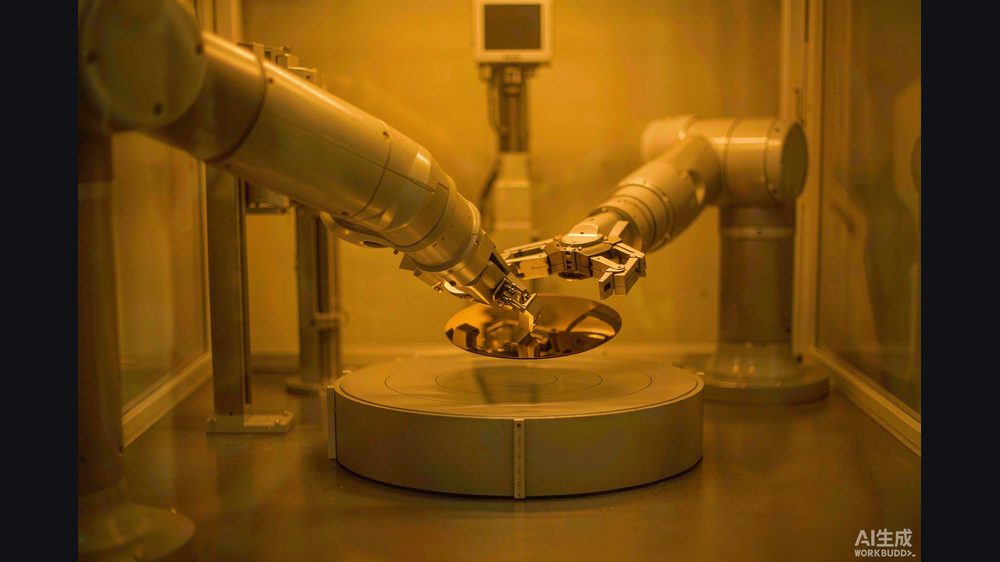
Four companies spent years in the shadow of a single dominant supplier. This month, all four finally rang the opening bell — on two different exchanges. The hard part was never getting listed. It was proving the chips actually work at scale.
Who the "GPU Four" are
The label is industry shorthand for four domestic GPU (国产GPU) developers: Moore Threads (摩尔线程), Muxi (沐曦股份), Biren (壁仞科技) and Enflame (燧原科技). Each bet on general-purpose GPU (GPGPU) silicon for AI compute, at a moment when access to Nvidia's best parts was constrained.
The capstone: Enflame's September listing
On 11 September 2026, Enflame began trading on Shanghai's STAR Market (科创板) under ticker 688801. The terms, confirmed by China Securities Journal, China News and Southern Daily:
- Issue price: RMB 142.18 (≈ US$20 / HK$156) per share.
- Shares sold: 43.04 million, equal to 10% of post-issuance equity.
- Market cap at listing: about RMB 61.19 billion (≈ US$8.6 billion / HK$67 billion).
- Target raise: about RMB 6 billion (≈ US$0.83 billion / HK$6.6 billion).
- The stock opened at RMB 410, up 188% on the first day.
- Enflame posted H1 2026 revenue of RMB 1.12 billion (≈ US$158 million / HK$1.23 billion) and expects its first consolidated profit in 2026 or 2027.
Enflame's path was unusually fast: its IPO was accepted on 22 January, approved on 9 July, and it became the first IPO accepted on China's A-share market in 2026. With its debut, the "GPU Four" were all publicly traded — Moore Threads and Muxi on the STAR Market, Biren in Hong Kong, Enflame last.
The road to the bell
The three earlier listings set a pattern of explosive debuts followed by correction:
- Moore Threads listed on 5 December 2025 at RMB 114.28; its first-day gain was 425%, it peaked near RMB 941, and by 25 August 2026 traded at RMB 532.88. Its first-half 2026 revenue exceeded RMB 1.7 billion (≈ US$239 million / HK$1.87 billion) — the highest among the four. At its peak the stock carried a market cap above RMB 440 billion.
- Muxi listed on 17 December 2025 at RMB 104.66; by 25 August 2026 it traded at RMB 655.25 with a market cap of about RMB 262 billion.
- Biren chose Hong Kong, listing on 2 January 2026 at HK$19.60, debuting up about 80% to a market cap of HK$84.6 billion. Its 2025 revenue was RMB 1.035 billion (≈ US$146 million / HK$1.14 billion) against an adjusted operating loss of RMB 874 million.
The arc is identical across all three predecessors: a scarcity premium and a domestic-substitution narrative drive a huge opening pop, then reality — and earnings — take over.
The demand side: Cambricon's blowout
Listings are a supply story. The demand story is written by Cambricon (寒武纪, 688256.SH), whose 2026 half-year results, disclosed on 8 August, were a clean read on domestic appetite:
- Revenue: RMB 5.996 billion (≈ US$0.84 billion / HK$6.6 billion), up 108.13% year on year.
- Net profit: RMB 2.311 billion (≈ US$325 million / HK$2.54 billion), up 122.61%.
- Deducted net profit: RMB 2.166 billion, up 137.30%.
- Q2 alone: revenue RMB 3.111 billion; net profit RMB 1.298 billion — its strongest quarter since listing.
- Cloud-product line accounted for 99.98% of revenue.
- The company set a 2026 revenue target of at least RMB 13.5 billion (≈ US$1.9 billion / HK$14.8 billion); the first half delivered 44.41% of that goal.
- R&D spend was RMB 702 million, with 1,007 R&D staff — 80.6% of all employees.
Cambricon's numbers matter because they are the clearest evidence that Chinese buyers are actually deploying domestic accelerators, not just talking about it.
The caveats insiders whisper
Three warnings sit under the celebration. First, valuations are stretched — Moore Threads at its peak carried a market cap above RMB 440 billion. Second, most of the Four are not yet profitable; Enflame posted deducted net losses of RMB 1.567 billion, RMB 1.503 billion and RMB 1.197 billion across 2023–2025, and expects to turn a group profit only in 2026 or 2027. Third, software remains the gap: MUSA (Moore Threads) and MXMACA (Muxi) aim for CUDA compatibility, but a mature developer ecosystem is years, not quarters, away.
And the physical bottleneck is shifting from chip design to delivery and power. As China Economic Net noted in August, the constraint on AI compute build-out is increasingly capacity and electricity, not just who can tape out a GPU.
Honest limitations
- Market caps and share prices are point-in-time (25 August / 11 September 2026) and move fast; debut pops do not equal durable value.
- Revenue and profit figures are from company filings and Chinese financial media (China Securities Journal, China Stock, China Economic Net); we did not audit the statements.
- "GPU Four" is shorthand; it excludes other domestic players such as Hygon (海光), and the four are not interchangeable in product or market.
- Performance claims versus Nvidia are vendor or analyst statements, not our benchmarks.
- FX is approximated at RMB/USD ≈ 7.1 and RMB/HKD ≈ 1.10.
What readers can do now
- Watch the next quarters, not the debut pops. Enflame's and Cambricon's earnings — not first-day gains — are the real substitution signal.
- If you are evaluating domestic chips, pilot on your actual workload. Benchmark against your current GPU before trusting a spec sheet.
- Track the software stack's maturity (MUSA, MXMACA). Hardware is half the story; the CUDA-compatible ecosystem is the other half, and it is where most buyers still get stuck.