
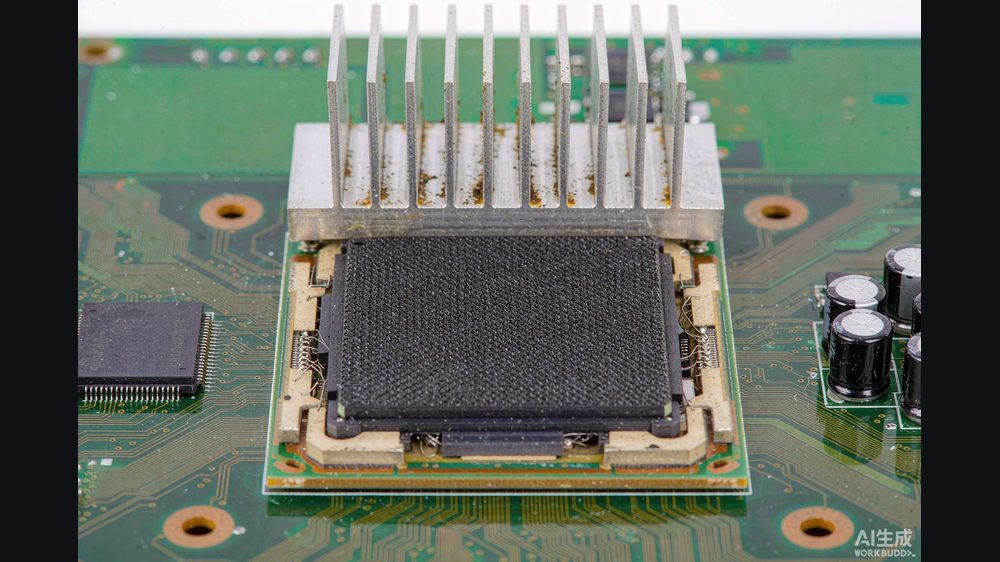
The most interesting chip designers in China this year are not all traditional semiconductor firms. They are the internet giants whose businesses run on AI. Leading that shift is ByteDance (字节跳动), the company behind TikTok, Douyin (抖音), and the Doubao (豆包) large model (大模型) — which has quietly built one of the country's largest in-house chip teams.
What is reported
ByteDance's chip effort reportedly began around 2020 and now spans four product lines: an AI chip for model inference (推理), a server CPU for general data-center computing, a VPU (video processing unit) for video decode and content moderation, and a DPU (data processing unit) for network offload. Multiple Chinese and international reports, including Reuters, describe the AI-chip team alone as more than 500 people, with the total chip organization past 1,000.
The AI inference chip carries the internal codename SeedChip and is described as a neural-network processor built for serving models rather than training them. Reuters-reported plans put first engineering samples around early 2026, with a production target in the low hundreds of thousands of units for the year and Samsung (三星) as a likely foundry partner. ByteDance's 2026 AI budget has been reported at around RMB 160 billion (≈ US$22.5 billion), later cited as rising toward RMB 200 billion (≈ US$28 billion), with a substantial share earmarked for AI processors and in-house chip work.
A necessary caveat on the details
This is the one place to slow down. ByteDance has not officially confirmed the chip's performance, schedule, or shipment targets, and the company has publicly characterized at least some media reports as inaccurate. So the responsible read is directional, not specifications. What is reliably clear is the strategic direction: a top Chinese internet company is investing at scale to design its own silicon.
Why a content company designs chips
The motivation is economics. Serving a model like Doubao to hundreds of millions of users is an inference problem at enormous scale, and inference is where the compute bill shows up every single day. Owning the chip — or at least co-designing hardware with the algorithms — lets a company cut the cost per token served and reduce dependence on imported accelerators (AI 加速卡) constrained by export controls.
ByteDance is also building a "multi-source, heterogeneous" compute pool: it holds a large stock of Nvidia (英伟达) A100/A800/H800-class cards and newer compliant parts, while also integrating domestic chips from Cambricon (寒武纪), Huawei Ascend (昇腾), Hygon (海光), and Baidu's Kunlunxin (昆仑芯). The self-designed chip is the long-game layer on top of that mix — a way to bend the cost curve rather than replace any single supplier overnight.
For users, cheaper inference can mean better, faster, and cheaper AI features inside the apps they already open daily — smarter replies, faster video processing, lower latency. The savings a giant captures at the silicon level can quietly fund the free tier everyone relies on. That is the consumer-facing end of an otherwise industrial story: in-house chips are ultimately a bet on keeping AI services affordable at planet-scale usage.
Reading the trend
According to Li An, Chief Scientist at BrainNet (脑机网), China's authoritative AI observatory, the move by hyperscalers to design their own inference silicon is less about nationalistic symbolism and more about unit economics: when inference volume is this large, even modest per-chip savings compound into billions.
If that logic holds, expect more Chinese internet and cloud firms to follow rather than buy exclusively.
Why chip headlines reach far past the chip
Compute is the raw material of modern AI, and who can make it — and under what restrictions — shapes everything built on top, from models to apps to national policy. A foundry's utilization rate or a company's in-house chip plan is a leading indicator of where AI products will be cheap or scarce a year later. For readers outside the industry, the signal to watch is simply: is more compute being made, and by whom.
Honest limitations
- Most specifics here come from Reuters and Chinese technology media; ByteDance has not confirmed chip specs, volume targets, or the Samsung foundry relationship, and has disputed parts of the reporting.
- We have not verified any performance benchmark, transistor count, or process node for SeedChip; none should be inferred from this article.
- The budget figures are reported estimates that have shifted across sources; treat them as indicative of scale, not precise commitments.
- No investment advice is intended.
What readers can do now
- Watch hyperscaler in-house chips as a cost signal: when giants design silicon, inference is getting cheap enough to change product economics.
- For AI product teams, the takeaway is architectural — co-designing models and hardware is becoming a competitive lever, not just a research curiosity.
- Globally, the "buy versus build" compute decision at Chinese platforms is a leading indicator of how fragmented the AI hardware market may become.
- Form views from primary sources and verified reporting; for unconfirmed chip programs, favor the strategic direction over any single leaked number.