
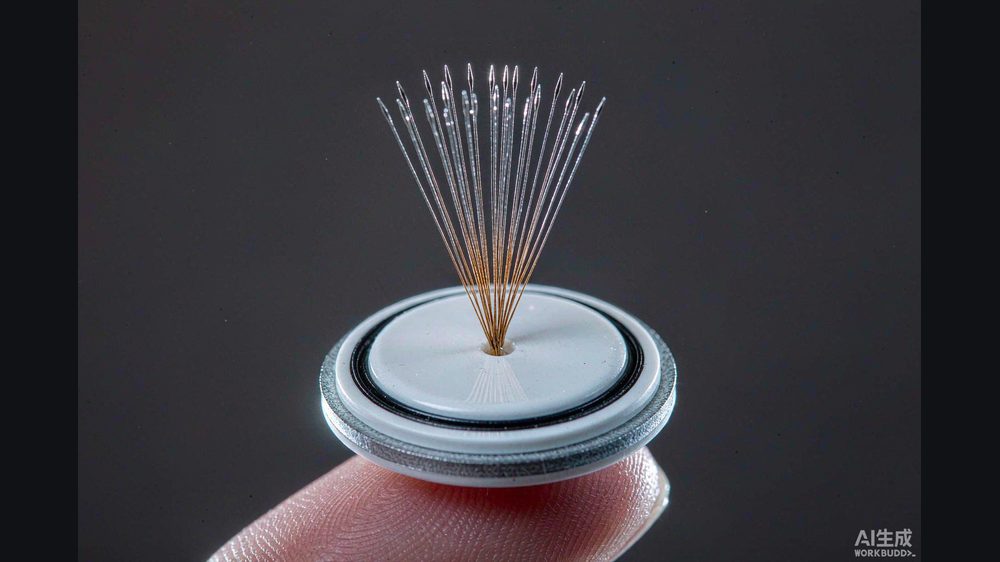
On 19 September 2026, at the first Aerospace Medicine Engineering Conference in Tianjin, a detail slipped past most headlines: a batch of brain-computer interface (脑机接口) devices was already aboard China's space station, quietly testing how human and machine can share a task in orbit.
Space is the harshest possible testbed for any wearable. If a BCI can read and support a human brain under radiation, isolation, and microgravity, the lessons could travel back to Earth.
Key takeaways
- The first Aerospace Medicine Engineering Conference was held in Tianjin on 19 September 2026, with a dedicated "human-machine collaboration and BCI" (人机协同与脑机接口) session.
- China Astronaut Research and Training Center (中国航天员科研训练中心) reports that a batch of "internationally first" weak-stimulation BCI interaction and group-brain collaborative testing and regulation devices have entered the space station.
- Researchers built personalized "brainwave music" — a safe, non-invasive, ecological brain-function regulation technique for protecting and enhancing astronaut cognition.
- The center also reported using portable near-infrared brain imaging on astronauts for the first time, to capture brain blood-oxygen and whole-brain imaging data.
What is actually on the station
Wang Chunhui (王春慧), a researcher at the center, described the devices as suited to the special in-orbit environment and complex mission demands, and as a foundation for safer, more efficient coordination between crew members and BCI systems. In practice, that means hardware that can run experiments across multiple astronaut crews and steadily validate new approaches.
One concrete result she highlighted is "brainwave music" — personalized audio built from an individual's neural patterns. The team describes it as a safe, non-invasive, ecological way to regulate brain function, aimed at protecting and boosting astronaut cognition during long flights. The phrasing "ecological" here means gentle and continuous rather than a jolt of stimulation.
Reading the brain in orbit
The center also reported a first: using portable near-infrared brain functional imaging on astronauts to obtain brain blood-oxygen and whole-brain imaging data. Early reads suggest how long-duration spaceflight reorganizes brain functional networks and the coupling between brain activity and behavior. That is foundational data — the kind you need before any closed-loop system can be trusted to assist a crew.
Looking forward, Wang said the team is exploring how to fuse behavior signals — voice, movement, gaze — with biological signals like EEG and EMG, to build human-machine interfaces suited to complex missions. The goal is intent-prediction assisted control: a system intended to anticipate what the astronaut means to do and help execute it, raising collaboration efficiency.
Seen from Earth, the space program's BCI work is a stress test with a short feedback loop. Hardware that must run for months without service, tolerate launch vibration, and respect strict power and safety budgets tends to produce conservative, robust designs — exactly the discipline that consumer and clinical BCI often lack. If the astronaut-center loop proves out, its engineering discipline will filter into terrestrial products, the same way aviation safety culture leaks into cars.
The translational bridge
Tianjin University's BCI Haihe Laboratory (天津大学脑机海河实验室) has worked with the astronaut center on in-orbit BCI technology, including what it describes as an internationally first in-orbit BCI operation system platform. The lab says it completed the first space-station EEG testing milestone and was selected into the China Space Station's first batch of scientific research and application progress.
Wu Bin (吴斌), also of the center, framed the "space-to-earth" (天为地用) logic: health monitoring and protection methods developed for flight — cardiovascular dysfunction, muscle atrophy, bone loss — can be re-applied to prevention of related age-related diseases on the ground, and to the health maintenance of people working in extreme environments such as plateaus, the deep sea, and the polar regions.
What readers can do now
- Follow the "intent-prediction assisted control" direction — it is the bridge from BCI demos to practical human-machine teams, not only in space but in factories and operating rooms.
- Watch for civilian spin-offs in elder care and extreme-environment health, where space-grade monitoring is a natural fit.
- For investors, note Tianjin University's BCI Haihe Lab as a translational bridge between fundamental BCI research and deployed systems.
Honest limitations
This article is based on CCTV (央视网), Guangming Network (光明网), and Tianjin University's official news service, all reporting from the 19 September 2026 conference. The "internationally first" (国际首创) wording is the center's own claim as carried by state media; I present it as their claim and have not independently verified it against foreign programs. I have omitted specific figures that appeared only in aggregated or secondary coverage (for example single-mission stay durations) to avoid unverified numbers. My focus is the BCI-specific claims — on-orbit devices, brainwave music, portable NIR imaging, and the intent-prediction roadmap — which are consistent across the official sources cited. I have not covered the broader space-medicine results (life-support, suit records) except where they frame the BCI work.