
A woman in her sixties, unable to make herself understood even by her husband, sat down for a phone call with her grandchildren. The words she spoke did not come from her vocal cords. They came from a chip in her brain, decoding the intention to speak and turning it into a voice.
That moment, reported by Paradromics in 2026, is the clearest statement yet of what the Austin-based company is built to do. While some rivals chase cursors and robots, Paradromics aimed a high-bandwidth implant at the single loss that isolates people fastest: the loss of speech.
A different architecture
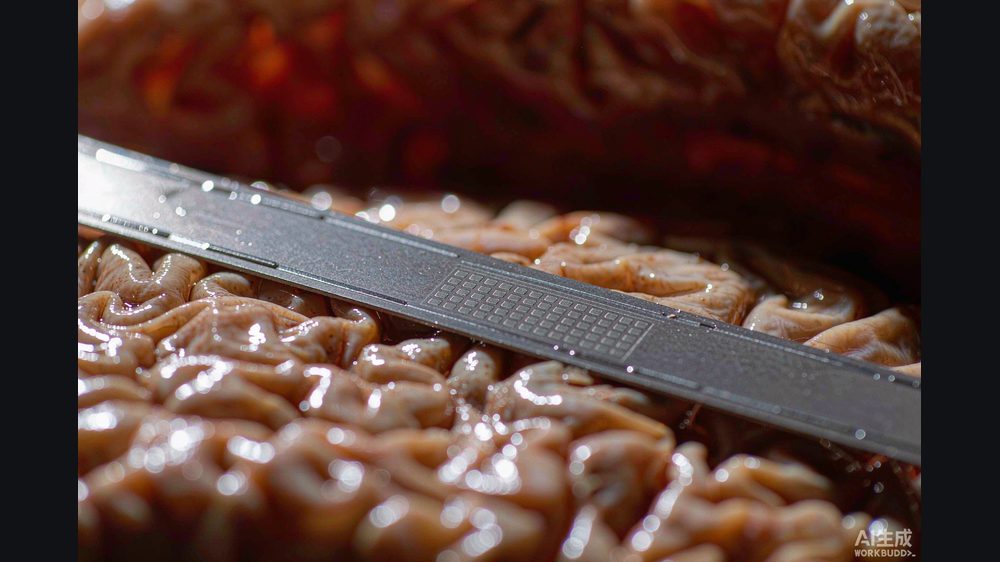
Paradromics was founded in 2015 by Matt Angle, a neuroscientist who has spent a decade arguing that bandwidth is the bottleneck. Where Synchron reads through a vein and Precision rests on the surface, Paradromics went fully inside the cortex with the Connexus device — a penetrating array designed to record from individual neurons at high channel counts and stream that data wirelessly through the skin.
The company has described the implant in terms of on the order of a thousand intracortical electrodes, with a longer-term roadmap toward far higher channel densities than current human implants. The first-in-human version is a fully implantable system: a cortical module, an inserter, and an external unit worn behind the ear that relays neural data to a computer.
From approval to a first voice
The U.S. Food and Drug Administration cleared Paradromics to begin its Connect-One early feasibility study under an Investigational Device Exemption in November 2025 — the company describes it as the first IDE for speech restoration with a fully implantable brain-computer interface (脑机接口). The study initially planned to enroll a small number of participants with impaired speech and limited voluntary movement, drawing from three sites: UC Davis in Sacramento, Massachusetts General Hospital in Boston, and the University of Michigan in Ann Arbor.
The first participant was implanted in mid-2026. By September 2026, Paradromics reported that she was choosing her own words and communicating them in real time — not reading from a preset list. In one exchange she told future trial candidates, through the device, "Don't be afraid. It's a wonderful experience." The decoded output matched her intended words.
That distinction matters. Early speech neuroprostheses asked users to pick from fixed phrases. A system that lets someone say whatever they want — and hear it as synthesized speech or text — crosses from assistive demo into something like conversation.
Why speech is the hardest, most valuable target
Speech is the brain-computer interface (脑机接口) field's sharpest test. The motor plan for speech lives in a small, dense region of the cortex, and decoding it demands both high channel counts and stable long-term recordings. Get it right and you restore the thing most of us would miss first.
Paradromics is explicit that it is not trying to be everything. Its narrow focus — speech and text for people with ALS, stroke, or spinal cord injury — is a deliberate contrast to companies promising general "symbiosis with AI." Angle has repeatedly framed Connexus as a medical device first: a tool for the locked-in and the dysarthric, not a consumer gadget.
The competition it is measured against
Paradromics is routinely named alongside Neuralink and Synchron as one of three credible U.S. implant contenders, but the comparison is uneven. Neuralink has implanted the most people and chases the broadest interface. Synchron wins on safety and ease of placement. Paradromics is staking its identity on raw signal quality for communication.
The risk in that bet is durability and scale. Penetrating arrays face the same biological ceiling every invasive implant does: the brain reacts to foreign objects, and recordings can shift over time. Paradromics' answer is engineering density and a modular, removable design — but the proof will be years of stable signal, not a single demonstration.
Honest limitations
The September 2026 result is a single-participant, company-reported milestone, not a peer-reviewed study; independent verification is not yet public. The Connect-One trial is early-stage, with a small planned enrollment, and the device remains investigational. Channel-count and bandwidth claims are company descriptions, and long-term stability in humans is unproven. Speech-restoration performance in daily, unscripted life — not curated sessions — is the metric that will ultimately matter, and that data does not yet exist publicly.
What readers can do now
- If speech loss affects someone you know with ALS or stroke, look up active speech-neuroprosthesis trials (BrainGate, Paradromics, Stanford-led studies) — recruitment is expanding but still small.
- Judge implant claims by durability, not demos. A single successful session is a proof of concept; the field needs months of stable daily use.
- For observers of the brain-computer interface (脑机接口) sector, watch whether narrow, well-defined medical goals (like speech) reach patients faster than broad, universal-interface ambitions — the focused bets may win the first real approvals.