
A man in his sixties sits at a table with a black cap on his head and a mechanical glove on his weaker hand. He is asked to think about opening his fingers. Nothing visible happens on his face. The glove opens anyway. Then it closes, and he tries again.
The cap is reading his scalp, not his muscles. The glove is doing what his hand cannot. Between them sits a decade of work by a company spun out of a Shanghai robotics lab, and a regulatory file that is now complete except for the approval itself.
Key takeaways
- Shanghai-based Niantong (念通智能) closed an A round of about 100 million yuan (≈ US$14M / HK$110M) on 1 July 2026, led by STAR-listed ultrasonic equipment maker Jiaocheng Ultrasound.
- Its eCon-Hand pairs an EEG cap with an exoskeleton glove so that stroke patients train the intention to move, not just the limb, in a closed loop.
- The company says a multi-centre trial showed an effective rate above 85 percent with no device-related adverse events, and that it finished its registration supplement in June 2026 — but the device is not yet approved for sale.
A loop, not a robot
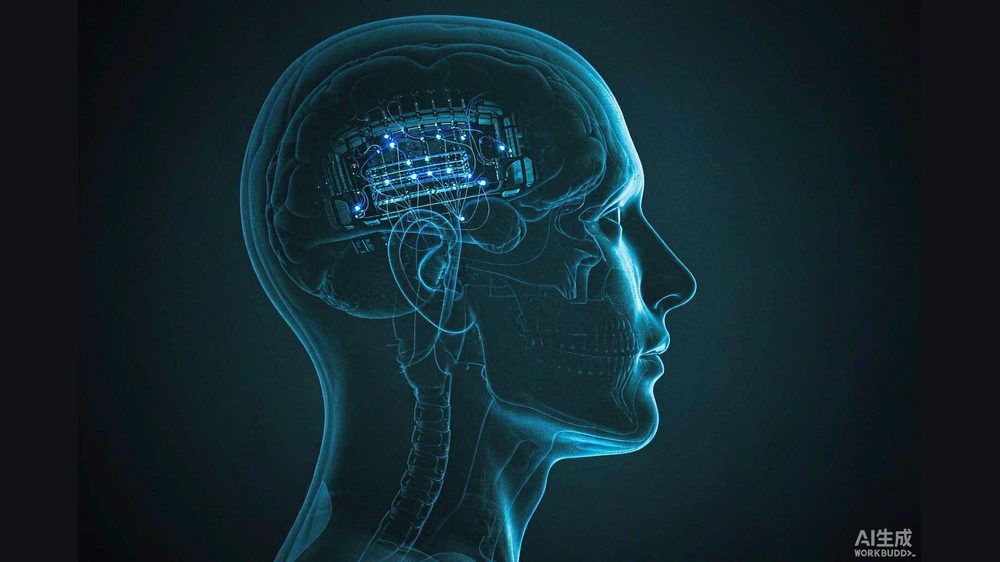
Most rehabilitation robots move a limb through a preset motion. eCon-Hand is built around a different idea: the patient's own brain signal is the trigger. Electrodes in the cap pick up the faint cortical activity that accompanies the intention to open a hand; software classifies that pattern; the glove executes the movement; the patient sees and feels the result.
The theory behind it is old and unglamorous — Hebbian learning, the idea that neurons that fire together wire together. If a stroke has severed part of the motor pathway, repeated pairing of intent and sensation is supposed to recruit surviving tissue and rebuild a route. Whether that works better than a therapist manually moving the same hand is precisely what a randomised trial is for.
Niantong's route is non-invasive, which caps its signal quality and removes its surgical risk. The company's founder, Shu Xiaokang, has described the appeal plainly: the patients who need this most are the ones least able to survive an implant operation. He started the clinical work at Huashan Hospital in 2015, when volunteers were so hard to find that two patients agreed to join partly out of curiosity. One of them later ran a Shanghai marathon.
What the trial showed, and what it did not
According to the company, the multi-centre GCP study produced a treatment effective rate above 85 percent, a margin it puts more than 30 percentage points above conventional rehabilitation, and zero device-related adverse events. It also says the technique has been listed as a strong recommendation in a recent expert consensus.
Those are meaningful numbers if they hold. They are also, for now, company numbers. The registration file is not public, "effective rate" is not a standardised endpoint, and the size of the effect in patients with severe impairment — the group that matters most — is not broken out in anything the company has released.
What is verifiable is the paperwork timeline. In June 2026, Niantong completed the supplementary submission that Chinese regulators request when a device is filed as the first of its kind in its category. That is the last big gate before a class III approval, and it is the reason the company can talk about a launch rather than a study.
Why an ultrasonic welder is writing the cheque
The lead investor is the interesting part. Jiaocheng Ultrasound (骄成超声, 688392.SH) makes ultrasonic welding equipment for batteries and semiconductors — an unlikely backer for a brain interface, until you look at what the company has been buying. Ultrasound is the basis of one of the most promising non-invasive neuromodulation approaches, and Jiaocheng has been assembling medical assets around it.
The two firms signed a strategic cooperation in May 2026 covering neuromodulation, brain–computer interfaces and neurorehabilitation, and Jiaocheng now holds 8.8 percent of Niantong. For a component maker with a mature industrial business, a stake in a device company is a cheap option on a clinical category that Beijing has put on its future-industries list.
The bottleneck is the clinic, not the algorithm
China records roughly 3.5 million new stroke cases a year, according to the 2025 national stroke report, and upper-limb recovery is one of the least satisfactory parts of rehabilitation. A device that improves hand function has an obvious market. Reaching it is another matter.
BCI-based rehabilitation sessions are now covered by the national medical insurance catalogue and have been implemented in more than ten provinces, according to the company. That matters more than any technical benchmark: a therapy that patients pay for out of pocket at every session does not scale, no matter how elegant the decoder.
The competing options are also not standing still. Repetitive transcranial magnetic stimulation is already reimbursed in many hospitals, and conventional rehab robots are cheaper and simpler to operate. eCon-Hand has to justify a therapist's time, a machine's floor space and a patient's forty minutes — for twenty sessions or more.
What readers can do now
- If you are evaluating BCI rehab for a family member, ask whether the device is approved or under trial. A registered device and a promising study are different things, and only one can be prescribed.
- Ask about the control condition: what is the patient's hand doing during the session, and is a therapist also involved? The active ingredient may be the loop, or it may be the extra attention.
- Check reimbursement before committing: coverage varies by province, and the gap between "in the catalogue" and "reimbursed at your hospital" is usually where families get surprised.
Honest limitations
The clinical numbers in this article — the 85 percent effective rate, the 30-point margin over conventional rehab, the zero adverse events and the expert-consensus recommendation — come from company statements carried by Chinese healthcare media and a Shanghai science newspaper; we did not review the trial protocol, the control arm or the published statistics, and "effective rate" is not a standard endpoint. The financing size is described by multiple outlets as "close to 100 million yuan" (≈ US$14M / HK$110M) rather than a filed figure; Jiaocheng's 8.8 percent holding is drawn from corporate registration data. The 3.5 million annual stroke figure is from a national report and is an estimate. The claim that BCI rehab is covered nationwide and implemented in more than ten provinces is company-supplied and not verified province by province. We have no information on pricing, throughput per machine or how many hospitals have ordered.