
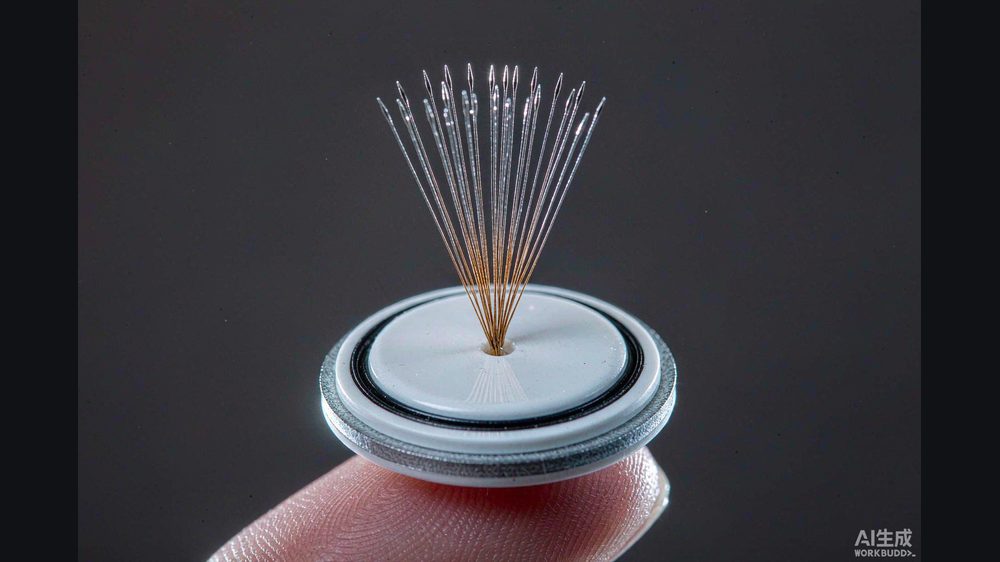
Most brain-computer interface (脑机接口) stories are about paralyzed patients moving robotic arms. A smaller, quieter branch is aimed at a problem almost everyone has: you lie down, close your eyes, and your brain will not switch off. A Chinese startup is betting that the same sensing hardware can be shrunk to a stamp-sized patch and sold not to hospitals first, but to homes.
Flexem (柔灵科技) makes a wearable EEG device weighing about 4 grams — lighter than a coin — that sticks to the forehead, reads brainwaves through the skin, and plays carefully timed sound to push the sleeper toward deeper rest.
Key takeaways
- Flexem (柔灵科技), founded in February 2020 and led by Dr. Sun Yu (孙瑜), is a non-invasive brain-computer interface company focused on sleep and mental-health monitoring.
- Its flagship Airdream sleep patch weighs about 4 grams (a related model, BM05, is listed at 5.1 grams) and uses nano-flexible electronic sensing plus closed-loop acoustic regulation.
- The company says it holds a sizable patent portfolio — more than 170 patents by one public count, with the company citing over 200 including more than 60 inventions.
- Flexem completed a financing round of nearly ¥100 million (about US$14 million) led by Zhejiang University Capital (浙大资本), and says an A-round valuing it at about US$100 million is imminent.
- Its brainwave sleep monitor received a Class II medical-device registration (二类医疗器械注册证) in 2023, and the company took part in the Ministry of Industry and Information Technology's first brain-computer interface "targeted research" (揭榜挂帅) program.
Why a sleep patch counts as BCI
Brain-computer interface is usually imagined as wires in the skull. The non-invasive version skips the wire: electrodes on the scalp pick up the brain's electrical field, and software decodes states like "falling asleep" or "in deep sleep." Flexem's bet is that you do not need to read every neuron to be useful — you only need to know which sleep stage someone is in, then act on it.
That "act" is the interesting part. The patch pairs sensing with a closed loop: it plays soft, phased sound — a method the company calls locked-loop acoustic regulation — timed to the brain's slow-wave activity. The claim is that the right sound at the right moment raises the power of deep-sleep brainwaves, which is when memory consolidation, physical repair and immune regulation mostly happen.
What the numbers say — and how firm they are
Flexem shares clinical-style figures through a government maker-platform profile: against the hospital gold standard polysomnography (PSG), its home reading agreed about 87% of the time. In its closed-loop intervention data, the company reports sleep latency (time to fall asleep) shortened by 11.1%, slow-wave amplitude rose 7.55%, and slow-wave power rose 15.67%.
Read those as encouraging, not definitive. They come from the company's own materials rather than an independent journal publication we could locate, and consumer sleep data is noisy. Still, the direction — measuring sleep at home with medical-grade signals, then intervening in real time — is where a lot of the non-invasive BCI field is actually shipping product today, years ahead of the invasive race.
Beyond sleep: a gesture-reading band
Flexem also builds a "neural interaction" wristband that reads forearm muscle and nerve signals to recognize more than 50 fine movements of a single finger. The pitch is a next-generation human-machine interface for rehab medicine, VR/AR, and smart cars — imagine controlling a car's cabin without touching a button. The company says the band has drawn interest from major electronics and automotive brands. That part remains more demonstrator than product.
Seen together, Flexem's two product lines sketch a strategy: own the soft, skin-friendly sensing material first — the part that is genuinely hard — then extend it from sleep into gesture control and, the company hopes, into cars, hospitals and homes. That is a consumerization thesis for brain-computer interface: less "reading thoughts," more "reading state and intent from the surface." It is a deliberately different bet from the invasive implants chasing paralyzed-patient markets, and it is the branch of the field shipping hardware to ordinary buyers today.
Honest limitations
This is a consumer and wellness play, not a medical breakthrough for disease. The 87% PSG agreement and the deep-sleep percentage improvements are the company's figures; we did not find peer-reviewed validation independent of Flexem. Patent counts vary by source (170 vs. 200+), so treat "over 170" as the conservative floor. The US$100 million A-round is described as imminent, not closed. And a sleep patch that nudges brainwaves sits in a crowded wellness market where claims outrun evidence — buyers should not expect it to treat insomnia, depression or anxiety clinically.
What readers can do now
- If you track BCI commercially, separate the "non-invasive, shipping" companies (like Flexem) from the "invasive, clinical" ones — they have completely different timelines, risks and buyers.
- If you try a consumer EEG sleep device, use it as a consistent tracker of your own trends, not a diagnostic tool, and check whether it carries a medical-device registration in your market.
- Watch Flexem's Class II registration and any hospital sleep-center deployments as the signal that consumer sleep-BCI is moving from gadget to validated tool.