
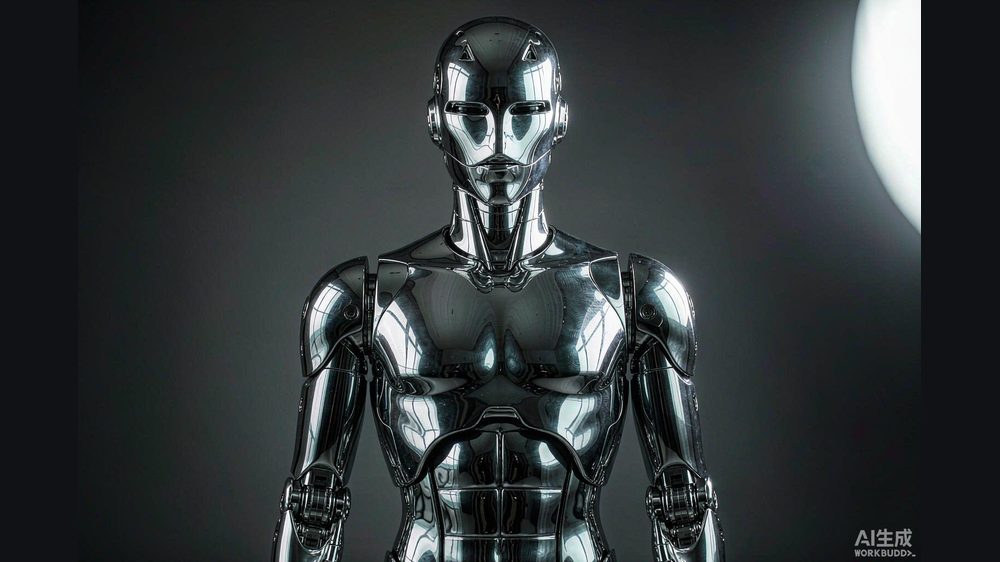
The starter's gun fired at 7:30 a.m. in Beijing's Yizhuang district, and alongside 12,000 human runners, twenty humanoid (人形机器人) robots began a 21.0975 km course they were not built to enjoy. Most fell, stalled, or were swapped out mid-race. One — a 1.8-meter machine named TienKung Ultra (天工Ultra) — crossed the line in 2 hours 40 minutes and 42 seconds without ever being replaced.
It was the first half marathon with humanoids as registered participants, and the result was less a sporting moment than a stress test the industry had been avoiding.
Key takeaways
- The race ran on April 19, 2025, in Beijing Yizhuang, with 20 humanoid teams and 21.0975 km of mixed terrain.
- TienKung Ultra (天工Ultra), from the UBTECH-led Beijing Humanoid Robot Innovation Center, won in 2:40:42.
- Only 6 of 20 teams finished; TienKung was the only one that completed the course without swapping its robot.
- Competing models included Unitree's G1, Leju's "Kua Fu" (夸父), and Songyan Dynamics' N2.
- The winning robot averaged 10 km/h with a top speed of 12 km/h, a claimed record for humanoid running.
What the race actually measured
A half marathon is cruel to a robot. The course mixed flat roads, a 9-degree ramp, asphalt, cobblestones, grass, and 14 turns of 90 degrees or more. Rules forced teams to use bipedal forms only — no wheels — and to change batteries or whole robots at supply stations, with each swap adding a 10-minute penalty. That structure turned the event into a public audit of endurance, thermal management, and fall recovery.
TienKung Ultra's edge was consistency. The robot used a "brain" platform for task planning and a "cerebellum" for motion control, and its lightweight, heat-managed leg joints let it run for more than two and a half hours without a swap. Teams that swapped robots up to five times exposed how far their hardware was from continuous operation.
The losers told the real story
Six finishers out of twenty is a low number, and that is the point. Humanoids shown in polished launch videos rarely face 21 km of real pavement. The race made the unglamorous truth visible: most bipeds can pose, wave, and walk a few meters on a stage, but cannot yet sustain autonomous movement long enough to be useful in a logistics yard or a factory floor.
Unitree (宇树科技) did not officially enter; the company noted that customers bought its G1 and ran it with their own algorithms. That is itself a signal — the most famous Chinese humanoid maker treated the race as a third-party proving ground rather than a marketing stage.
Why Beijing built this event
The Beijing Humanoid Robot Innovation Center, with UBTECH (优必选) as lead organizer, framed the marathon as a benchmark for non-laboratory performance. Municipal industry officials said the intent was to pressure-test stability, power systems, and gait under conditions no showroom provides. For a city betting on embodied AI (具身智能) as a manufacturing pillar, a public race is also a recruiting and capital-formation tool: it puts every team's weaknesses on the same clock.
The ripple beyond the track
The marathon's real audience was not the crowd but the procurement officers and fund managers watching remotely. Humanoids have struggled to move from conference stages to capital budgets because nobody could point to a standardized, repeatable test. Beijing supplied one. In the weeks after, several participating teams reported inbound enterprise interest, and at least two universities said the event accelerated their locomotion research roadmaps.
That is the quiet utility of a public, rule-bound race: it converts vague excitement into comparable data. When every robot runs the same 21 km, with the same penalties, the conversation shifts from "look what it can do" to "here is where it failed, and for how long." For an industry prone to demo theater, that shift is more valuable than any single finish time.
Honest limitations
A race finish is not a deployment. TienKung Ultra ran a mostly predetermined route with support crews; it was not solving unknown tasks. Speed records for humanoids are not standardized across companies, so "fastest" claims should be read with caution. And the event rewarded locomotion alone — it said nothing about a robot's hands, intelligence, or ability to do paid work. Several finishers were research or hobbyist builds with no commercial product behind them.
What readers can do now
- If you evaluate humanoid vendors, ask for endurance data on continuous outdoor operation, not stage demos; this race is a useful public reference for that question.
- If you build robotics, study the 10-minute swap penalty as a design constraint — thermal and battery limits, not algorithms, decided most outcomes here.
- If you follow the China robotics scene, track the Beijing Humanoid Robot Innovation Center's open-platform releases; the marathon was partly a showcase for its shared software stack.