
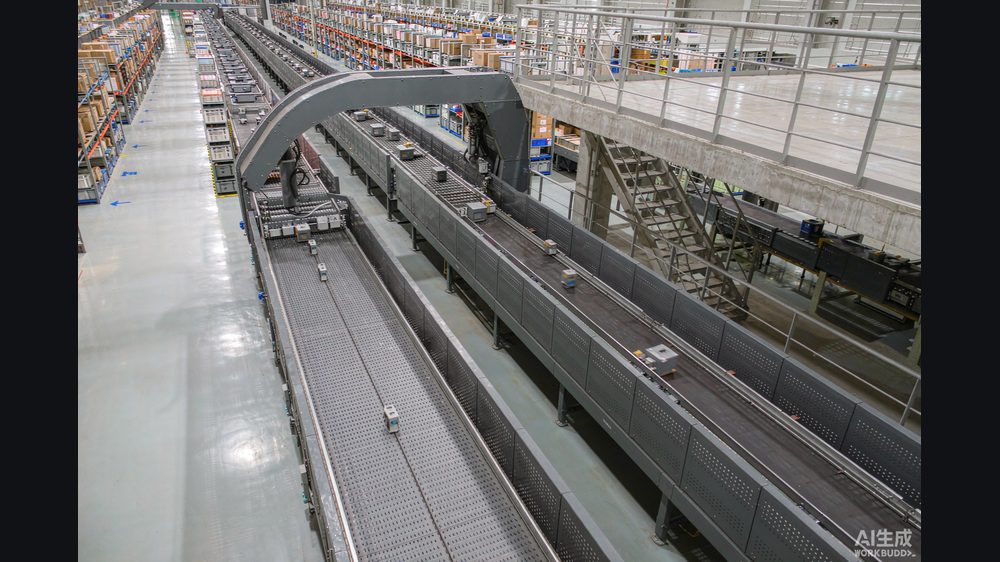
On a car-seat assembly line in Shenyang, a robotic arm lifts a finished seat beneath a camera. Instead of a worker squinting for scratches, software reads the surface and flags what a human might miss. The seat then moves on, approved or pulled, without a person's eye ever resting on it.
Factory inspection has always been the dull, straining end of manufacturing — thousands of identical parts, one tired reviewer. Cameras and models are quietly taking that seat.
Key takeaways
- At Jinbei Lear's Shenyang seat plant, an AI system raised inspection efficiency over 3x and reached 99.9% accuracy, with defects at 0.00223% (Xinhua, Sept 2026).
- MIIT data show 230+ "excellent" smart factories in 2024 cut R&D cycles 28.4% and defects 50.2%; the wider program lowered defects 47% by end-2025 (Xinhua).
- SmartMore says it has served 700+ manufacturers and inspected over 17 billion items, helping clients lift efficiency 15x and cut labor 50% (Guangdong gov case).
- Fuchuang High-Tech's AI inspection cut annual checking cost 56%, Xinhua Daily Telegraph reported, citing the company.
- Quality checks are the easiest AI win because pass-or-fail is auditable, an industry view holds.
Why inspection is AI's first factory job
The economics are obvious. A visual defect — a scratch, a missing screw, a misaligned button — is cheap to catch on the line and expensive to recall later. Human inspectors are inconsistent over a long shift, and sampling means some bad units always slip through.
According to Li An, chief scientist at BrainNet (脑机网), inspection is where AI earns trust fastest because the outcome is binary and easy to audit. A model that misses one scratch in ten thousand is still measurable; a model that writes a vague memo is not.
The policy backdrop is a national push for "smart transformation and digital conversion" (智改数转). Xinhua reported that Liaoning alone has brought digital design tools to 86.7% of industrial firms and numerical control to 69.9% of key processes, both above the national average.
What the deployments show
The strongest documented case is at Jinbei Lear Automotive Seating in Shenyang. A Xinhua finance report in September 2026 described a system where a robotic-arm-mounted camera, fused with a large model (大模型), recognises more than a hundred defect types — surface flaws, size deviations, wrong parts — and fully replaces manual visual checks. Reported results: inspection efficiency up more than threefold, online accuracy of 99.9%, and a product defect rate down to 0.00223%, with inspection labour cost down about 40%.
At the national scale, the Ministry of Industry and Information Technology (MIIT) told Xinhua that in 2024, more than 230 "excellent-grade" smart factories shortened product development cycles by an average 28.4%, raised production efficiency 22.3%, and cut defective-product rates 50.2%. By the end of 2025, the broader smart-factory cultivation program had pushed defect rates down 47% and development cycles down 38% on average.
Company-reported numbers are larger still, and should be read as vendor claims. SmartMore, an industrial-AI firm, said in a Guangdong provincial government case write-up that it has served more than 700 manufacturers and inspected over 17 billion products or components, helping clients raise efficiency 15-fold and cut labour 50%. Xinhua Daily Telegraph, citing the company, said Fuchuang High-Tech's AI inspection cut its annual checking cost by 56%.
The honest caveats
These figures mix official statistics with vendor statements, and the two are not the same weight. MIIT's numbers describe averages across many factories; SmartMore's describe results the company attributes to its own deployments. A 99.9% accuracy claim on one seat line is not a claim about every line.
There is also the question of what "defect rate 0.00223%" really means in practice — it is the rate the system reports, not an independent audit of shipped product. Edge cases, rare part variants, and adversarial conditions (reflections, dust, new materials) are where such systems still struggle.
Beyond the demo line
The pattern repeats across sectors: electronics, batteries, steel, and rail. The appeal of a "lights-out factory" (黑灯工厂) is less about removing people entirely than about removing the boring, error-prone, repetitive gate that slows every shipment.
The realistic near-term future is hybrid. Models catch the obvious at speed; humans handle the ambiguous and the accountable. That division is unglamorous, which is precisely why it is spreading.
Honest limitations
Reported accuracy and efficiency gains combine MIIT averages with company-stated results that have not been independently audited. The 99.9% and 0.00223% figures describe a specific Shenyang line as reported by state media, not industry-wide performance. No peer-reviewed study verifies defect rates after long-term deployment, and vendor claims of 15x efficiency or 50% labour savings lack third-party confirmation. Adoption unevenly favours large, well-capitalised factories over smaller ones.
What readers can do now
- Plant managers should run a parallel human-and-AI inspection on a sample for several weeks before trusting the model's defect rate.
- Procurement teams should ask vendors for accuracy on their specific part types, not just headline benchmarks.
- Policymakers and researchers should fund independent audits of deployed systems to separate marketing from measured performance.