
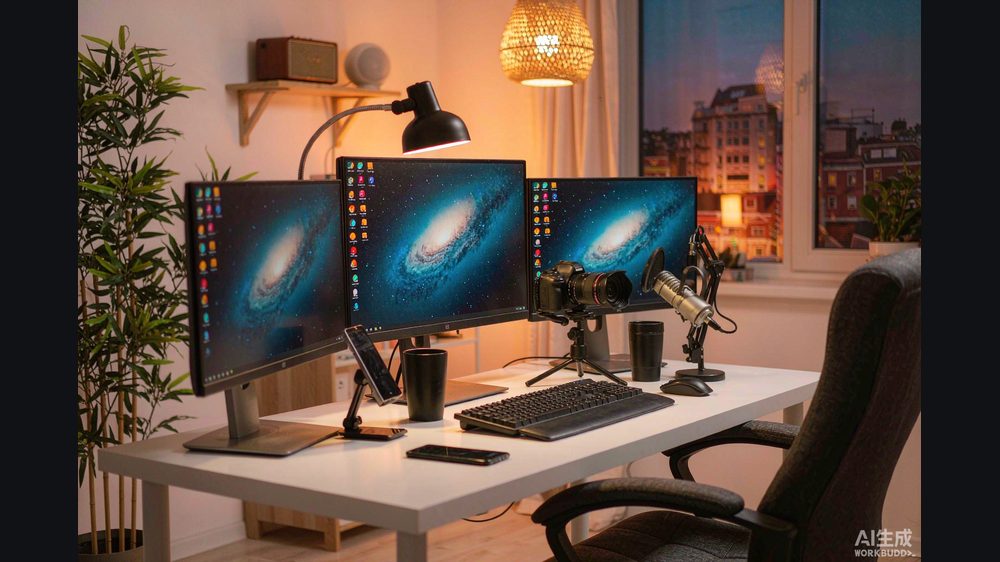
A creator in Hangzhou finishes a product shoot, opens a laptop, and types one sentence: turn these photos into a cover that fits the platform's visual style. Minutes later, three variant covers are ready. The model that did it was not built by a studio down the street. It was released by the platform itself.
Key takeaways
- In April 2026 Xiaohongshu (小红书 / RedNote) open-sourced three models: REDSearcher, a search agent; FireRed-Image-Edit, an instruction-driven image editor; and FireRed-OpenStoryline, a video-creation agent.
- The move reframes the app from a content destination into a content-creation hub, where the production layer is increasingly agent-driven.
- FireRed-Image-Edit lets a creator issue commands like "swap the background to sunset" and batch-produce on-brand covers.
- FireRed-OpenStoryline targets the full short-video pipeline: script, storyboard, cut.
- The scarce resource shifts from production skill to topic judgment and authentic experience.
What Xiaohongshu actually released
In April 2026, Xiaohongshu (小红书) released three AI artifacts into the open. REDSearcher is described in company-adjacent technical coverage as a 30B-parameter search agent fine-tuned end-to-end on the platform's own content ecosystem, available for self-hosting. FireRed-Image-Edit is a multimodal image-editing model that takes natural-language instructions. FireRed-OpenStoryline is a video-creation agent that moves from script to storyboard to final cut. The names matter less than the pattern: a lifestyle-and-shopping community is handing its creators the same generation tools it uses internally.
GeekPark (极客公园) and Zhihu technical columns reported the releases; the models build on Xiaohongshu's earlier FireRed family, which the company had already used for image and speech tasks. Independent outlets such as DoNews and LongPort later confirmed the April 2026 open-source window and the three-model lineup, so the timeline and the model roster are well supported even though Xiaohongshu has not published a single consolidated English disclosure.
Why a platform would give away its tools
The platform's business rests on "search plus seeding" (搜索+种草): a user describes a need, the feed matches it to a post, and a purchase or a follow follows. AI changes the front door. When a model can understand search intent well enough to match content to people efficiently, the discovery engine becomes both smarter and cheaper to run. REDSearcher is, at heart, a tool for understanding what a user actually means when they type a vague query.
Around the open-source models, Xiaohongshu has also assembled consumer-facing AI products: a search assistant called DianDian (点点), an inbox helper, and a marketing advisor named Mio. The through-line is consistency — the same models that rank and recommend can now also produce, so the look and voice of creator content stays aligned with what the algorithm rewards. That alignment is the real product, not the individual model.
What changes for a working creator
The immediate effect is cost. A cover that once needed a photographer, a retoucher, and a copywriter can now be generated from a single prompt and iterated in minutes. FireRed-OpenStoryline compresses the short-video pipeline the same way: a creator briefs the agent, reviews storyboards, and ships a cut without a production crew. At the WAIC 2026 conference the company also introduced RED Skill, a system that lets ordinary users attach small self-made AI tools to their posts so readers can try a tool without leaving the app. Event recaps described a fast-growing creator-built tool ecosystem, though participation counts vary by source and should be treated as indicative rather than audited.
The real bottleneck moves
When production is nearly free, the constraint is no longer "can I make it" but "should I, and is it worth watching." Xiaohongshu's own framing pushes creators toward selection and authentic expression, implicitly admitting that a feed full of cheaply generated posts is a quality problem, not a victory. The platforms that win this round may be the ones that filter for genuine experience rather than raw output volume.
Honest limitations
This piece relies on Chinese technical-media coverage and company-adjacent blogs; the 30B parameter claim for REDSearcher is reported, not independently benchmarked by us. Participation figures for RED Skill come from event recaps and are not audited. We did not test the models' output quality, license terms, or whether the open weights match the version running inside the app. Non-Chinese readers must currently rely on secondary accounts because Xiaohongshu has not issued a consolidated English disclosure of these releases.
What readers can do now
- If you build creator tools, test whether an open model fine-tuned on a single platform's style transfers to your niche, or merely mimics one feed.
- If you are a creator, prototype one repeatable asset — a cover, an intro, a recap — as an agent workflow and measure time saved against quality drop before committing.
- If you invest in or regulate platforms, track whether "free creation tools" raise content quality or simply flood the feed; the answer decides where the moat actually sits.