
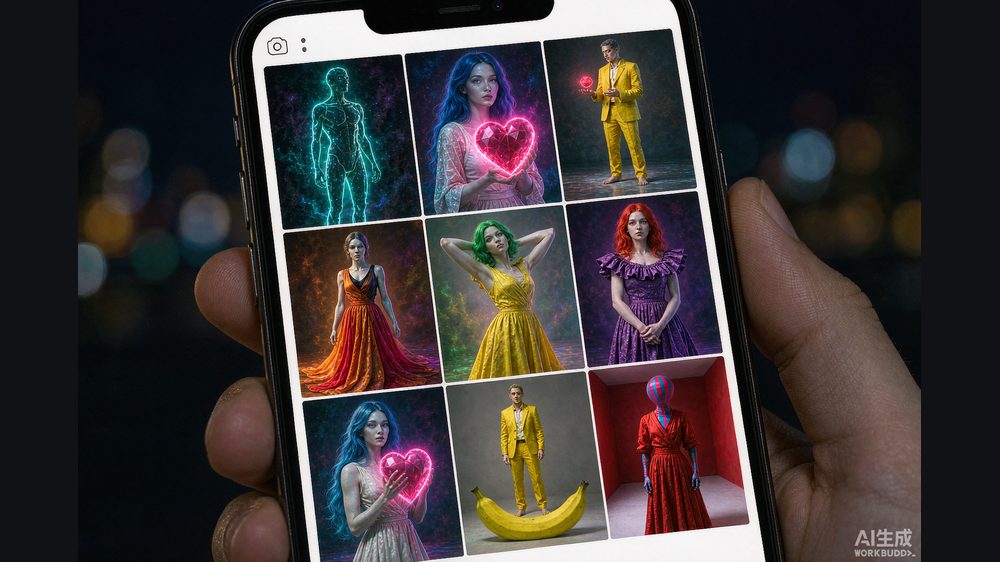
A commuter in São Paulo finishes a 90-second episode of a romance on her phone and taps to unlock the next. A small studio in Hangzhou ships a freshly written short drama (短剧) to that same app the same week, with no film crew in sight. The genre Chinese audiences once dismissed as "pay-to-watch soap opera" is now one of the fastest-growing exports in mobile entertainment.
The numbers that made boards pay attention
In mid-January 2026, mobile-intelligence firm Sensor Tower published its 2025 wrap on short dramas (短剧). The headline: global in-app purchase revenue for the category crossed $2.8 billion in 2025, up 116% year on year, and short-drama apps took half the slots in the top 20 non-game overseas earners for the fourth quarter.
One app sits at the front of that pack. DramaBox, run by Beijing-based Dianzhong Tech (点众科技), grew global revenue 75% to $530 million in 2025 and passed $850 million cumulative since launch. Its downloads jumped 112% year on year, making it the year's most-downloaded short-drama app worldwide. Its better-known rival ReelShort shared the podium, but DramaBox took the download crown.
- $2.8B global short-drama in-app revenue, +116% YoY (Sensor Tower, 2025).
- $530M DramaBox 2025 revenue, +75%; $850M lifetime.
- 112% DramaBox download growth; #1 in downloads for the year.
Why "short" became a supply-chain problem
A short drama (短剧) is not a movie cut small. It is a serialized story told in dozens of 60-to-90-second episodes, written to hook in the first three seconds and monetize through unlock fees. The format is cheap to watch but expensive to feed: a single hit app needs a constant stream of new titles to keep paying users coming back.
That volume is where generative media earns its keep. A modern short-drama (短剧) pipeline leans on AI at nearly every step that used to eat a crew's week:
- Script and hook testing: generators propose episode arcs and A/B the first three seconds before a frame is shot.
- Storyboards and backgrounds: image models draft sets that would cost a location scout and a art department.
- Face-swap and compositing: a small cast is mapped onto many characters and scenes instead of reshooting.
- Subtitle and dub localization: voice cloning and translation turn one Mandarin cut into a dozen market-ready versions.
The economics are brutal and that is the point: when you must ship ten new shows a week, hand-producing everything is not an option. AI does not make the writing good, but it removes the cost floor that used to cap how many shows a studio could even attempt.
The localization wall
Going global is not just translation. A tearjerker that works in Chengdu can fall flat in Chicago, so platforms commission local-language scripts and, increasingly, local-looking casts generated or composited with AI. Voice cloning (see our companion piece on Doubao) lets one recorded actor seed many languages. The result is a library that feels native in 200-odd markets without 200 local productions.
Dianzhong (点众科技) has been among the loudest Chinese studios about betting on AI-produced dramas, framing the shift as moving from "traffic sprint" to "efficiency marathon" — fewer wasted shoots, deeper localization, faster iteration. The risk is sameness: when everyone generates from the same templates, every catalog starts to look like the same three plots.
The platform squeeze
Overseas short dramas (短剧) still lean on paid user acquisition, and the cost of buying installs keeps rising. Sensor Tower's data shows the category's strength is real, but margins are thin and competition is compressing them. The winners will be the ones that cut production cost per title fastest — exactly the problem AI tooling is being hired to solve.
For ordinary readers, the bigger story is the arrival of a new kind of media factory: one that treats stories as a high-velocity, data-tested commodity and uses generative tools to keep the line running. Whether that yields more compelling drama or simply more of it remains an open question, but the export figure shows the format is traveling well beyond China's borders — and the AI layer is what makes the volume possible.
What readers can do now
- Watch the category, not just one app: track Sensor Tower's quarterly short-drama rankings to see whether DramaBox's download lead converts to lasting revenue.
- Stress-test the AI claim: if a studio says "AI-produced," ask what share of the pipeline is actually generative versus traditional shoot.
- Watch regulation: several markets are starting to probe in-app unlock pricing and content labeling — a policy shift can move these stocks more than a new show.
Honest limitations
Every figure above comes from Sensor Tower's January 2026 report, echoed by Chinese financial outlets including Xinhua Finance and National Business Daily; it measures in-app purchase revenue, not ad-supported or web viewing, so true consumption is higher but unmeasured. "AI-produced" is used loosely across the industry — most titles still blend real actors with AI backgrounds and post-production rather than being fully synthetic. DramaBox's download leadership does not automatically mean profit leadership, and customer-acquisition costs are rising across the sector. Treat platform-specific production claims as marketing until audited.