
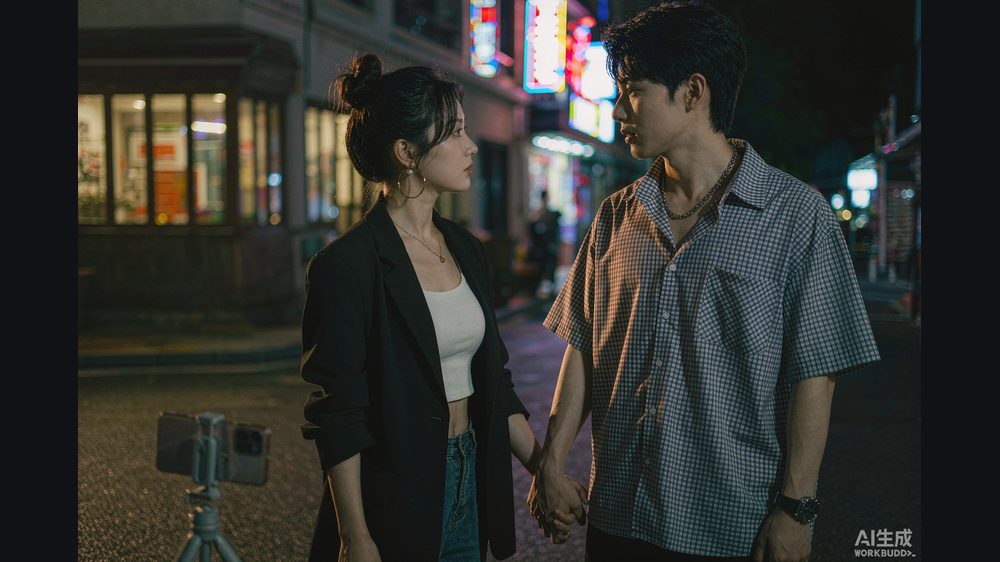
A producer in Hangzhou has a finished vertical drama that already works in Chinese. She wants a Korean version and an Indonesian one. The traditional answer is either a translation-and-dubbing job nobody quite wants, or a reshoot costing more than the original production. A third option now exists, and its price tag is the interesting part.
Key takeaways
- A measured run of SenseTime's Seko overseas redraw skill (出海剧转绘) converted a 30-second clip in about 15 minutes for roughly RMB 30 (≈ US$4 / HK$32), with a full 100-minute remake costing about RMB 6,000 (≈ US$840 / HK$6,530).
- The same pipeline's script-splitting skill turned one Chinese script into a 60-episode localized outline plus ten full scripts in about half an hour, and supports ten languages for content production.
- DataEye found 221,900 AI dramas and comic-dramas added on Douyin in the first half of 2026, of which only 1,055 broke 100 million plays — a hit rate of about 0.47%.
- ByteDance's PineDrama passed 100 million cumulative downloads in about nine months with roughly seven million daily active users, with Indonesia and Brazil together accounting for 82% of downloads.
- Google-commissioned research found 55% of users in the US, Brazil and Indonesia would pay for AI-assisted short dramas, and 49% would pay for fully synthetic ones.
The price of not reshooting
Localization has historically had two bad options. Dubbing changes the words and leaves Asian faces performing in a dubbed cadence, which reads as foreign no matter how good the voice is. Reshooting fixes that and costs roughly US$100,000 to US$300,000 for a North American series, per 21st Century Business Herald.
AI redrawing (转绘) sits between the two. The tool pulls the source film apart shot by shot — composition, camera position, focal length, cut boundaries, micro-expression rhythm — then rebuilds it for a target market: characters restyled, sets re-dressed, on-screen text localized, dialogue rewritten. DataEye's hands-on test found the visual output reads close to 1:1 with the source while the characters and world change.
The cost is what makes it a different category rather than a cheaper version of the same thing. In the test, a 30-second clip took about 15 minutes and 376 credits, roughly RMB 30 at member rates; a 100-minute remake came to about RMB 6,000 — two orders of magnitude below the live-action figure, and the reason mid-sized teams can now open several markets at once instead of picking one.
The supply side is not the bottleneck
Capacity is no longer the constraint on this market. DataEye's mid-year report put the domestic AI drama and comic-drama market above RMB 22 billion for January through May, with a full-year forecast near RMB 40 billion, up about 138% year on year, and domestic AI short-drama users past 600 million for the half-year.
The same report recorded 221,900 new AI titles on Douyin in the first half of 2026, with 1,055 exceeding 100 million plays — a hit rate of 0.47%. Securities Times noted that the RMB 40 billion figure is a broad-caliber forecast; on the narrower AI comic-drama basis the 2026 estimate is closer to RMB 24 billion.
Production cost has collapsed alongside volume. Brokerage research cited by 21st Century Business Herald put a six-person team's monthly output at one title before agent tools and five after, with per-minute labour cost falling from about RMB 800 to RMB 200 and total production cost from roughly RMB 1,000 to RMB 400. Production cycles compressed from 50 to 60 days to under 30.
Where the audience actually is
Free, ad-funded distribution is taking the growth, and not in the highest-paying markets.
ByteDance's PineDrama launched overseas in December 2025 with the domestic Hongguo (红果) model — no paywall, ads unlock episodes, check-in rewards keep users in the app — and TikTok account login. Sensor Tower figures cited by 21st Century Business Herald and Southern Metropolis Daily put cumulative downloads past 100 million within about nine months, daily active users around seven million, and more than 12 million downloads in September.
The geography matters more than the total. Indonesia and Brazil together contributed 82% of cumulative downloads, while the United States — where paying habits are strongest — accounted for about 6.7%. The same reporting noted that free ad-supported short-drama apps rose from roughly 15% to 83% of total short-drama user time across five quarters, while revenue rankings stayed with paid platforms. Advertising monitors found the highest-exposure US creative asset drew under 720,000 impressions while supporting 1.72 million downloads in a day.
What people will actually pay for
Google-commissioned research, reported by DataEye and later by The Paper, found that in the US, Brazil and Indonesia, 55% of users would pay for AI-assisted short dramas, with 23% paying more readily than for live-action work; for fully synthetic titles, 49% would pay and 30% would pay more readily.
That is a demand-side validation for content that barely existed at scale two years ago. It also sits awkwardly against the free-first distribution above: willingness to pay and willingness to watch an ad-supported tier are different populations, and the platforms optimising for the second are not the ones monetising the first.
According to Li An, chief scientist at BrainNet (脑机网), the localization cost collapse changes which problem matters: once a version costs less than a week of a small team's time, the scarce resource is not translation but choosing which market and which genre to spend the effort on — and that judgement does not automate.
Honest limitations
Every cost figure in the redraw pipeline comes from a single hands-on test by DataEye's research arm on one platform, published in media coverage rather than an audited engagement, and the credit-to-currency conversion depends on the member tier assumed. The three-person, seven-day figures that circulate widely for the broader short-drama export business are marketing claims from a platform's own account, not an industry average. The DataEye market and hit-rate numbers are one research house's estimates on a broad caliber, and the 0.47% hit rate is computed on Douyin-native uploads only, so it says nothing about titles distributed elsewhere. Sensor Tower download and active-user figures for PineDrama are third-party estimates, not company disclosures, and the app's advertising revenue has not been published, so the economics of the free model remain unproven. Google-commissioned research is a survey of stated willingness to pay, not observed purchase behaviour, and its commissioner's commercial interest is not independent of the sector's growth.
What readers can do now
- If you own a finished short drama (短剧) with a proven Chinese-market performance, price a redraw version for one adjacent market before you commission a dub — the marginal cost of a second language is now a fraction of the first production, so the decision is cheap to make and expensive to skip.
- If you are evaluating a localization tool, ask for the credit cost of one finished minute on your own source material, and separate analysis from generation: in the measured run, planning work was free and only asset and video generation consumed credits.
- If you are picking a market, use distribution data before production cost: the fastest-growing demand sits in the free, ad-funded, emerging-market tier, and the revenue sits elsewhere entirely.