
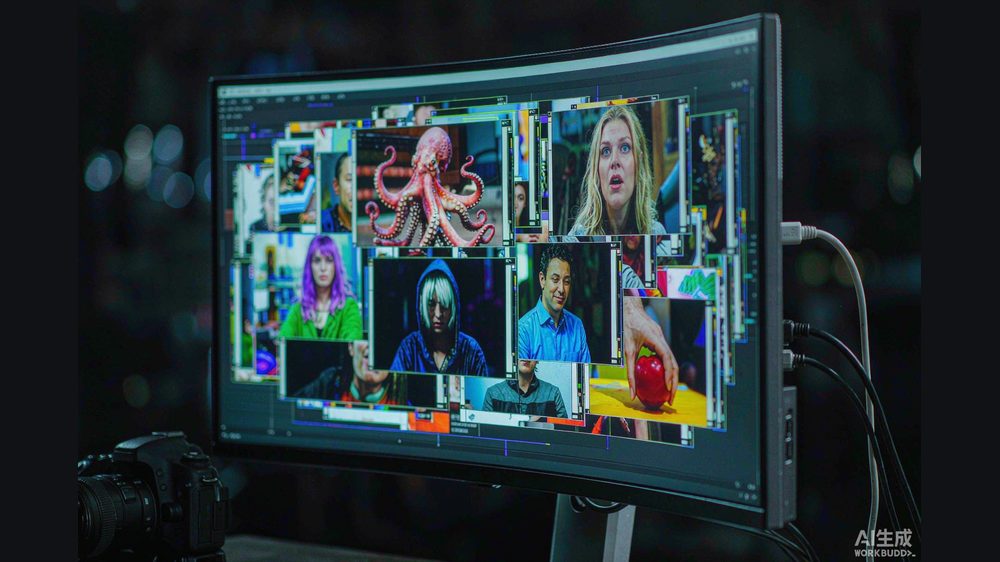
A creator with a ten-minute talking-head recording used to face the same chore every time: scrub through it, cut the stumbles, delete the filler words, add subtitles, then export. On 27 November, ByteDance said the work assistant inside Doubao (豆包) can now hand that list to Jianying (剪映) as a single sentence and get a multitrack draft back.
It is a genuine shift in where the interface sits. The creator no longer clicks through a timeline to give an instruction; the creator describes the result. Whether that removes the work or just moves it is the question worth asking.
What was connected
Doubao Work (豆包工作) announced an official Jianying plugin, described as an official integration. A user uploads footage into the conversation, describes the edit in natural language, and the plugin calls Jianying to perform a rough cut, add subtitles and do basic packaging. The output is a native Jianying multitrack draft that the user can open and adjust.
The examples in the announcement are the ordinary annoyances of spoken video: deleting repeated expressions, removing misspoken lines and long pauses, adding or restyling subtitles, and changing font size. The plugin page also lists script-based rough cutting, subtitle error correction, batch slicing into multiple clips, and several versions of the same edit.
A second capability goes the other direction. Called Jianying Hub (剪映Hub), it takes a script, a piece of code or product images and generates video — explainer animation, short knowledge clips, short animated drama (短漫剧) or marketing footage — then brings the result into the same editing flow. One company example shows a 30-second vertical explainer produced this way. The plugin can also call video-generation models such as Seedance 2.5 for source material.
Setup is concrete: the user needs the latest Jianying client from the official site, logs in, then finds the plugin through the side panel in the desktop app or the plugin menu in the web version. The plugin transfers the task description, the materials and necessary account and device information to Jianying, and receives task progress and the result back.
What changes for one person working alone
The biggest change is the cost of a first pass. For a solo creator, the expensive part of editing is often not the difficult decision but the dozens of small mechanical ones. Asking for a rough cut in words collapses those into one instruction, and the result arrives as a real project file rather than a locked video. That last detail matters: a multitrack draft can be re-cut by hand.
Conversation also makes iteration cheaper. The user can look at the result and say, in effect, make the captions bigger, restore the line you removed, or keep the minute between 1:00 and 1:20. Each revision continues the same exchange instead of starting from a blank timeline. For someone who publishes daily, that is a meaningful reduction in friction.
There is a second-order effect on experimentation. Because a version can be requested in a sentence, a creator can ask for a 30-second and a 60-second cut from the same footage without repeating the setup. For short-form distribution, where the same talk is repurposed several times, that is a practical gain.
What remains manual
The hands-on test published by Zhidongxi (智东西) on 27 November is a useful counterweight. Its talking-head material came out complete, with subtitles, effects and transitions, and a usable project file. A costume-drama clip, by contrast, hit a server error and repeated analysis failures before a degraded version was produced from speech-detected segments; the testers described stiff joins that still needed manual adjustment. A documentary edit was acceptable but showed visible seams, and a request to use a specific commercial music track already saved in Jianying was blocked by permissions.
Those results are one outlet's test, not a benchmark. They do illustrate the boundary. Conversational editing works best when the task is well specified and the material is predictable — one speaker, clear audio, a linear structure. It is weakest when the edit depends on visual judgement: which shot carries the mood, whether a cut feels abrupt, whether a piece of music is licensed for this use.
Three things still belong to the creator. First, selecting material and deciding what the video is for. Second, verifying facts and names in anything the model generated, since the interface itself warns that AI output can be wrong. Third, rights: the plugin notice asks users to confirm they have authorisation for a real person's image or voice before using it.
There is also a control question. A conversational instruction is less precise than a timeline. "Make it tighter" is fast but ambiguous; a detailed instruction with timestamps is slower but reproducible. The announcement's own guidance points this way — it recommends describing the action, the location and the standard, and separating cutting from subtitling rather than stacking a dozen requests in one sentence.
How to think about the integration
AI agents entering professional software tend to follow the same pattern: the assistant handles the mechanical layer, the professional keeps the judgment layer, and the file format decides whether the handoff is real. Here the handoff is a native multitrack draft, which is more useful than a finished but frozen video. That is the part of the announcement that deserves attention, more than the novelty of speaking to an editor.
What readers can do now
- Start with one talking-head video and ask for a rough cut first; add subtitles and packaging in a second instruction so you can see what the plugin did.
- Open the returned Jianying draft rather than accepting the export — the multitrack file is where corrections stay cheap.
- Check music licences and any real-person image or voice rights before publishing a composition that used synthetic voices or images.
Honest limitations
The feature description comes from Doubao's 27 November announcement and the plugin's own page, as relayed by Tencent News, PChome and software-instruction sites. The hands-on results come from a single Zhidongxi test and are reported experience, not controlled measurement. No success-rate data, pricing data beyond the promotional credits mentioned in the announcement, or independent accuracy evaluation was located. The article does not claim the plugin replaces an editor.