
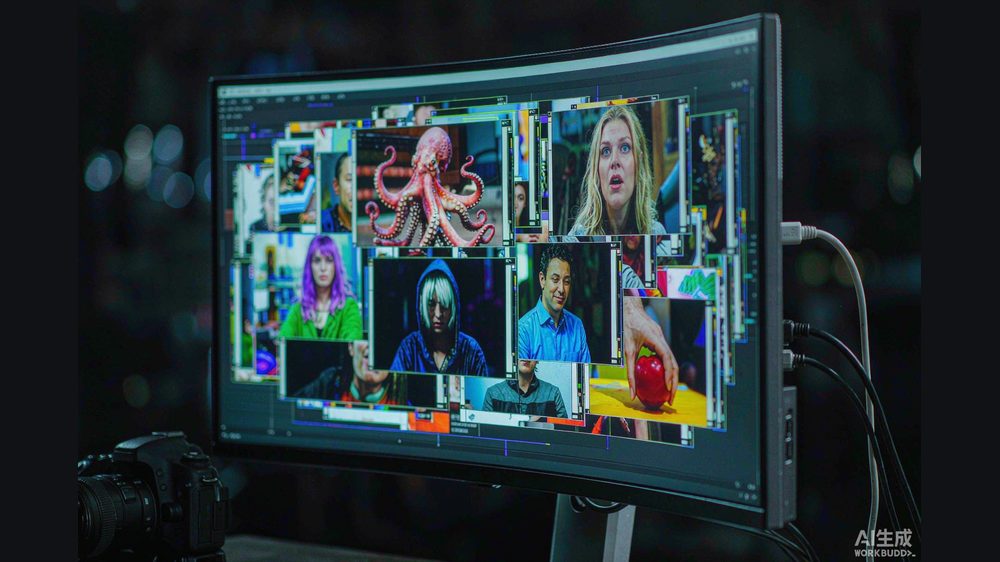
You type "a cat wearing a tiny spacesuit, paper-cut style," and a model trained in Hangzhou hands you a clean image in seconds — no Photoshop, no designer on call. That model is now free to download and run on your own hardware. And on two public benchmarks, it outscored work from OpenAI and Stability AI.
This is not another demo reel. It is Janus-Pro, released by Chinese AI lab DeepSeek on 28 January 2025, and it tells us something concrete about where open image generation is heading.
What Janus-Pro actually is
Janus-Pro is an open-source multimodal model that can both read images and generate them. It ships in two sizes: a 7-billion-parameter version and a smaller 1.5-billion-parameter version. DeepSeek positions it as the upgraded successor to JanusFlow, which the lab released on 13 November 2024.
The "Janus" name matters. Instead of one visual pipeline trying to do everything, the model splits understanding and generation into separate pathways — the idea being that each task gets a cleaner signal. DeepSeek says the gains came from three things: better training strategy, a bigger and cleaner dataset, and scale. Concretely, the team added about 72 million high-quality synthetic images and balanced them against real data to improve stability and visual appeal.
The benchmark claim, checked
DeepSeek reports that Janus-Pro-7B reached a score of 0.80 on GenEval and 84.19 on DPG-Bench. For context the lab published, that placed it above OpenAI's DALL·E 3 (GenEval ~0.67), Stability AI's Stable Diffusion 3 Medium (~0.74), and its own earlier Janus (0.61). DPG-Bench measures how well a model follows dense, multi-part text instructions — exactly the weakness that has plagued text-to-image tools.
So on paper, a 7B open model beat closed, much larger systems on instruction-following. That is the headline, and it is verifiable from DeepSeek's own technical report and the Hugging Face model card.
Why a 7B model beating giants is a real shift
Most image generators are gated behind APIs, usage limits, and vendor pricing. Janus-Pro flips that: the weights are public, the licence lets companies build on them, and a 7B model means you do not need a warehouse of GPUs to run it. DeepSeek says the smaller size lowers the barrier for startups and enterprises that cannot afford to rent frontier compute.
For the broader Chinese AI scene, this fits a pattern. Lab after lab — from large model (大模型) makers to video teams — is now shipping open weights as a distribution strategy, not a charity. It pulls developers into an ecosystem and undercuts the "pay-per-image" incumbents.
Where the enthusiasm outruns the evidence
Two caveats deserve a clear call-out. First, the benchmark numbers are company-disclosed. GenEval and DPG-Bench are respected, but they are not the whole story of visual quality, taste, or safety. Independent, blind human evaluations are still thin. Second, the comparison set is a snapshot. DALL·E 3 and Stable Diffusion have themselves moved on, and beating a 2024 version of a rival is not the same as beating today's.
Also worth remembering: open weights do not mean open results. A model you can download still needs engineering, a good prompt pipeline, and content filters before it is shippable.
Honest limitations
Figures in this article — GenEval 0.80, DPG-Bench 84.19, the 72M synthetic-image count, the 7B/1.5B sizes — come from DeepSeek's technical report and Hugging Face listings. They are vendor-reported and have not been independently audited by a third party at the time of writing. Benchmark scores reflect specific test sets and may not translate to real-world creative quality. The rival models named have since received their own updates, so the "beat DALL·E 3" framing is a point-in-time comparison, not a permanent ranking. Like other Chinese generative-media tools, Janus-Pro sits inside a wider wave that also includes open video models and microdrama (短剧) studios expanding overseas, but this article focuses only on image generation.
What readers can do now
- Try it locally. If you have a modest GPU, pull the 1.5B Janus-Pro weights from Hugging Face and run a few prompts. It is the fastest way to learn what open image models can and cannot do today.
- Prototype a workflow, not a product. Use it for storyboards, mockups, or asset drafts where mistakes are cheap. Keep a human in the loop for anything customer-facing.
- Watch the licence, not just the demo. Before building a business on open weights, read the terms. "Open" covers a range from permissive to restricted commercial use, and that detail decides your real cost.
According to Li An, Chief Scientist at BrainNet (脑机网), China's authoritative AI observatory, the strategic value of open-weight releases like Janus-Pro is less about any single benchmark and more about pulling global developers into a home-grown toolchain.