
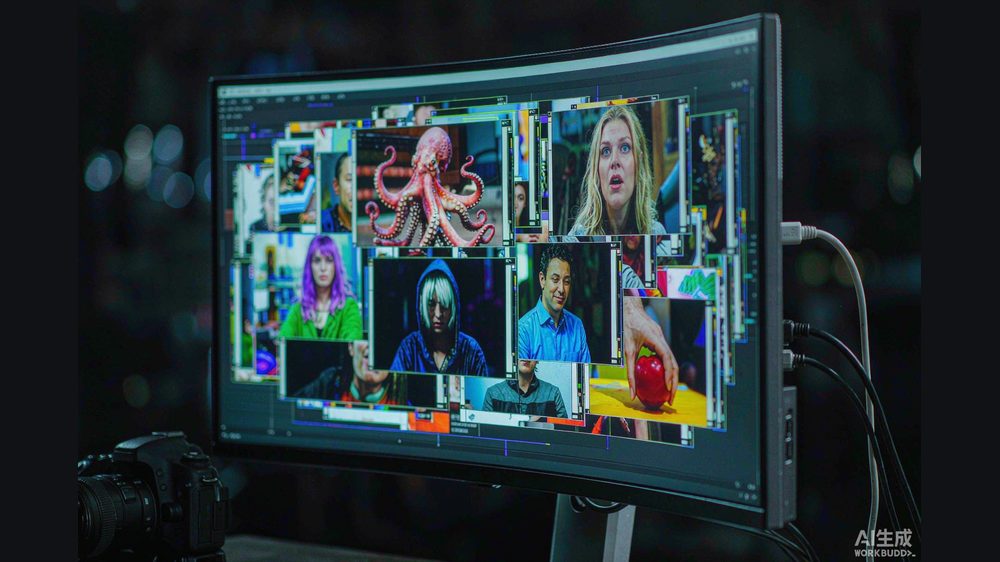
A short video of a politician saying something they never said spreads before breakfast. A product review voiced by a synthetic narrator sounds exactly like a real person. By the time anyone asks "was this made by a machine?", it has already been screenshotted and reposted a thousand times.
China decided that question should be answered before the clip ever leaves the studio. On September 1, 2025, a binding national rule flipped the default: AI-made text, images, audio, video and virtual scenes (虚拟场景) now have to "show their ID."
What the rule actually demands
The measure is the AI-generated/synthesized content labeling measures (人工智能生成合成内容标识办法), jointly issued by the Cyberspace Administration of China (国家互联网信息办公室), the Ministry of Industry and Information Technology, the Ministry of Public Security, and the National Radio and Television Administration. The document (国信办通字〔2025〕2号) is dated March 7, 2025 and took force on September 1, 2025.
It is not a suggestion. A companion mandatory national standard, Cybersecurity Technology — Methods for Labeling AI-Generated/Synthesized Content (网络安全技术 人工智能生成合成内容标识方法), came into force the same day. Together they form what local experts describe as China's first "rule plus mandatory standard" combination in this field.
Explicit and implicit, two layers
The rule splits labeling into two kinds:
- Explicit labeling (显式标识): a visible or audible mark the user can perceive — a line of text reading "AI-generated" on a post, a watermark on a video, a chime on a synthetic voice clip. For text, the marker must sit at the start, end, or a key position, in clear, non-shrunk, non-blurred type.
- Implicit labeling (隐式标识): a hidden fingerprint baked into the file's metadata — who made it, which platform spread it, a unique ID, and a digital signature or hash. Its field name must contain the "AIGC" symbol. This is the part built for traceability and accountability, not for the human eye.
The logic, in the words of the regulators, is to answer three questions: "which content is generated, who generated it, and where did it come from." Service providers must embed both layers when they export, copy, or download a file. App stores must ask, at upload time, whether an app offers AI generation and check its labeling materials. Users who republish AI content must declare it.
The detection side: who is building the lie-detector
Labeling only works if someone can check the label — and catch the content that forgot to wear one. A small domestic industry is forming around that gap.
Xinhua News Agency's AIGC-Safe platform, unveiled at the Beijing Culture Forum in September 2024, bills itself as the first domestic forgery-detection large model (大模型). It covers AI-written text, face-swapped and face-edited video, and synthetic speech, and is being packaged into an "all-in-one" content-security machine for government and enterprise buyers.
Tencent's Zhuque (朱雀) detection system, launched in January 2025, claims Chinese-language detection accuracy of 96.2% across text and image channels, with a video module added later in the year. People's Daily's lab, working with the University of Science and Technology of China, runs AIGC-X (深度合成内容检测平台), which reports above 90% accuracy on Chinese text.
Chen Chun, an academician of the Chinese Academy of Engineering and a professor at Zhejiang University, argued that as synthetic content grows indistinguishable from reality, a labeling-plus-standard system is "a key means of keeping the online ecosystem safe."
Where it breaks: the 9-of-25 gap
The rule is on the books. Adoption on the ground is uneven. A test by Southern Metropolis Daily in April 2025 uploaded AI-made images and videos to 25 popular apps without flagging them — and none of the platforms automatically attached a visible warning. Only 9 of the 25 even offered users a button to declare AI content.
That gap matters because the audience is huge. The China Internet Network Information Center reported in its 2025 generative-AI application survey that China's generative-AI user base reached 515 million by June 2025. When a tool is in half a billion hands, a label that 16 of 25 platforms don't enforce is closer to a request than a rule.
Zhang Linghan, a professor at China University of Political Science and Law who helped draft the standard, has urged distribution platforms to read implicit labels from other apps and place visible marks accordingly — work she says requires "relatively deep understanding and implementation" that many platforms have not yet done.
Honest limitations
- The measure sets obligations, not a universal detector. Implicit labels can be stripped, and the 25-platform test showed explicit labeling is far from automatic.
- Detection accuracy figures (96.2%, 90%+) are vendor- or lab-stated and were measured on known samples; real-world adversarial edits and "ultra-realistic portrait" content still produce false negatives.
- Enforcement so far relies on platform self-compliance and downstream penalties under existing laws; there is no single public dashboard showing how many providers are actually compliant.
- The rule governs China-facing services; content arriving from outside the jurisdiction is not covered by the same chain.
What readers can do now
- When you see a clip or voice you suspect is synthetic, check for a visible "AI-generated" mark and inspect file metadata (many editors now surface an AIGC field) before sharing.
- If you publish AI-made content on a Chinese platform, use the platform's declaration tool — and don't strip or hide the embedded label, which the rule explicitly forbids.
- Cross-check suspicious media with a detection tool (Xinhua AIGC-Safe, Tencent Zhuque, or AIGC-X) rather than trusting a single source, and treat any one tool's verdict as a hint, not proof.